Culinary Advisor
A cooking platform built around craft, culture, and the stories behind what we eat.
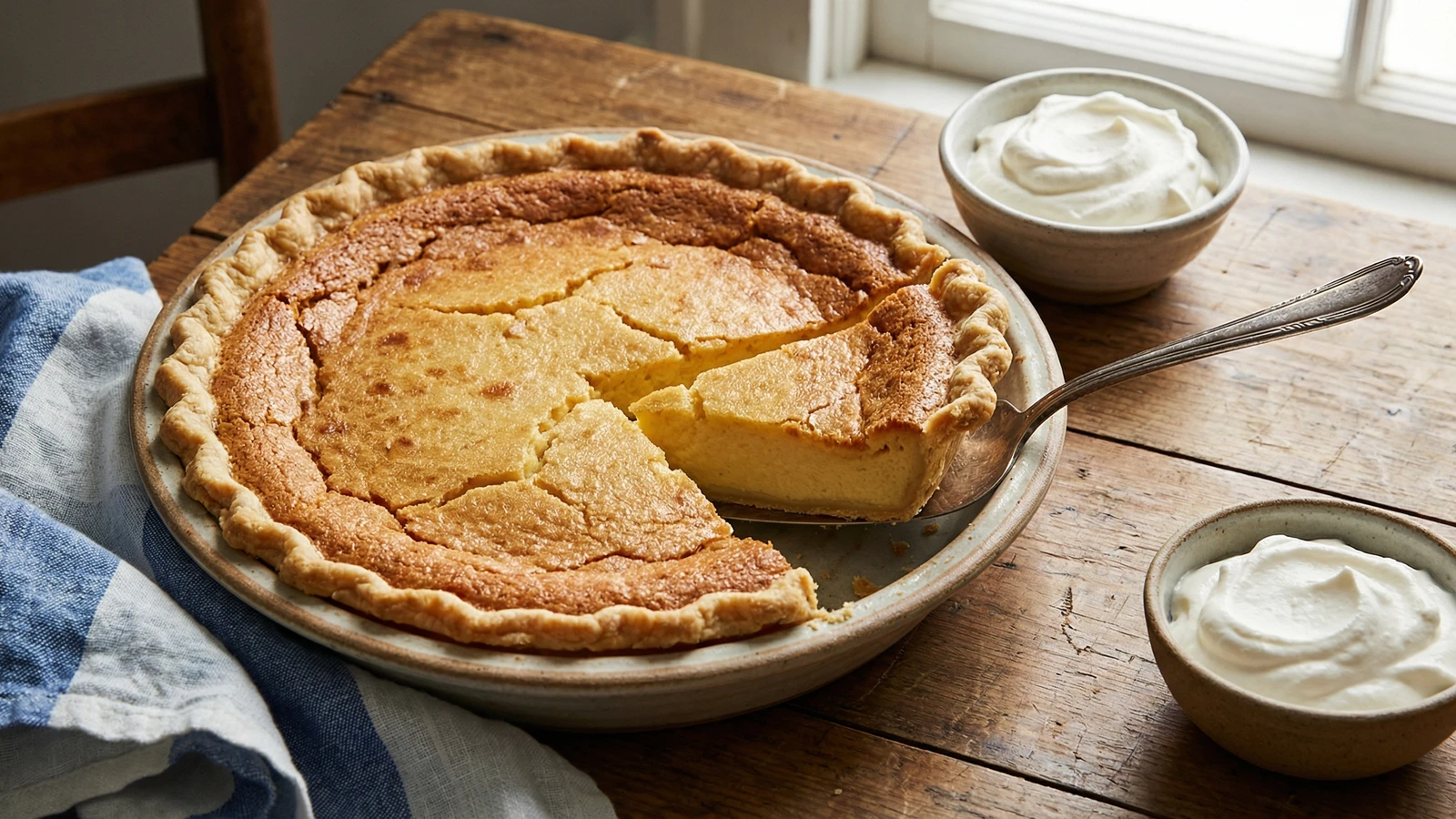
Buttermilk Chess Pie
Created by Chef Remy
A humble collection of pantry staples transformed into something extraordinary: tangy buttermilk custard with a caramelized golden crust, baked in flaky pastry until the house smells like your grandmother's kitchen on Sunday afternoon.
Some pies try too hard. Chess pie doesn't try at all. It just is what it is: butter, sugar, eggs, and buttermilk baked until the top turns golden and crackly. That's the whole story. And yet people have been making this pie for two hundred years because sometimes the simplest things are the best things.
My grandmother Evangeline made chess pie when there wasn't much else in the kitchen. No fancy fruits, no expensive nuts. Just what she had on hand. She'd say, "Remy, this pie proves you don't need a silver fork to eat good food." She was right. The buttermilk gives it that pleasant tang, the cornmeal adds a slight texture that tells you this is the real thing, and the top caramelizes into something that looks like it took hours but comes together in twenty minutes.
At Lagniappe, we serve this pie after crawfish boils and po'boy lunches. It's the kind of dessert that belongs at the end of an honest meal. Not fussy. Not complicated. Just good food made with care, the way four generations of my family have always cooked.
The technique, the tradition, and the story behind every dish.
Discover Culinary AdvisorIngredients
unbaked pie crust
Quantity
1 (9-inch)
homemade or store-bought
granulated sugar
Quantity
1 1/2 cups (300g)
fine yellow cornmeal
Quantity
3 tablespoons
fine sea salt
Quantity
1/4 teaspoon
large eggs
Quantity
4
at room temperature
unsalted butter
Quantity
1/2 cup (1 stick/113g)
melted and slightly cooled
full-fat buttermilk
Quantity
1 cup
at room temperature
pure vanilla extract
Quantity
1 tablespoon
fresh lemon juice
Quantity
1 tablespoon
lemon zest
Quantity
1 teaspoon
finely grated
| Ingredient | Quantity |
|---|---|
| unbaked pie crusthomemade or store-bought | 1 (9-inch) |
| granulated sugar | 1 1/2 cups (300g) |
| fine yellow cornmeal | 3 tablespoons |
| fine sea salt | 1/4 teaspoon |
| large eggsat room temperature | 4 |
| unsalted buttermelted and slightly cooled | 1/2 cup (1 stick/113g) |
| full-fat buttermilkat room temperature | 1 cup |
| pure vanilla extract | 1 tablespoon |
| fresh lemon juice | 1 tablespoon |
| lemon zestfinely grated | 1 teaspoon |
Equipment Needed
- •9-inch pie plate
- •Large mixing bowl
- •Wire whisk
- •Wire cooling rack
- •Rimmed baking sheet
Instructions
- 1
Prepare your crust
Fit your pie crust into a 9-inch pie plate, crimping the edges however your grandmother taught you. Place it in the freezer for 15 minutes while you prepare the filling. A cold crust holds its shape better and resists shrinking. This little bit of patience pays off in a prettier pie.
If using store-bought, let it soften just enough to unroll without cracking. Handle it gently, like you're handling someone's trust. - 2
Preheat and position
Set your oven to 325F and position a rack in the lower third. Chess pie needs gentle, even heat from below to set the custard properly without over-browning the top. Place a rimmed baking sheet on the rack to catch any drips and make the pie easier to handle.
- 3
Combine dry ingredients
Whisk together the sugar, cornmeal, and salt in a large bowl. The cornmeal is essential here. It gives chess pie its characteristic texture, that slight graininess that sets it apart from other custard pies. Three tablespoons is all you need. More would make it gritty; less would lose the tradition.
Use fine cornmeal, not coarse. You want texture, not gravel. - 4
Add eggs carefully
Add the eggs one at a time, whisking after each addition until just combined. You're not trying to incorporate air here like you would for a cake. Gentle strokes. The goal is a smooth, unified mixture without creating bubbles that would mar your finished surface.
- 5
Stream in the butter
Pour the melted butter into the bowl in a slow, steady stream while whisking constantly. The butter should be warm but not hot. If it's too hot, you'll scramble the eggs. If it's too cold, it'll solidify into little flecks. You want that smooth, golden ribbon flowing in and disappearing into the mixture.
- 6
Add buttermilk and flavorings
Whisk in the buttermilk until smooth. Add the vanilla, lemon juice, and lemon zest, stirring gently. The buttermilk brings tang that balances all that sweetness. The lemon brightens everything without announcing itself. Together they keep the pie from being one-dimensional.
Full-fat buttermilk is non-negotiable. Low-fat versions are thin and will give you a sad, watery filling. - 7
Fill and bake
Remove the crust from the freezer and pour in the filling. It should come nearly to the top of the crimped edge. Carefully transfer to the oven on that waiting baking sheet. Bake for 50 to 55 minutes. The pie is done when the edges are set and puffed slightly, but the center still has a gentle wobble, about the size of a silver dollar.
- 8
Watch for the golden top
The surface will develop a beautiful golden-brown crust as natural sugars caramelize. This is the magic of chess pie. If the top is browning too quickly before the center sets, tent loosely with foil for the last 15 minutes. Trust your eyes and nose. When you smell butter and vanilla and the edges look firm, you're close.
- 9
Cool completely
Let the pie cool on a wire rack for at least 3 hours, or until room temperature. The filling continues setting as it cools. Cut into it too early and you'll have a beautiful, delicious mess instead of clean slices. Patience, cher. This pie rewards those who wait.
The pie will puff dramatically in the oven, then fall and crack slightly as it cools. This is normal. This is tradition. This is how you know it's real.
Chef Tips
- •Room temperature ingredients matter here. Cold eggs and buttermilk won't emulsify properly with the warm butter, and you'll end up with a curdled mess. Take everything out of the refrigerator an hour before you start.
- •If your pie cracks on top, don't panic. Every chess pie cracks. It's part of the charm. Serve it with confidence and a dollop of whipped cream if you want to cover your tracks.
- •This pie is even better the next day after the flavors have had time to settle and the filling has fully set. Make it the day before your gathering and store it loosely covered at room temperature.
- •A drizzle of cane syrup on each slice is the Louisiana way. We don't apologize for gilding the lily down here.
Advance Preparation
- •The pie can be baked one day ahead and stored loosely covered at room temperature. The texture and flavor actually improve overnight.
- •Unbaked pie crust can be prepared up to 3 days ahead, wrapped tightly in plastic, and refrigerated until needed.
- •The filling can be mixed and refrigerated for up to 24 hours before baking. Whisk gently before pouring into the crust.
Frequently Asked Questions
Nutrition Information
1 serving (about 125g)
Where cooking meets culture.
Culinary mentorship, cultural storytelling, and the editorial depth that makes cooking meaningful.
Explore Culinary Advisor