Culinary Advisor
A cooking platform built around craft, culture, and the stories behind what we eat.
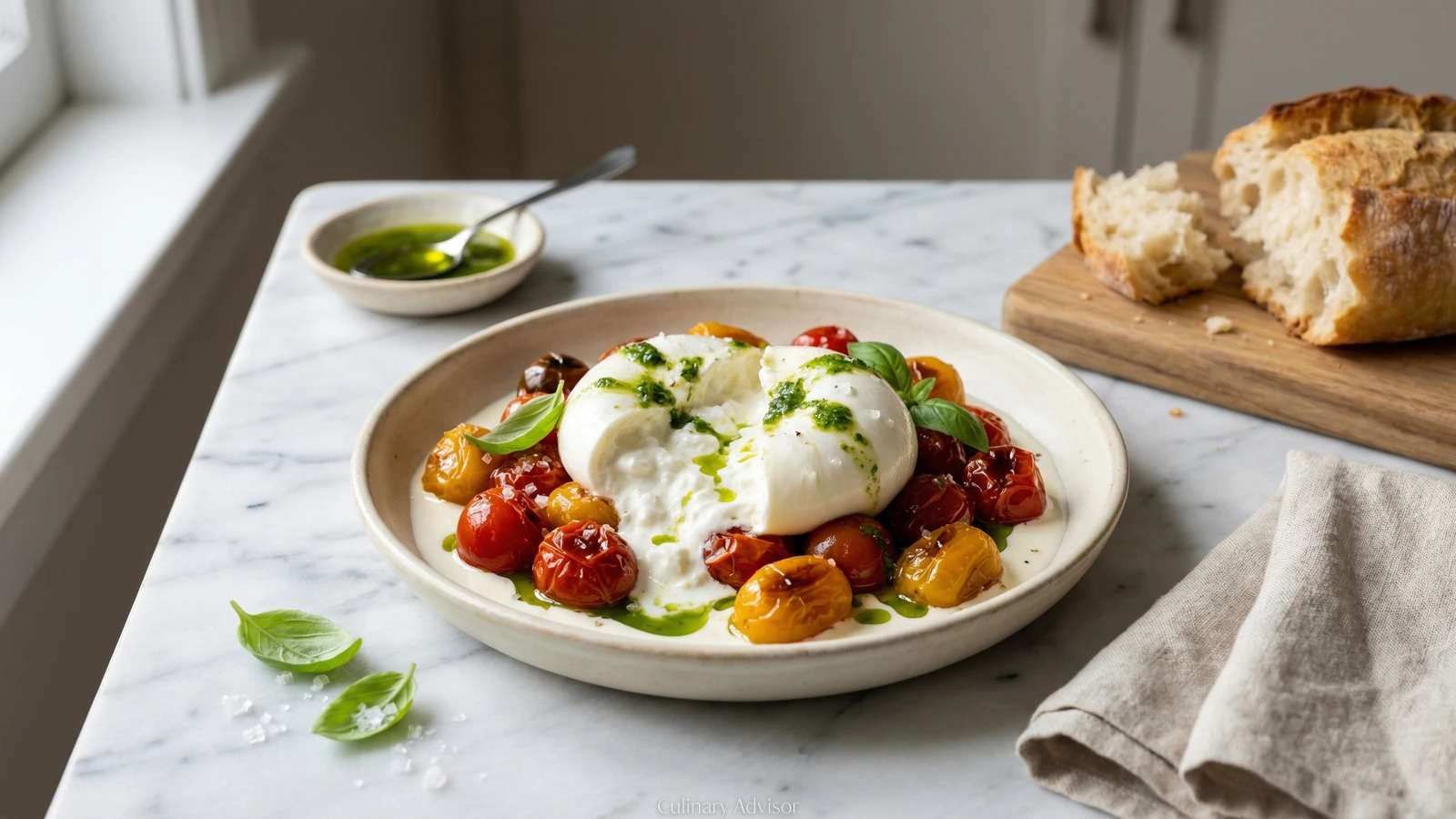
Burrata with Roasted Tomatoes and Basil Oil
Created by
A cloud of cream-filled mozzarella split open over jammy slow-roasted tomatoes, finished with emerald basil oil that tastes like summer concentrated into a spoonful. This is the appetizer that makes guests lean in.
Burrata began in the Puglia region of Italy as a way to use leftover mozzarella scraps. Some clever cheesemaker wrapped those shreds in fresh mozzarella and filled the pouch with cream. What started as thrift became luxury. The name means "buttered," and that tells you everything about what awaits when you cut through the outer shell.
The genius of this dish lies in temperature and texture contrast. Slow-roasted tomatoes, still warm from the oven, collapse into concentrated sweetness. The burrata arrives at cool room temperature, yielding cream that floods across the plate when you break the surface. Bright basil oil cuts through the richness. Crusty bread becomes your utensil.
I've served this to guests who swore they'd eaten burrata a hundred times and never tasted anything like it. The secret is respecting each component. Roast your tomatoes slowly until they candy. Make your basil oil properly so it stays vivid green. Let your burrata temper before serving. Three simple elements, each treated with care, become something greater than the sum.
The technique, the tradition, and the story behind every dish.
Discover Culinary AdvisorIngredients
cherry or grape tomatoes
Quantity
2 pints (about 24 ounces)
extra-virgin olive oil (for tomatoes)
Quantity
1/4 cup, plus more for finishing
garlic cloves
Quantity
4
smashed
flaky sea salt
Quantity
1 teaspoon, plus more for finishing
black pepper
Quantity
1/2 teaspoon
freshly cracked
granulated sugar
Quantity
1/2 teaspoon
fresh basil leaves
Quantity
2 cups packed (about 2 large bunches)
extra-virgin olive oil (for basil oil)
Quantity
1/2 cup
fine sea salt (for basil oil)
Quantity
pinch
fresh burrata
Quantity
2 balls (8 ounces each)
at room temperature
crusty bread or grilled crostini
Quantity
for serving
aged balsamic vinegar (optional)
Quantity
for drizzling
| Ingredient | Quantity |
|---|---|
| cherry or grape tomatoes | 2 pints (about 24 ounces) |
| extra-virgin olive oil (for tomatoes) | 1/4 cup, plus more for finishing |
| garlic clovessmashed | 4 |
| flaky sea salt | 1 teaspoon, plus more for finishing |
| black pepperfreshly cracked | 1/2 teaspoon |
| granulated sugar | 1/2 teaspoon |
| fresh basil leaves | 2 cups packed (about 2 large bunches) |
| extra-virgin olive oil (for basil oil) | 1/2 cup |
| fine sea salt (for basil oil) | pinch |
| fresh burrataat room temperature | 2 balls (8 ounces each) |
| crusty bread or grilled crostini | for serving |
| aged balsamic vinegar (optional) | for drizzling |
Equipment Needed
- •Rimmed baking sheet
- •Blender or food processor
- •Fine-mesh sieve (optional)
- •Ice bath setup
Instructions
- 1
Prepare tomatoes for roasting
Preheat your oven to 300°F. Line a rimmed baking sheet with parchment paper. Halve the tomatoes through their equators and spread them cut-side up in a single layer. They can touch, but shouldn't overlap. Scatter the smashed garlic cloves among them. Drizzle with olive oil, then sprinkle with salt, pepper, and the sugar. The sugar isn't sweetening them. It accelerates caramelization.
Cutting through the equator rather than stem to bottom exposes more surface area for caramelization and prevents the seeds from falling out. - 2
Slow-roast until jammy
Slide the baking sheet into the oven and roast for 75 to 90 minutes. You're looking for tomatoes that have collapsed significantly, edges darkened and slightly caramelized, centers still glistening but concentrated. The garlic should be golden and soft enough to spread. The kitchen will smell like Italian summer. Don't rush this. Low and slow transforms ordinary supermarket tomatoes into something remarkable.
- 3
Blanch basil for vivid color
While tomatoes roast, bring a pot of salted water to a rolling boil. Prepare an ice bath. Plunge the basil leaves into boiling water for exactly ten seconds. They'll turn brilliant green almost instantly. Immediately transfer to the ice bath and swirl until completely cold, about thirty seconds. Drain and squeeze in a clean kitchen towel until nearly dry. This blanching step locks in chlorophyll and prevents your oil from turning army green.
The squeeze is critical. Any residual water will make your oil cloudy and dilute the flavor. - 4
Blend basil oil
Combine the blanched, squeezed basil with the half cup of olive oil and a pinch of fine salt in a blender. Process on high for a full minute until completely smooth and vibrantly green. The color should be almost unnaturally bright. That's how you know you did it right. Strain through a fine-mesh sieve if you want pristine clarity, though I often leave it with body.
- 5
Temper the burrata
Remove burrata from refrigeration at least thirty minutes before serving, preferably an hour. Cold burrata is a tragedy. The cream inside should flow freely when cut, not sluggishly. Let it sit at room temperature in its liquid, turning once halfway through. When ready, lift from the liquid and drain briefly on a clean towel.
Burrata should feel like a water balloon when properly tempered. If it's still firm, it's still too cold. - 6
Assemble the dish
Spoon the warm roasted tomatoes onto a serving platter or individual plates, arranging them in a rough circle with the softened garlic tucked among them. Reserve any pan juices. Place the burrata in the center of the tomatoes. Using a sharp knife, make a deep cross-hatch cut into the top of each ball, then gently pull the corners apart so the creamy stracciatella interior spills out over the tomatoes.
- 7
Finish and serve
Drizzle the basil oil generously over everything, letting it pool in the creamy crevices. Spoon any reserved tomato pan juices around the edges. Finish with a scattering of flaky salt and a few grinds of black pepper. If using balsamic, add just a few drops around the perimeter. Serve immediately with plenty of crusty bread for scooping. This dish waits for no one.
Chef Tips
- •Burrata is best consumed within 48 hours of production. Seek out a cheese shop that receives regular shipments from quality producers, or find a domestic creamery making it fresh. The supermarket stuff packed in water often tastes like wet cotton.
- •If burrata proves impossible to source, substitute fresh mozzarella and drizzle with heavy cream. It's not the same, but it's honest and delicious in its own right.
- •The basil oil yields about half a cup. Store leftovers refrigerated in a jar for up to five days. It transforms pasta, grilled fish, and simple vegetable soups.
- •For larger gatherings, scale tomatoes and oil proportionally: one pint of tomatoes and one ball of burrata serves two to three as a substantial appetizer, or four as part of a larger spread.
- •A drizzle of aged balsamic adds complexity, but choose wisely. Thick, syrupy condimento-grade balsamic complements; thin grocery store balsamic drowns.
Advance Preparation
- •Roasted tomatoes can be made up to three days ahead and refrigerated. Bring to room temperature or rewarm gently in a 300°F oven before serving.
- •Basil oil holds refrigerated for five days, though the color is most vivid on day one. Bring to room temperature before using.
- •Burrata cannot be prepared ahead. Remove from refrigeration one hour before serving, no earlier.
- •Complete assembly must happen immediately before serving. The moment you cut the burrata, the clock starts.
Frequently Asked Questions
Nutrition Information
1 serving (about 228g)
Where cooking meets culture.
Culinary mentorship, cultural storytelling, and the editorial depth that makes cooking meaningful.
Explore Culinary Advisor