Culinary Advisor
A cooking platform built around craft, culture, and the stories behind what we eat.
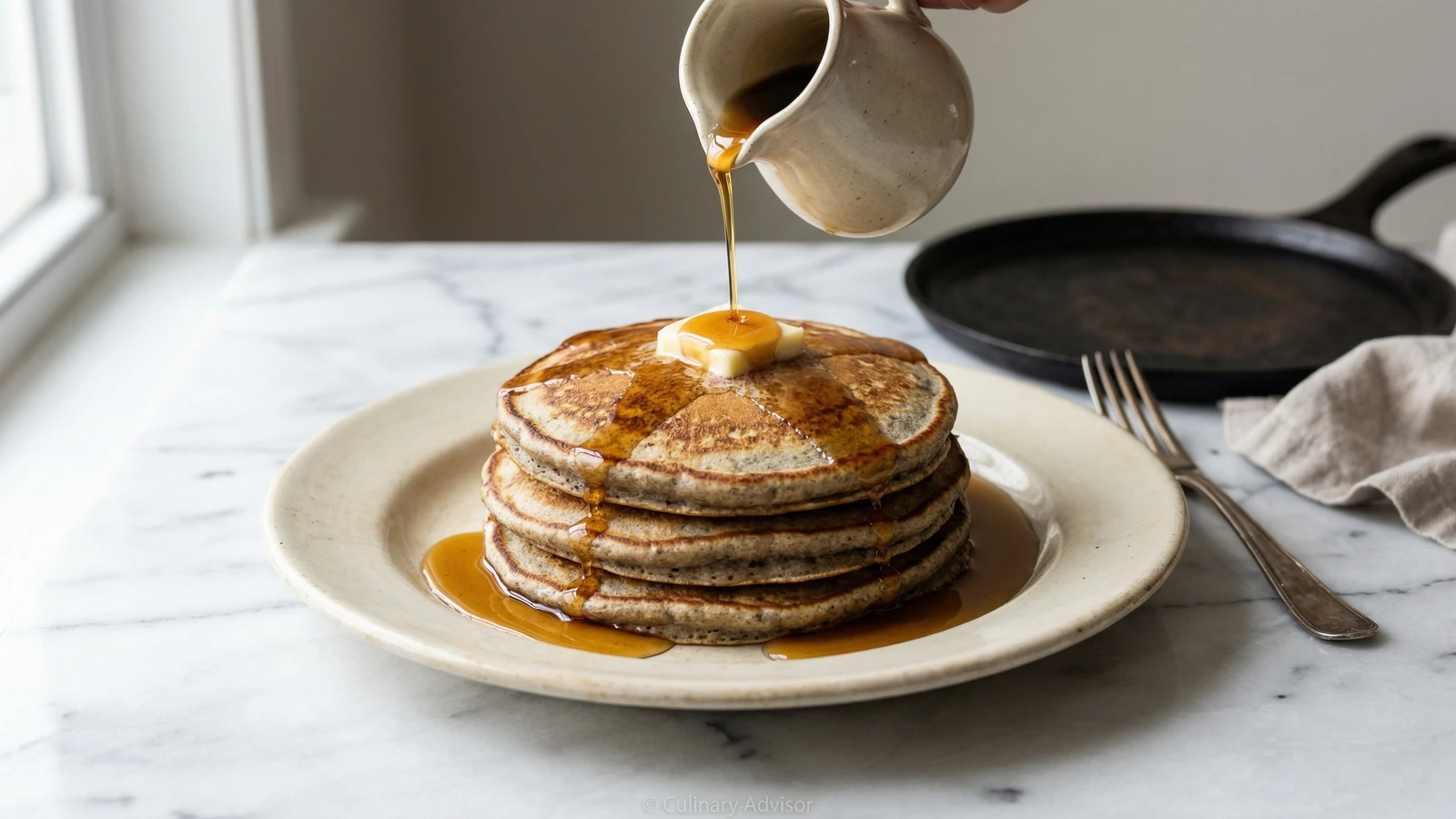
Buckwheat Pancakes with Maple Syrup
Created by
Nutty, earthy buckwheat pancakes with golden-brown edges and tender centers, made the way your grandmother made them: simply, honestly, and with real buttermilk and pure maple syrup.
Buckwheat pancakes are older than America itself. Dutch settlers brought them to the Hudson Valley in the 1600s, where buckwheat grew in soil too poor for wheat. Farmers ate these pancakes because they had to. Their descendants eat them because nothing else quite compares.
The flavor is distinctive: earthy, almost mushroomy, with a nutty depth that white flour simply cannot provide. Mixed with a portion of all-purpose flour, the texture stays tender while the character remains bold. Buttermilk adds tang that cuts through the richness and reacts with baking soda to create lift.
I've made these pancakes in restaurant kitchens and in cabins with nothing but a woodstove and a cast iron pan. The technique doesn't change. You mix until just combined, you let the batter rest, and you trust your griddle to tell you when it's ready. No recipe can teach you the sound of a properly heated pan or the look of a batter that's been mixed just enough. That comes from making them again and again.
Serve these on a cold morning when you have nowhere to be. Warm the syrup. Use real butter. Sit down at the table instead of eating over the sink. Some meals deserve ceremony, even if the ceremony is simply slowing down.
The technique, the tradition, and the story behind every dish.
Discover Culinary AdvisorIngredients
buckwheat flour
Quantity
1 cup (120g)
all-purpose flour
Quantity
1/2 cup (60g)
sugar
Quantity
2 tablespoons
baking powder
Quantity
1 1/2 teaspoons
baking soda
Quantity
1/2 teaspoon
fine sea salt
Quantity
1/2 teaspoon
buttermilk
Quantity
1 3/4 cups
at room temperature
large eggs
Quantity
2
at room temperature
unsalted butter
Quantity
4 tablespoons
melted and cooled slightly, plus more for griddle
pure vanilla extract
Quantity
1 teaspoon
pure maple syrup
Quantity
for serving
warmed
butter for serving (optional)
Quantity
as needed
| Ingredient | Quantity |
|---|---|
| buckwheat flour | 1 cup (120g) |
| all-purpose flour | 1/2 cup (60g) |
| sugar | 2 tablespoons |
| baking powder | 1 1/2 teaspoons |
| baking soda | 1/2 teaspoon |
| fine sea salt | 1/2 teaspoon |
| buttermilkat room temperature | 1 3/4 cups |
| large eggsat room temperature | 2 |
| unsalted buttermelted and cooled slightly, plus more for griddle | 4 tablespoons |
| pure vanilla extract | 1 teaspoon |
| pure maple syrupwarmed | for serving |
| butter for serving (optional) | as needed |
Equipment Needed
- •Cast iron griddle or 12-inch cast iron skillet
- •Wire cooling rack
- •Rimmed baking sheet
- •Thin metal spatula
Instructions
- 1
Whisk dry ingredients
In a large mixing bowl, whisk together the buckwheat flour, all-purpose flour, sugar, baking powder, baking soda, and salt until thoroughly combined. The buckwheat will look darker and more speckled than standard flour. That's its character showing through. Make a well in the center.
Buckwheat isn't actually wheat at all. It's a seed related to rhubarb. This makes these pancakes naturally suitable for those avoiding wheat gluten, though the all-purpose flour here does contain it. - 2
Combine wet ingredients
In a separate bowl or large measuring cup, whisk together the buttermilk, eggs, melted butter, and vanilla extract until the eggs are fully incorporated. The mixture should be pale yellow and uniform. Buttermilk at room temperature blends more smoothly than cold.
- 3
Make the batter
Pour the wet ingredients into the well of dry ingredients. Stir with a wooden spoon or spatula using circular motions, working from the center outward. Stop the moment the flour disappears. The batter will be lumpy. It should be lumpy. Those lumps become tender pockets. Overmixed batter produces tough, chewy pancakes that fight back when you bite them.
Count your strokes if it helps. Fifteen to twenty is usually enough. A few streaks of flour are preferable to a smooth, overworked batter. - 4
Rest the batter
Let the batter rest for five minutes while you heat your griddle. This brief pause allows the buckwheat to hydrate fully and the leavening to begin its work. You'll notice the batter thickens slightly and small bubbles form on the surface. The flavors are already beginning to develop.
- 5
Heat your cooking surface
Set a cast iron griddle or large skillet over medium heat. Let it warm for a full three minutes. Test the temperature by flicking a few drops of water onto the surface. When they dance and evaporate within two seconds, you're ready. Rub the surface with butter using a folded paper towel. The butter should sizzle gently, not smoke or brown instantly.
A cast iron griddle that spans two burners is ideal for cooking multiple pancakes simultaneously. Preheat it over both burners, then adjust heat as needed to maintain consistent temperature across the surface. - 6
Pour and cook first side
Using a quarter-cup measure or ladle, pour batter onto the griddle, leaving two inches between pancakes. They will spread. Let them cook undisturbed until bubbles form across the entire surface and the edges look set and slightly dry, about two to three minutes. The undersides should be deep golden brown with darker spots where the buckwheat concentrated.
- 7
Flip with confidence
Slide a thin spatula completely under each pancake and flip in one decisive motion. Hesitation creates folds. The second side needs only ninety seconds to two minutes, until golden. Press gently with the spatula. The pancake should spring back, indicating the interior has set. Transfer to a wire rack set over a baking sheet in a 200°F oven to keep warm.
Never stack pancakes directly on a plate while making more. They'll steam each other and turn soggy. The wire rack allows air circulation that preserves their texture. - 8
Continue and adjust
Re-butter the griddle between batches. If pancakes are browning too quickly, reduce heat slightly. If they're pale and taking too long, increase it. The first pancake of any batch is a test. Treat it as such. Continue until all batter is used.
- 9
Serve properly
Stack three pancakes on warmed plates. Top with a generous pat of butter and let it begin to melt into the crevices. Bring the warm maple syrup to the table in a small pitcher so each person can pour their own. These pancakes drink syrup eagerly. Have plenty ready.
Chef Tips
- •Seek out stone-ground buckwheat flour from a mill that still operates the old way. Commercial buckwheat flour is often stripped of its most flavorful components. The good stuff smells almost sweet, like toasted hazelnuts.
- •If you lack buttermilk, stir one tablespoon of white vinegar or lemon juice into regular milk and let it sit for ten minutes. It won't be identical, but it'll work.
- •Warm your maple syrup gently in a small saucepan or microwave. Cold syrup on hot pancakes creates an unpleasant temperature contrast and makes the pancakes cool too quickly.
- •These pancakes pair beautifully with crisp bacon or breakfast sausage. The salt and fat complement the earthy buckwheat in ways that feel inevitable once you've tried them.
- •For an extra dimension, add a quarter cup of toasted chopped walnuts or pecans to the batter just before cooking. The nuts echo the buckwheat's inherent nuttiness.
Advance Preparation
- •The dry ingredients can be whisked together the night before and stored covered at room temperature, shaving five minutes off your morning routine.
- •Leftover pancakes freeze well for up to two months. Cool completely, separate with parchment paper, and store in a freezer bag. Reheat directly from frozen in a 350°F oven for eight to ten minutes.
- •The batter itself does not hold well overnight. The leavening agents begin working immediately upon contact with liquid. Make batter fresh each time.
Frequently Asked Questions
Nutrition Information
1 serving (about 270g / 3 pancakes)
Where cooking meets culture.
Culinary mentorship, cultural storytelling, and the editorial depth that makes cooking meaningful.
Explore Culinary Advisor