Culinary Advisor
A cooking platform built around craft, culture, and the stories behind what we eat.
Buck Rarebit
Created by Chef Thomas
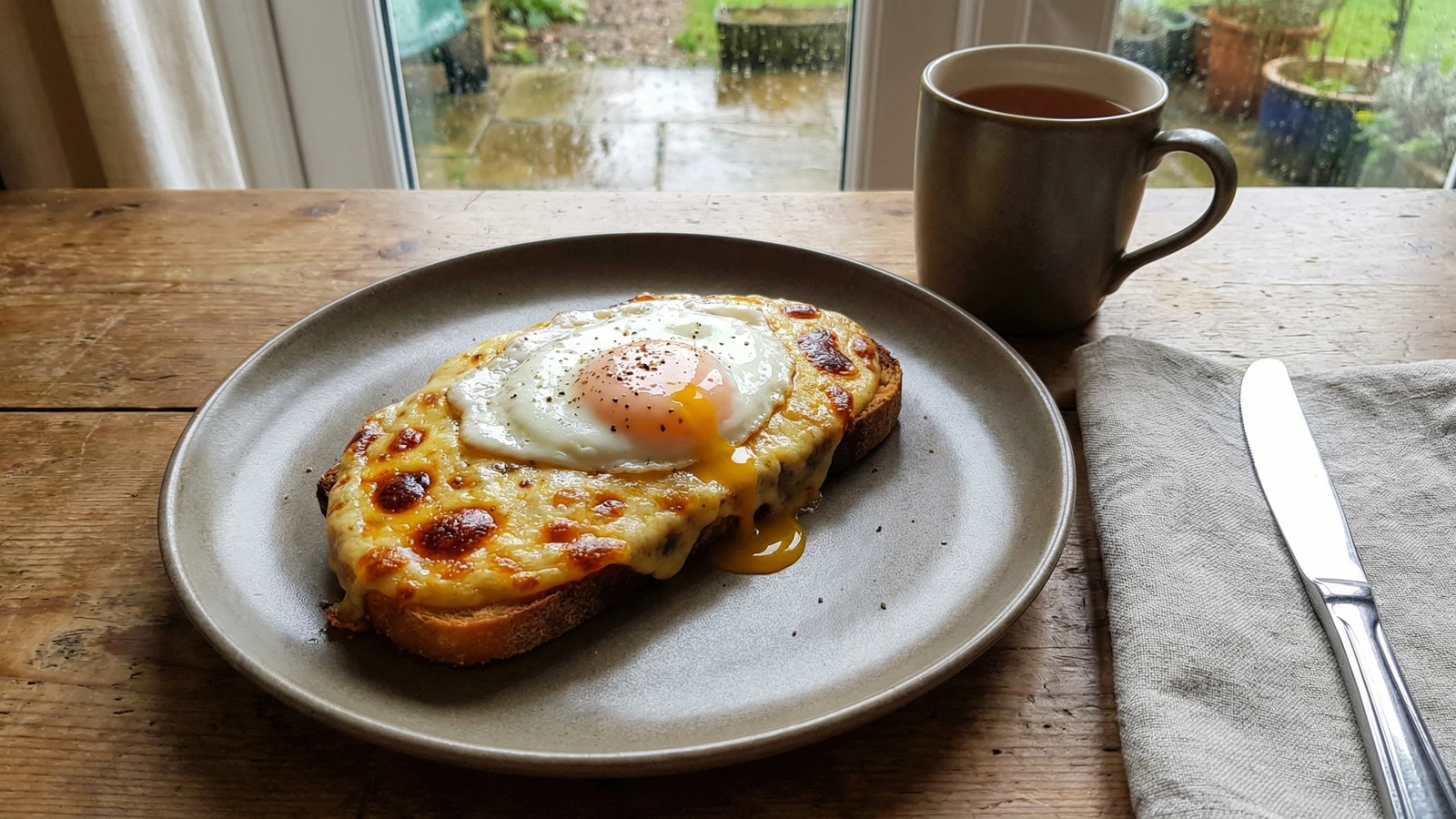
Welsh rarebit crowned with a fried egg, the yolk splitting over bubbled cheese and mustard, the sort of plate that turns a slow morning into something you'll remember by Tuesday.
Acold Saturday. Rain on the window since dawn. The kind of morning where the kitchen is the warmest room in the house and you stand at the hob in socks, waiting for the kettle. This is when buck rarebit makes sense. Not a weekday breakfast bolted down before work, but a slow, deliberate late morning meal that says: we're not going anywhere for a while.
Rarebit is already one of the best things you can do with cheese and bread. The sauce, sharp with mustard and darkened with a splash of ale, bubbles under the grill until it blisters and smells of something you'd cross the room for. But the "buck" is the thing that lifts it from very good to quietly magnificent: a fried egg, set on top, its yolk still soft and yielding. You cut into it and the yolk runs down over the cheese, pooling into the toast. There are few better feelings than putting a warm plate of this in front of someone on a grey morning.
I wrote it down in the notebook years ago: cheese, egg, toast, rain. Four words. It didn't need a fifth. The recipe is a conversation, not a contract. Use a cheddar that tastes of something. Use bread that can hold its ground. Fry the egg in butter, gently, so the white sets without crisping and the yolk stays liquid. We're only making breakfast. But we're making it properly.
The technique, the tradition, and the story behind every dish.
Discover Culinary AdvisorIngredients
mature cheddar
Quantity
200g
coarsely grated
unsalted butter
Quantity
15g, plus a little more for the eggs
plain flour
Quantity
1 tablespoon
ale or stout
Quantity
3 tablespoons
English mustard
Quantity
1 teaspoon
Worcestershire sauce
Quantity
a few shakes
egg yolk
Quantity
1
good bread
Quantity
2 thick slices
eggs
Quantity
2
black pepper
Quantity
to taste
| Ingredient | Quantity |
|---|---|
| mature cheddarcoarsely grated | 200g |
| unsalted butter | 15g, plus a little more for the eggs |
| plain flour | 1 tablespoon |
| ale or stout | 3 tablespoons |
| English mustard | 1 teaspoon |
| Worcestershire sauce | a few shakes |
| egg yolk | 1 |
| good bread | 2 thick slices |
| eggs | 2 |
| black pepper | to taste |
Equipment Needed
- •Small heavy-bottomed saucepan
- •Small frying pan
- •Grill or overhead broiler
- •Baking tray
Instructions
- 1
Make the cheese sauce
Melt the butter in a small, heavy-bottomed saucepan over a low heat. Stir in the flour and let it cook for a minute, stirring, until it smells biscuity and loses its raw edge. Pour in the ale. It will hiss and seize for a moment, then relax. Stir until smooth. Now add the grated cheese, a handful at a time, stirring after each addition until it melts into the sauce. It should be thick and glossy, the colour of old gold. Stir in the mustard and Worcestershire sauce. Take the pan off the heat and beat in the egg yolk quickly. Season with black pepper. No salt. The cheese and Worcestershire do that work for you.
Keep the heat low throughout. Cheese sauce split by too much heat is a sorry thing, and there is no putting it back together. Gentle and patient. The cheese will melt in its own time. - 2
Toast the bread
Toast the bread properly. Not the pale, half-hearted sort. You want it golden and firm enough to hold the weight of what is coming. Toast both sides under a hot grill or in a toaster, whatever is to hand. Set the slices on a baking tray lined with foil or parchment.
- 3
Grill the rarebit
Spoon the cheese mixture generously over each slice of toast, spreading it right to the edges so nothing burns bare. Be generous. This is not the moment for restraint. Put the tray under a hot grill, close to the heat, and watch it. The cheese will bubble and blister and turn the colour of a conker in two or three minutes. Pull it out when the surface is bubbling fiercely and has caught in patches of dark gold. Your nose will tell you: when it smells toasted and sharp and irresistible, it's done.
Spreading the cheese mixture to the edges of the bread is important. Exposed bread under a grill burns quickly, and burnt crusts taste of nothing good. - 4
Fry the eggs
While the rarebit is under the grill, melt a knob of butter in a small frying pan over a medium heat. When it foams, crack in the eggs. Let them cook gently, spooning a little of the hot butter over the whites if you like, until the whites are set and the yolks are still soft and trembling. This takes two or three minutes. Don't rush it. A fried egg cooked fast in screaming oil is a different thing entirely, and not what you want here.
Crack each egg into a small cup or ramekin first, then slide it into the pan. It gives you control and prevents shell fragments from ending up where they shouldn't. - 5
Assemble and serve
Slide each rarebit onto a warm plate. Set a fried egg on top. A grind of black pepper over the yolk. That's it. Cut into the egg and let the yolk run down over the bubbled cheese and the crisp toast beneath it. Eat immediately. This is not a dish that waits.
Chef Tips
- •The cheese is the whole thing. Use a mature cheddar with some bite, something that has had time to develop a proper sharpness. A mild, rubbery block will melt well enough but taste of nothing in particular. This is not the place to economise.
- •A proper English mustard, the hot sort, is what you want here. Not wholegrain, not Dijon. That clean, sinus-clearing heat cuts through the richness of the cheese. Start with a teaspoon and taste the sauce before you spread it. You can always add more.
- •The ale matters less than you'd think. A few tablespoons of whatever you have open, something dark and malty if possible, but a pale ale works fine. If you don't drink beer, a splash of dry cider or even milk will do. The point is liquid to loosen the sauce, and a faint bitterness to balance the cheese.
- •Serve it with a mug of strong tea or, if the morning has that sort of feeling, a glass of cold, dry cider. Nothing else on the plate. It doesn't need a side salad. It doesn't need garnishing. It needs eating.
Advance Preparation
- •The cheese sauce can be made a day ahead and refrigerated. It sets firm when cold, which actually makes it easier to spread on the toast. It will melt and bubble again under the grill as if nothing happened.
- •Toast the bread and spread the sauce in advance if you are making several at once, then grill them together. The eggs should always be fried at the last moment. A cold fried egg is no good to anyone.
Frequently Asked Questions
Nutrition Information
1 serving (about 260g)
Where cooking meets culture.
Culinary mentorship, cultural storytelling, and the editorial depth that makes cooking meaningful.
Explore Culinary Advisor