Culinary Advisor
A cooking platform built around craft, culture, and the stories behind what we eat.
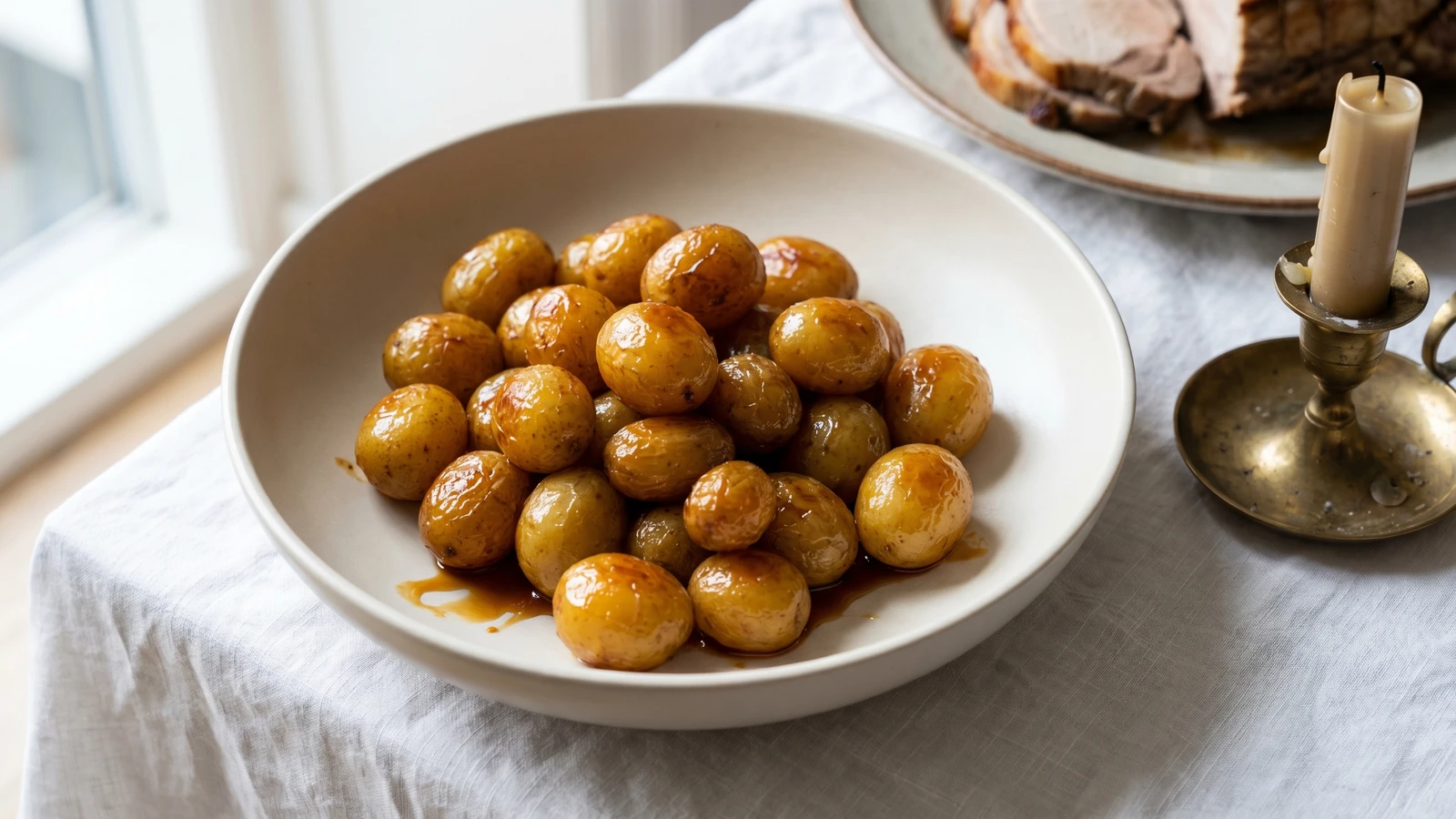
Brunede Kartofler
Created by Chef Freja
Small cold-boiled potatoes turned slowly through golden caramelized sugar and butter until every surface is sticky and glossy. The side dish that no Danish Christmas table can do without.
December in Denmark is dark by half past three. The candles are lit, the kitchen windows fog with warmth, and somewhere in the house a roast is in the oven. This is when brunede kartofler appear. Not before. They belong to Christmas the way candles belong to Advent, completely and without negotiation.
The dish is potatoes, sugar, and butter. Three ingredients. But there's a moment in the making of it that separates the cooks who've done it from those who haven't, and that's the caramel. You melt sugar in a dry pan, watching it turn from white to liquid gold, and you do not stir. You wait. You trust the heat. When the butter goes in and the cold potatoes follow, each one rolling through that amber sauce until it's coated and gleaming, you understand why this dish has survived centuries of Danish Christmases unchanged.
I want you to know two things before you begin. First: the potatoes must be cold. This is the rule that holds the whole dish together, and I'll explain why when we get there. Second: the caramel is forgiving if you pay attention. Watch the color, not the clock. You'll know when it's right. The pan will smell like toffee, the sugar will be clear and golden, and you'll feel the confidence that comes from understanding what's happening in front of you. That confidence is the gift I want to give you with this recipe.
Brunede kartofler have been part of the Danish Christmas meal since at least the mid-1800s, when sugar became affordable enough for everyday cooks to use it beyond baking. The technique of dry-caramelizing sugar and coating boiled potatoes likely evolved from the older European tradition of caramelizing root vegetables in fat and sugar to preserve them through winter. In Denmark, the dish became inseparable from the Christmas plate alongside and flæskesteg (roast pork with crackling) or roast duck, rødkål (braised red cabbage), and brown gravy. Regional debates persist: some families in Jutland insist on using only the smallest potatoes from the year's harvest, while cooks on Sjælland are more relaxed about size, so long as the caramel is right.
The technique, the tradition, and the story behind every dish.
Discover Culinary AdvisorIngredients
small waxy potatoes
Quantity
1kg
uniform in size
white granulated sugar
Quantity
100g
unsalted butter
Quantity
50g
fine sea salt
Quantity
a pinch
| Ingredient | Quantity |
|---|---|
| small waxy potatoesuniform in size | 1kg |
| white granulated sugar | 100g |
| unsalted butter | 50g |
| fine sea salt | a pinch |
Equipment Needed
- •Wide, heavy-bottomed pan or skillet, 28cm or larger
- •Wooden spoon
- •Large pot for boiling the potatoes
Instructions
- 1
Boil and cool the potatoes
Place the potatoes in a large pot of cold salted water. Bring to a gentle boil and cook until they are just tender, about fifteen to twenty minutes depending on their size. A knife should slip through with no resistance, but the potato should not be falling apart. Drain them and let them cool completely, then peel. This is important: the potatoes must be cold when they meet the caramel. Warm potatoes absorb the sugar and turn mushy. Cold potatoes hold their shape and develop that glossy, sticky shell that makes brunede kartofler what they are.
You can boil the potatoes the day before and keep them in the fridge. Cold from the fridge is perfect. In fact, many Danish cooks prefer it because the surface firms overnight and takes the caramel even better. - 2
Make the dry caramel
Spread the sugar in an even layer across the bottom of a wide, heavy pan. Set it over medium heat and leave it alone. Don't stir. Don't touch it. The sugar will begin to melt from the edges inward, turning liquid and golden. This takes patience, about five to seven minutes. When most of the sugar has melted and turned a clear amber color, gently swirl the pan to even it out. If you stir with a spoon, the sugar will crystallize into white clumps and you'll need to start over. The color you want is a warm honey gold. Not pale (the caramel will taste of nothing) and not dark brown (it will taste bitter). Trust your eyes.
If small lumps of unmelted sugar remain, leave the pan on the heat and keep swirling gently. They will dissolve. The moment you panic and reach for a spoon, the caramel fights back. - 3
Add the butter
When the caramel is a clear, even amber, add the butter in one piece. It will foam up vigorously. This is normal. Swirl the pan until the butter melts into the caramel and you have a smooth, glossy sauce the color of dark honey. The butter does two things: it stops the sugar from cooking further, and it rounds out the sweetness with a richness that sugar alone cannot give. Add a small pinch of salt. The salt is not optional. Without it, the coating is simply sweet. With it, the caramel has depth.
- 4
Toss the potatoes
Reduce the heat to low and add the cold, peeled potatoes to the pan. Using a wooden spoon or by gently shaking the pan, turn the potatoes through the caramel until every one is coated on all sides. Keep the heat low and let them warm through slowly, about eight to ten minutes, turning them now and then. The caramel will tighten around each potato as they heat, forming a thin, glossy shell that catches the light. You'll know when they're right: the surface is sticky and shining, deep gold all over, and the potatoes are warm through to the center.
Be gentle. A wooden spoon is better than a metal one here, and shaking the pan is better still. You want the potatoes whole and beautiful, not scraped and broken. - 5
Serve alongside the roast
Transfer the brunede kartofler to a warm serving dish. They belong next to the roast duck or flæskesteg, alongside red cabbage and gravy. Serve them while the caramel is still warm and glossy. As they cool, the coating sets and loses its shine, so bring them to the table with confidence and without delay. This is Christmas on a plate.
Chef Tips
- •Choose the smallest potatoes you can find, all roughly the same size. Uniformity matters because they need to cook evenly and look beautiful on the plate. In Denmark, we use a variety sometimes sold as "kartofler til brunede kartofler" at Christmas markets. Any small, firm waxy potato will do.
- •The caramel is the only tricky part, and the trick is restraint. Don't stir. Swirl. The difference between the two is the difference between a smooth golden caramel and a grainy crystallized mess. If it does crystallize, add a splash of water and start again. The sugar will re-melt.
- •Use real butter, not margarine. The butter carries flavor into the caramel that margarine simply cannot. This is Christmas cooking. It happens once a year. Use the good butter.
- •Brunede kartofler wait for nobody. They're best served immediately, while the caramel is warm and glossy. As they sit, the coating dulls and stiffens. Time your cooking so the potatoes are the last thing finished before the meal comes to the table.
Advance Preparation
- •Boil and peel the potatoes up to a day ahead. Store them uncovered in the fridge so the surface dries slightly. This gives the caramel something to grip.
- •The caramel and coating must be done just before serving. There is no way around this. Brunede kartofler cannot be reheated successfully. The caramel seizes and the potatoes lose their gloss. This is a dish that rewards your timing, not your planning.
Frequently Asked Questions
Nutrition Information
1 serving (about 185g)
Where cooking meets culture.
Culinary mentorship, cultural storytelling, and the editorial depth that makes cooking meaningful.
Explore Culinary Advisor