Culinary Advisor
A cooking platform built around craft, culture, and the stories behind what we eat.
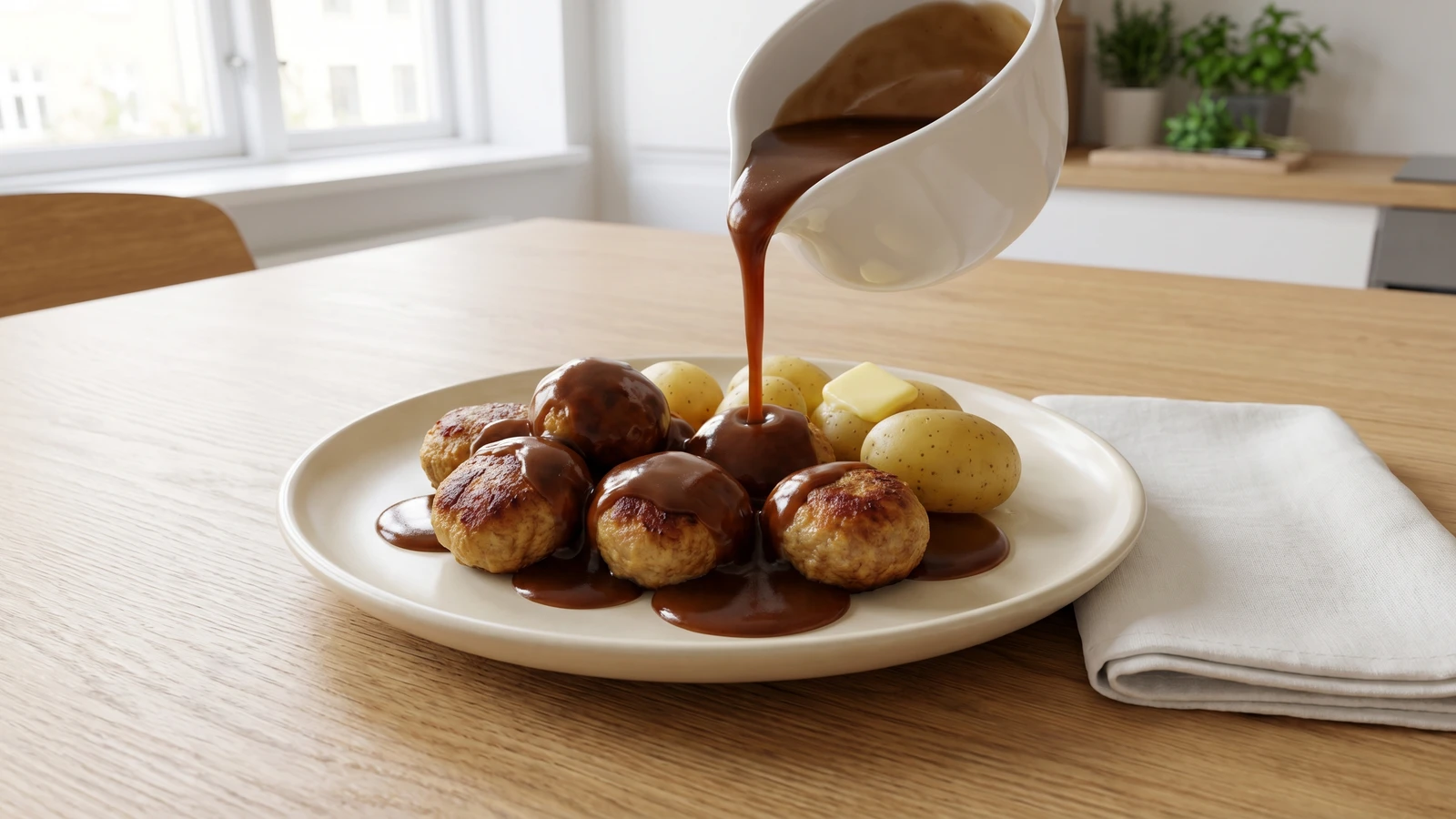
Brun Sovs
Created by Chef Freja
The patient, mahogany-dark gravy that Danish cooks build from butter, flour, and good stock. It goes over the meat, the potatoes, and the memory of every Sunday dinner you've ever sat down to.
The temperature drops, the roast goes in the oven, and somewhere between peeling the potatoes and setting the table, you make the gravy. Brun sovs is the quiet centre of Danish meat cooking. It doesn't announce itself. It holds everything else together.
This is a roux-based sauce, which means it starts with butter and flour cooked together until the raw taste disappears and something deeper takes its place: a warmth, a nuttiness, the smell of toast and browned butter. You add stock gradually, whisk out the lumps, and let it simmer until it coats a spoon. Then a small spoonful of sukkerkulor, the caramel colouring that gives the gravy its dark mahogany shine, and you have something that belongs poured over frikadeller on a Tuesday, over flæskesteg at Christmas, and over boiled potatoes any night the weather turns cold.
The technique is not difficult, but it asks for your attention. A roux punishes impatience. Too little time on the heat and it tastes of raw flour. Too much and it burns, and a burnt roux is the end of the road. I'll tell you exactly what to watch for, what colour, what smell, what moment to add the stock. You'll know when it's right. And once you've made it well, you won't reach for a packet again.
The roux-based gravy tradition in Denmark traces directly to French culinary influence, which arrived in Danish upper-class kitchens in the 18th century and had filtered into everyday home cooking by the mid-1800s. Brun sovs became the standard accompaniment to nearly every Danish meat dish, from Sunday roasts to weeknight frikadeller, and the addition of sukkerkulor, a concentrated caramel colouring, is a distinctly Danish touch that distinguishes it from French brown sauces. The technique of colouring with sukkerkulor was already well established in Danish household cookbooks by the time Froken Jensen's famous Copenhagen kitchen was serving it in the early 1900s.
The technique, the tradition, and the story behind every dish.
Discover Culinary AdvisorIngredients
unsalted butter
Quantity
40g
plain flour
Quantity
40g
beef or veal stock
Quantity
500ml
warm
pan drippings
Quantity
100ml
from roasted or fried meat
sukkerkulor
Quantity
1-2 teaspoons
soy sauce (optional)
Quantity
1 tablespoon
fine sea salt
Quantity
to taste
black pepper
Quantity
freshly ground, to taste
| Ingredient | Quantity |
|---|---|
| unsalted butter | 40g |
| plain flour | 40g |
| beef or veal stockwarm | 500ml |
| pan drippingsfrom roasted or fried meat | 100ml |
| sukkerkulor | 1-2 teaspoons |
| soy sauce (optional) | 1 tablespoon |
| fine sea salt | to taste |
| black pepper | freshly ground, to taste |
Equipment Needed
- •Heavy-bottomed saucepan, 1.5-2 litre
- •Whisk
- •Fine sieve
- •Warm serving jug or sauciere
Instructions
- 1
Collect the drippings
If you've roasted or fried meat, pour the pan drippings through a fine sieve into a measuring jug. You want the liquid and the browned bits, not the large pieces. Those browned bits are called fond, and they carry more flavor than anything else in the pan. If the drippings are very fatty, let them settle for a minute and spoon off the excess. A little fat is fine and good. Too much and the gravy goes greasy.
No drippings? You can still make brun sovs. Use all stock and add a splash of soy sauce for the savoury depth that drippings would have given you. It won't be the same, but it will still be worth making. - 2
Make the roux
Melt the butter in a heavy saucepan over medium heat. When it foams, add all the flour at once and stir it in with a wooden spoon. Keep stirring. The mixture will form a thick paste, and for the first minute it will smell raw and floury. That smell is the reason you don't rush this step. Cook the roux, stirring constantly, for three to four minutes. You're watching for a colour change: it should go from pale yellow to the colour of wet sand, then to light hazelnut brown. When it smells biscuity and warm, not floury, it's ready. This is where the flavour of the gravy is built. A pale roux tastes of nothing. A properly browned roux tastes of toast and butter and depth.
If black specks appear in the roux, you've gone too far and it's burnt. Start over. Burnt roux tastes acrid and no amount of stock will fix it. Better to lose two minutes than the whole sauce. - 3
Add the liquid gradually
Take the pan off the heat. Pour in about a third of the warm stock and the pan drippings, whisking steadily as you go. It will seize up and go thick immediately. That's right. Keep whisking until the mixture is smooth with no lumps. Return the pan to a medium heat and add another third of the stock, whisking again until smooth. Then the final third. The reason you add the liquid in stages is simple: if you pour it all in at once, the roux can't absorb it evenly and you get lumps that no amount of whisking will dissolve. Patience here saves you from straining later.
Warm stock blends into a roux more willingly than cold. If your stock is cold from the fridge, heat it in a small pan first. The difference in smoothness is immediate. - 4
Simmer and develop
Bring the gravy to a gentle simmer. You'll see it start to bubble softly at the edges. Let it cook at this pace for ten to twelve minutes, stirring often. Two things happen during this time. First, the flour loses its starchy taste completely. A gravy that hasn't simmered long enough has a papery quality at the back of the tongue. Second, the sauce reduces and concentrates. It should coat the back of a spoon in an even layer. Draw a line through it with your finger: if the line holds, the consistency is right.
- 5
Colour and season
Stir in one teaspoon of sukkerkulor. This is the ingredient that gives brun sovs its characteristic deep mahogany colour. It adds almost no sweetness, only colour and a faint caramel bitterness that rounds out the savouriness. Look at the gravy. If you want it darker, add a little more, half a teaspoon at a time. Now taste it. Season with salt and pepper. The gravy should taste deeply savoury, rounded, and warm. If it tastes flat, it needs salt. If it tastes one-dimensional, a teaspoon of soy sauce adds the complexity that a long-simmered stock would have built.
Sukkerkulor is sold in small bottles in Danish supermarkets under names like Parisian Essence. If you can't find it, you can make a simple caramel by melting two tablespoons of sugar in a dry pan until dark amber, then carefully adding a splash of water. It's not identical, but it serves the same purpose. - 6
Strain and serve
If the gravy is perfectly smooth, pour it straight into a warm jug or sauciere. If there are any lumps or bits of fond that didn't dissolve, pour it through a fine sieve. Don't be proud about this. Even experienced cooks strain their gravy. Serve immediately alongside whatever you've cooked: frikadeller, flæskesteg, medisterpølse, or just boiled potatoes with butter. The gravy goes over everything. That is not a suggestion. That is how it's done.
Chef Tips
- •Good stock is the single biggest factor. If your stock is watery, the gravy will be watery, and no amount of roux will fix that. Make stock from bones and time when you can. When you can't, buy the best concentrated stock you can find and taste it before you use it.
- •If you're making brun sovs to go with frikadeller, fry the frikadeller first and make the gravy in the same pan. Deglaze the fond with a splash of stock, scraping the browned bits loose, and use that as your liquid base. The gravy will taste of the meat without you adding anything else.
- •Brun sovs should pour, not plop. If it's too thick, thin it with a little warm stock, a tablespoon at a time. If it's too thin, simmer it a few minutes longer. The consistency you're after is cream that moves, not paste that sits.
- •A bay leaf simmered in the gravy for the last five minutes adds a quiet, herbal note that many Danish cooks swear by. Remove it before serving.
Advance Preparation
- •Brun sovs reheats well. Cool it completely, cover, and refrigerate for up to three days. Reheat gently over low heat, whisking to restore the smooth consistency. Add a splash of warm stock if it has thickened in the fridge.
- •You can freeze brun sovs in portions for up to two months. Defrost overnight in the fridge and reheat slowly. It may separate slightly on thawing; a good whisk over gentle heat brings it back together.
- •If you're planning a large meal, make the roux and add the stock up to the simmering stage, then hold it warm. Add the sukkerkulor and final seasoning just before serving, when you can taste it alongside the meat.
Frequently Asked Questions
Nutrition Information
1 serving (about 100g)
Where cooking meets culture.
Culinary mentorship, cultural storytelling, and the editorial depth that makes cooking meaningful.
Explore Culinary Advisor