Culinary Advisor
A cooking platform built around craft, culture, and the stories behind what we eat.
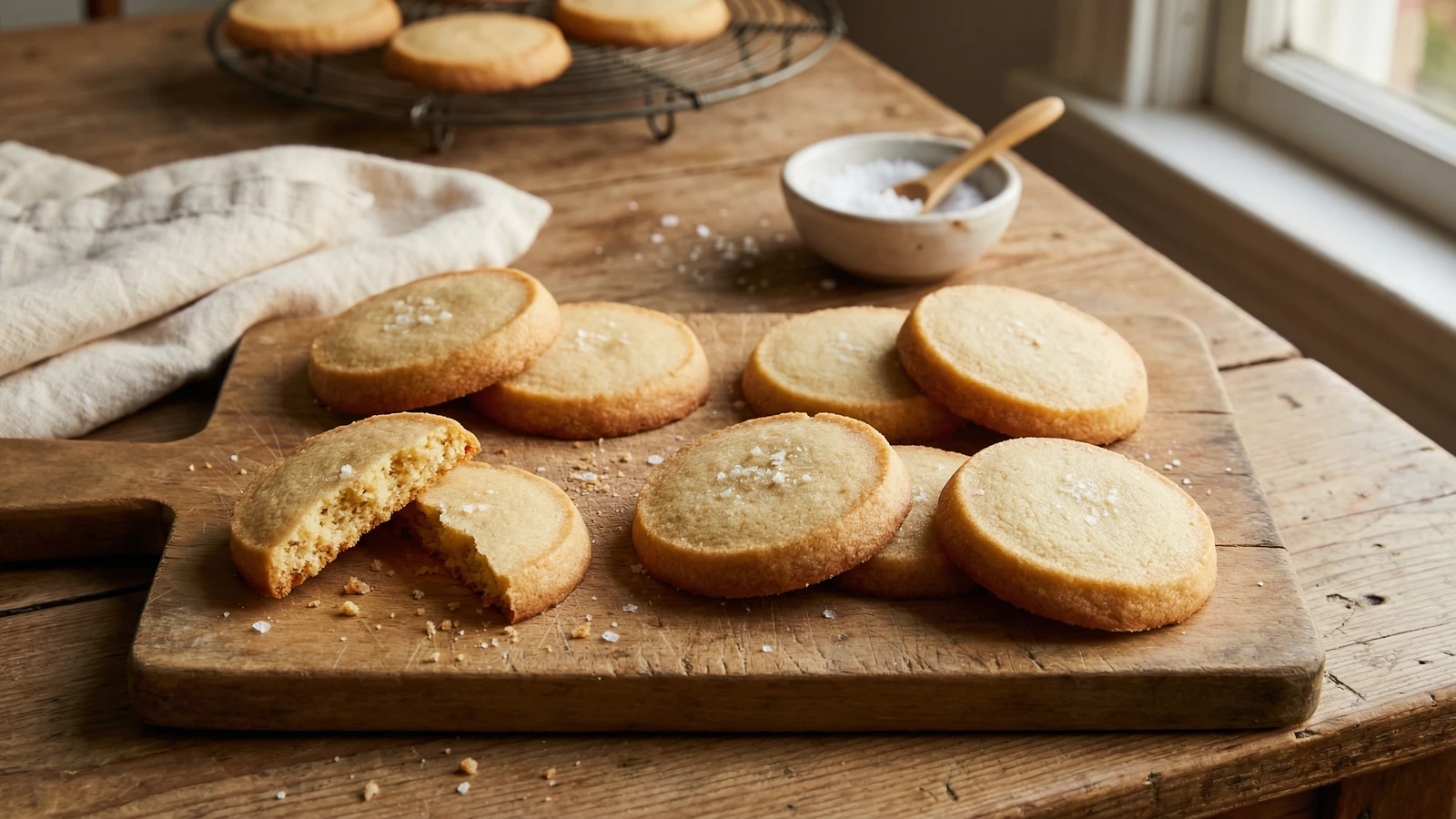
Brown Butter Sablés with Fleur de Sel
Created by Chef Ally
A French butter cookie made extraordinary by one patient act: browning the butter until it smells of hazelnuts and caramel, then finishing each round with crystals of fleur de sel that spark against the sweetness.
Start with the butter. Good butter, the kind with higher fat content and the faint tang of cultured cream. European-style if you can find it, from a dairy you trust if you are lucky enough to have one nearby. This cookie asks almost nothing of you except that you begin with something worth eating.
Browning butter is an act of attention. You stand at the stove and watch milk solids transform from pale foam to golden flecks that smell like toasting nuts. The French call this beurre noisette, hazelnut butter, and the name is precise. When that aroma fills your kitchen, you have arrived somewhere worth being.
Sablé means sandy, and the texture should live up to the name. These cookies shatter when you bite them, then dissolve on your tongue. The brown butter gives depth that plain butter cannot. The fleur de sel on top, those irregular crystals harvested from the surface of salt ponds, provides tiny explosions of contrast that make each bite more interesting than the last.
Every meal is a meaningful choice. A cookie can be mindless or it can be this: butter you watched transform, salt you placed by hand, something worth sharing with someone you love.
The technique, the tradition, and the story behind every dish.
Discover Culinary AdvisorIngredients
unsalted butter
Quantity
1 cup plus 2 tablespoons (255g)
preferably European-style
granulated sugar
Quantity
1 cup (200g)
large egg yolk
Quantity
1
at room temperature
pure vanilla extract
Quantity
1 teaspoon
all-purpose flour
Quantity
2 1/4 cups (280g)
fine sea salt
Quantity
1/2 teaspoon
fleur de sel
Quantity
for finishing
| Ingredient | Quantity |
|---|---|
| unsalted butterpreferably European-style | 1 cup plus 2 tablespoons (255g) |
| granulated sugar | 1 cup (200g) |
| large egg yolkat room temperature | 1 |
| pure vanilla extract | 1 teaspoon |
| all-purpose flour | 2 1/4 cups (280g) |
| fine sea salt | 1/2 teaspoon |
| fleur de sel | for finishing |
Equipment Needed
- •Light-colored saucepan for browning butter
- •Stand mixer or hand mixer
- •Sharp knife for slicing dough
- •Rimmed baking sheets
- •Wire cooling rack
Instructions
- 1
Brown the butter
Cut the butter into tablespoon-sized pieces and place in a light-colored saucepan. A light pan lets you watch the color change. Set over medium heat and let the butter melt completely, then continue cooking. It will foam and sputter as the water cooks off. Swirl the pan occasionally. After four to six minutes, the foam will subside and you will see golden-brown flecks settling at the bottom. The kitchen will smell like toasting hazelnuts. This is your moment. Remove from heat immediately.
Brown butter goes from perfect to burnt in seconds. Stay present. Watch. Smell. The moment it smells like nuts, you are there. - 2
Cool the brown butter
Pour the brown butter, including all the toasted milk solids at the bottom, into a heatproof bowl. These solids carry tremendous flavor. Scrape every bit. Let the butter cool until it is opaque and the consistency of soft mayonnaise, about forty-five minutes at room temperature. You can speed this by refrigerating for twenty minutes, stirring every five minutes to keep it uniform.
- 3
Cream butter and sugar
Add the sugar to the cooled brown butter. Beat with a stand mixer or hand mixer on medium speed until the mixture is light and fluffy, about three minutes. The color will pale slightly and the texture will become airy. Scrape down the sides of the bowl.
- 4
Add egg yolk and vanilla
Add the egg yolk and vanilla extract. Beat on medium speed until fully incorporated, about one minute. The mixture should look smooth and glossy, like buttercream.
- 5
Incorporate the flour
Whisk together the flour and fine sea salt in a separate bowl. Add to the butter mixture in two additions, mixing on low speed just until the flour disappears. The dough will be soft but workable, slightly sticky. Do not overmix. The sandy texture of a proper sablé comes from restraint here.
- 6
Shape the dough
Turn the dough onto a lightly floured surface and divide in half. Roll each portion into a log about one and a half inches in diameter. Work gently. Wrap each log tightly in parchment paper, twisting the ends like a candy wrapper. Refrigerate until firm, at least one hour or overnight.
For perfectly round cookies, place each wrapped log inside an empty paper towel tube, slit lengthwise. The tube prevents flat spots while the dough chills. - 7
Slice and arrange
Preheat your oven to 325°F. Line baking sheets with parchment paper. Unwrap the chilled dough and slice into rounds a quarter-inch thick, using a sharp knife and a gentle sawing motion. Arrange on prepared sheets with one inch between cookies. They spread very little.
- 8
Season with fleur de sel
Press a few flakes of fleur de sel onto the top of each cookie. Not too much. Three or four crystals are enough. The salt should catch the light and provide moments of contrast, not overwhelm. This is seasoning, not coverage.
- 9
Bake until golden
Bake for twelve to fourteen minutes, rotating the pan halfway through. The cookies are done when the edges turn golden and the centers look set but still pale. They will firm as they cool. Remove from oven and let rest on the baking sheet for five minutes before transferring to a wire rack.
- 10
Cool completely
Let the cookies cool completely on the wire rack. The texture transforms as they rest. Warm, they are tender. Cooled, they shatter. Both are wonderful. Store in an airtight container once completely cool.
Chef Tips
- •Seek out European-style butter with at least 82% butterfat. The higher fat content means less water, which means more flavor and a better texture. Plugrá, Kerrygold, or butter from a local creamery all work beautifully.
- •Fleur de sel is not interchangeable with table salt or even kosher salt. The crystals are delicate, irregular, and slightly moist. They stay distinct on the cookie surface rather than dissolving. This matters.
- •If your kitchen is warm, the dough may be too soft to slice cleanly. Return it to the refrigerator for fifteen minutes whenever it starts to stick or smear.
- •These cookies improve on the second day. The flavors meld and deepen. If you can wait, wait.
Advance Preparation
- •Dough logs can be refrigerated for up to five days, well wrapped. Slice and bake when you are ready.
- •Dough logs freeze beautifully for up to two months. Slice while still frozen, adding one to two minutes to the baking time.
- •Baked cookies keep in an airtight container at room temperature for up to one week. They also freeze well for two months.
Frequently Asked Questions
Nutrition Information
1 serving (about 21g)
Where cooking meets culture.
Culinary mentorship, cultural storytelling, and the editorial depth that makes cooking meaningful.
Explore Culinary Advisor