Culinary Advisor
A cooking platform built around craft, culture, and the stories behind what we eat.
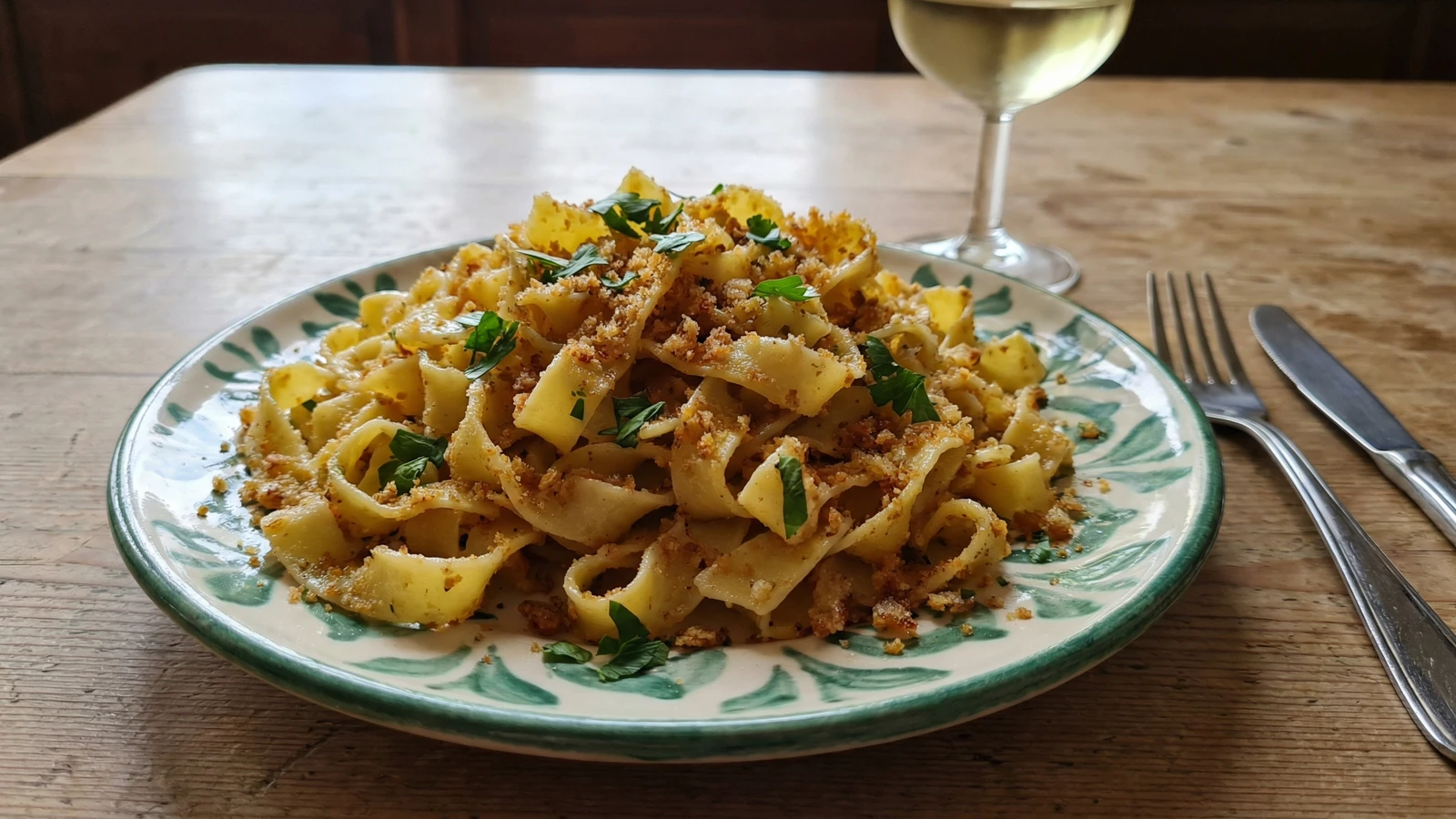
Bröselnudeln
Created by Chef Elsa
Broad egg noodles tossed in golden butter-toasted breadcrumbs until every strand is coated and crackling. Four ingredients, fifteen minutes, and a dish that has kept Austrian families fed and happy for centuries.
In my grandmother Eva's kitchen in Kent, Bröselnudeln was what appeared on the table when the day had been long and nobody wanted to think too hard about dinner. Eva would boil noodles, toast breadcrumbs in a shameful amount of butter, toss the two together, and set it down with a look that said: this is enough. It was always enough.
Gretel always said that Austrian cooking reveals itself most honestly in the simplest dishes. Anyone can hide behind a complicated recipe. But noodles in browned butter and breadcrumbs? There's nowhere to hide. The butter has to be good. The breadcrumbs have to be toasted properly, golden and fragrant, not burned and not pale. The noodles have to be cooked with intention, not boiled into submission. Three or four ingredients, and every single one of them is doing real work.
I still make Bröselnudeln at least once a week at home in Salzburg. Not at the restaurant, this isn't restaurant food. This is what I eat standing at my own kitchen counter at nine in the evening after service, or what I make for friends who show up without warning. It takes fifteen minutes. It costs almost nothing. And it tastes like the kind of cooking that doesn't need to prove anything to anyone, because it already knows exactly what it is.
Bröselnudeln belongs to the broad Austrian tradition of Mehlspeisen, which in its original meaning encompassed all flour-based dishes, savory and sweet, not only pastries and desserts. Breadcrumb-and-butter preparations appear across the former Habsburg lands, from Bohemia to Hungary to the Alpine regions, wherever frugal cooks needed to turn stale bread and pantry staples into something nourishing. In rural Austria, Bröselnudeln was often served as a main course on meatless days, particularly during Lent, and remains one of the most common everyday dishes in Austrian home kitchens today.
The technique, the tradition, and the story behind every dish.
Discover Culinary AdvisorIngredients
broad ribbon egg noodles (Bandnudeln)
Quantity
250g
unsalted butter
Quantity
80g
coarse white breadcrumbs (Semmelbrösel)
Quantity
100g
salt
Quantity
to taste
fresh flat-leaf parsley
Quantity
small handful
roughly chopped
| Ingredient | Quantity |
|---|---|
| broad ribbon egg noodles (Bandnudeln) | 250g |
| unsalted butter | 80g |
| coarse white breadcrumbs (Semmelbrösel) | 100g |
| salt | to taste |
| fresh flat-leaf parsleyroughly chopped | small handful |
Equipment Needed
- •Wide heavy-bottomed pan or skillet (28cm)
- •Large pot for boiling noodles
- •Box grater (if making fresh breadcrumbs)
Instructions
- 1
Cook the noodles
Bring a large pot of well-salted water to a rolling boil. Cook the Bandnudeln according to the packet instructions, but pull them out one minute early. They should be just barely tender, still with a bit of resistance at the center. They'll finish cooking in the butter. Drain them, but save a small cup of the starchy cooking water. You'll want it in a moment.
If you can find proper Austrian egg noodles at a Central European shop, use those. They're sturdier than Italian pasta and hold up to the butter and breadcrumbs without going soft. Broad pappardelle is your best substitute. - 2
Toast the breadcrumbs
While the noodles cook, melt the butter in a wide, heavy pan over medium heat. Let it foam. When the foam subsides and the butter starts to smell nutty and turn a light gold, add the breadcrumbs. Stir constantly. This is the moment that makes or breaks the whole dish. The breadcrumbs go from pale to golden to burned in less than a minute, so stay with the pan and keep everything moving. You want them deep gold, dry, and crackling, not dark brown.
Make your own Semmelbrösel if you can. Grate day-old Semmeln or white bread on the coarse side of a box grater. Shop-bought breadcrumbs are fine, but homemade ones toast more unevenly, and those irregular bits of crispy and chewy are part of the pleasure. - 3
Toss the noodles
Add the drained noodles straight into the pan with the toasted breadcrumbs. Toss everything together over medium heat for a minute, turning the noodles until every strand is coated in golden butter and clinging to crunchy Brösel. If the pan looks dry or the noodles are sticking, add a splash of that reserved cooking water. The starch helps everything bind together without making it heavy. Season with salt. Taste it. Adjust.
- 4
Finish and serve
Take the pan off the heat. Scatter the chopped parsley over the top and toss once more. Pile it onto warm plates and serve immediately. No garnish, no sauce, no fuss. Bröselnudeln doesn't need anything else. Mahlzeit!
Chef Tips
- •The butter is doing two jobs here: it's the cooking fat and it's the sauce. Use good unsalted butter, the kind you'd happily spread on bread. If your butter tastes flat or waxy, the whole dish will taste flat and waxy. There's nowhere to hide.
- •Don't crowd the breadcrumbs in the pan. If your pan is too small and the Brösel are piled on top of each other, they'll steam instead of toast and you'll end up with something soggy. Use the widest pan you have.
- •Some Austrian cooks add a pinch of sugar to the breadcrumbs while they toast. It's a small thing, barely perceptible, but it rounds out the nuttiness of the browned butter. Try it once and decide for yourself.
- •Bröselnudeln is traditionally served as a main course on its own. If you want a vegetable alongside, a simple green salad with a sharp vinaigrette is all it needs. Don't overthink it.
Advance Preparation
- •You can toast the breadcrumbs in butter up to an hour ahead and leave them in the pan. Reheat gently before adding the noodles.
- •Bröselnudeln does not keep well. The breadcrumbs lose their crunch within minutes of sitting. Make it, serve it, eat it.
Frequently Asked Questions
Nutrition Information
1 serving (about 340g)
Where cooking meets culture.
Culinary mentorship, cultural storytelling, and the editorial depth that makes cooking meaningful.
Explore Culinary Advisor