Culinary Advisor
A cooking platform built around craft, culture, and the stories behind what we eat.
Brisas do Lis
Created by
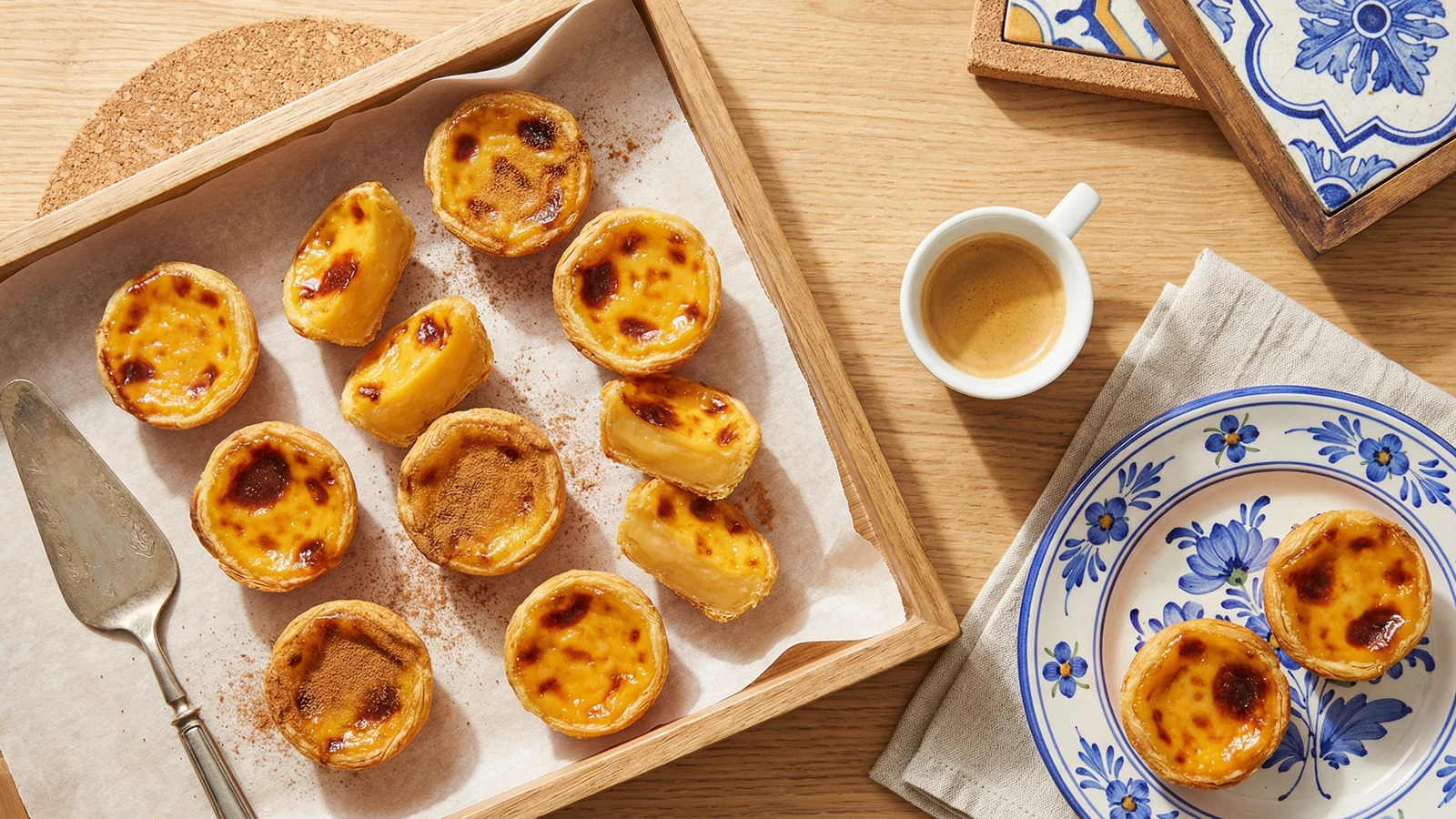
The little golden tarts of Leiria, named for the river that runs through the city. Egg yolks and sugar transformed by nuns into something that dissolves on the tongue like a prayer.
Some sweets carry the weight of centuries in every bite. Brisas do Lis are one of them.
I first tasted these in Leiria on a trip to document recipes from the central regions. An elderly baker, Dona Fernanda, made them in a kitchen that hadn't changed since her mother's time. The filling was pure gold, that deep amber that only comes from good eggs and patient stirring. She told me the name means "breezes of the Lis," after the river that cuts through the city. Light as a breeze, she said. That's what they should be.
These pastries come from the convents, like so many of our greatest sweets. The nuns used egg whites to starch their habits and had yolks left over by the dozen. What do you do with all those yolks? You make something beautiful. You make doces conventuais. You make Brisas do Lis.
The technique requires patience. The sugar syrup must reach the right consistency. The yolks must be stirred constantly over gentle heat until they thicken into something that barely holds its shape. Rush it and you get scrambled eggs. Give it time and you get silk. Dona Fernanda's hands moved slowly, steadily, the same rhythm her mother taught her, the same rhythm the nuns perfected centuries ago. As avós sabem. The grandmothers know.
Brisas do Lis emerged from the convents of Leiria, likely the Monastery of Santa Clara, during the 17th or 18th century when egg-based sweets became the signature of Portuguese conventual baking. The name references the River Lis, which flows through Leiria, and speaks to the pastry's delicate, light character. Like many doces conventuais, the recipe survived the dissolution of the monasteries because local bakers preserved what the nuns had perfected.
The technique, the tradition, and the story behind every dish.
Discover Culinary AdvisorIngredients
all-purpose flour
Quantity
250g
cold unsalted butter
Quantity
125g
cubed
powdered sugar
Quantity
50g
egg yolk (for pastry)
Quantity
1
cold water
Quantity
2-3 tablespoons
salt
Quantity
pinch
egg yolks (for filling)
Quantity
12
granulated sugar
Quantity
300g
water
Quantity
150ml
Portuguese cinnamon
Quantity
1 teaspoon
lemon
Quantity
1
zested
| Ingredient | Quantity |
|---|---|
| all-purpose flour | 250g |
| cold unsalted buttercubed | 125g |
| powdered sugar | 50g |
| egg yolk (for pastry) | 1 |
| cold water | 2-3 tablespoons |
| salt | pinch |
| egg yolks (for filling) | 12 |
| granulated sugar | 300g |
| water | 150ml |
| Portuguese cinnamon | 1 teaspoon |
| lemonzested | 1 |
Equipment Needed
- •24-cup mini tart pan or individual tart molds
- •Heavy-bottomed saucepan
- •Wooden spoon
- •Candy thermometer (optional but helpful)
- •Rolling pin
Instructions
- 1
Make the pastry
In a large bowl, combine the flour, powdered sugar, and salt. Add the cold butter cubes and work with your fingertips until the mixture resembles coarse breadcrumbs. Add the egg yolk and enough cold water to bring the dough together. Don't overwork it. Wrap in plastic and refrigerate for at least 30 minutes.
Cold butter is essential. If the butter gets warm, the pastry will be tough instead of tender. Work quickly with cool hands. - 2
Prepare the tart shells
Roll the chilled dough to about 3mm thickness. Cut circles to fit your tart molds, pressing gently into the sides. The shells should be thin, delicate. Prick the bottoms with a fork. Refrigerate while you make the filling.
- 3
Make the sugar syrup
Combine the sugar and water in a heavy saucepan. Stir over medium heat until the sugar dissolves completely. Stop stirring and let it simmer until it reaches ponto de pérola, the pearl stage, about 110°C (230°F). The syrup should form a thin thread when dropped from a spoon. Add the cinnamon and lemon zest. Remove from heat and let cool for 5 minutes.
If you don't have a thermometer, dip a spoon in the syrup and let it drip. When it forms a thread that holds together briefly before breaking, you're there. - 4
Cook the egg yolk filling
Whisk the 12 egg yolks until smooth. Slowly pour the warm syrup into the yolks, whisking constantly. Return everything to the saucepan over very low heat. Stir continuously with a wooden spoon, scraping the bottom and sides. The mixture will thicken gradually over 10 to 15 minutes. You're looking for a consistency that coats the spoon heavily and holds a brief trail when you drag your finger through it. Don't rush. Don't stop stirring. The moment you stop, you get lumps.
Dona Fernanda told me her mother counted her stirring, one thousand strokes, always the same direction. I don't count, but I understand the point. This step demands your full attention. - 5
Fill and bake
Preheat your oven to 180°C (350°F). Fill each pastry shell about two-thirds full with the egg yolk filling. Don't overfill; the mixture puffs slightly as it bakes. Bake for 15 to 18 minutes until the pastry is golden and the filling is set with a slight wobble in the center. The tops should have golden spots, almost like a pastel de nata but more delicate.
- 6
Cool and serve
Let the tarts cool in their molds for 10 minutes before carefully removing. They're fragile when warm. Serve at room temperature. These are best eaten within a day or two, though they rarely last that long. Dust with cinnamon if you like. In Leiria, some do, some don't. I leave that to you.
Chef Tips
- •The quality of eggs matters enormously here. Farm eggs with deep orange yolks produce a richer color and flavor. If your eggs are pale, your brisas will be pale. Seek out the best eggs you can find.
- •Portuguese cinnamon (canela) is softer and sweeter than cassia cinnamon. If you can source it, it makes a difference. Look for Ceylon cinnamon as a substitute.
- •The filling can be made a day ahead and refrigerated. Bring to room temperature before filling the shells, as cold filling won't spread evenly.
- •Don't be tempted to use a higher heat to speed up the filling. Low and slow is the only way. The convents had nothing but time, and their sweets show it.
Advance Preparation
- •The pastry dough can be made up to 2 days ahead and refrigerated, or frozen for up to 1 month.
- •The egg yolk filling can be prepared a day ahead, covered directly with plastic wrap touching the surface to prevent a skin, and refrigerated.
- •Baked tarts are best eaten within 1 to 2 days. Store at room temperature in an airtight container; refrigeration dulls the pastry.
Frequently Asked Questions
Nutrition Information
1 serving (about 40g)
Where cooking meets culture.
Culinary mentorship, cultural storytelling, and the editorial depth that makes cooking meaningful.
Explore Culinary Advisor