Culinary Advisor
A cooking platform built around craft, culture, and the stories behind what we eat.
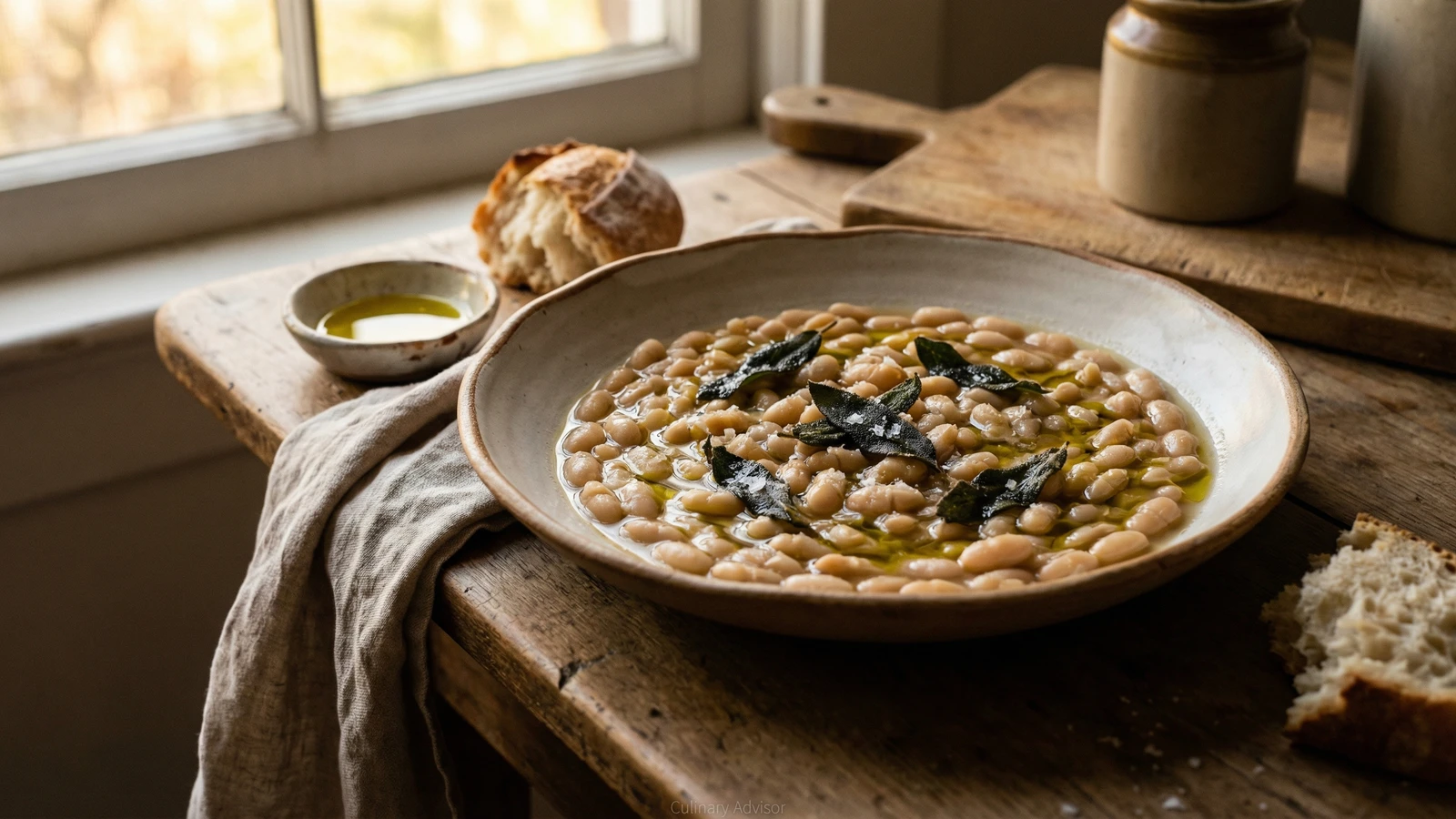
Braised White Beans with Sage
Created by Chef Ally
Creamy cannellini beans, slow-simmered with aromatics until they release their starch into a silky broth, crowned with shattering fried sage and the greenest olive oil you can find.
Start with the beans. Good dried beans, the kind you find at a farmers' market or order from a small farm, are not the chalky pellets that have languished in a supermarket bin for years. They are alive with flavor, creamy when cooked, and they transform a pot of water into something worth eating with a spoon.
This dish is Italian in spirit but belongs to anyone who has stood at a market stall and asked the grower when the beans were harvested. The technique is simple: you soften aromatics, add beans and water, and wait. The beans do the rest, releasing their starch into the cooking liquid until it becomes silky and rich. You are not making the dish so much as letting it happen.
The sage matters. Fresh sage from a fall garden has a musky, almost camphor quality that frying transforms into something nutty and crisp. It shatters when you bite into it. A generous pour of grassy olive oil at the end pulls everything together. This is food that feeds a crowd, improves the next day, and costs almost nothing. Every meal is a meaningful choice, and this one says you trust the ingredient to carry the dish.
The technique, the tradition, and the story behind every dish.
Discover Culinary AdvisorIngredients
dried cannellini beans
Quantity
1 pound
sorted and rinsed
extra-virgin olive oil
Quantity
1/4 cup, plus more for finishing
yellow onion
Quantity
1 medium
diced
garlic cloves
Quantity
4
smashed
celery stalks
Quantity
2
diced
carrot
Quantity
1 small
diced
fresh rosemary
Quantity
1 sprig
water or vegetable stock
Quantity
6 cups
fine sea salt
Quantity
1 teaspoon, plus more to taste
black pepper
Quantity
1/2 teaspoon
freshly cracked
fresh sage leaves
Quantity
20
flaky sea salt
Quantity
for finishing
| Ingredient | Quantity |
|---|---|
| dried cannellini beanssorted and rinsed | 1 pound |
| extra-virgin olive oil | 1/4 cup, plus more for finishing |
| yellow oniondiced | 1 medium |
| garlic clovessmashed | 4 |
| celery stalksdiced | 2 |
| carrotdiced | 1 small |
| fresh rosemary | 1 sprig |
| water or vegetable stock | 6 cups |
| fine sea salt | 1 teaspoon, plus more to taste |
| black pepperfreshly cracked | 1/2 teaspoon |
| fresh sage leaves | 20 |
| flaky sea salt | for finishing |
Equipment Needed
- •Dutch oven or heavy-bottomed pot with lid
- •Small skillet for frying sage
- •Slotted spoon
Instructions
- 1
Soak the beans
Cover the beans with cold water by three inches and let them soak overnight, or for at least eight hours. Dried beans from a good source, purchased recently and stored properly, will cook more evenly than beans that have sat on a shelf for years. The soaking softens the skins and begins the process of transformation.
If you forgot to soak, cover beans with water, bring to a boil for two minutes, then let stand covered for one hour. It works, though overnight is better. - 2
Build the aromatic base
Drain and rinse the soaked beans. In a heavy pot or Dutch oven, warm the olive oil over medium heat. Add the onion, celery, and carrot. Cook gently, stirring occasionally, until the vegetables soften and turn translucent, about eight minutes. You want sweetness, not color. Add the smashed garlic and cook one minute more until fragrant.
- 3
Add beans and liquid
Add the drained beans to the pot along with the rosemary sprig. Pour in the water or stock. The liquid should cover the beans by about two inches. Bring everything to a gentle simmer over medium heat. You will see small bubbles rising lazily to the surface. This is what you want.
Do not add salt yet. Salt added too early can toughen the bean skins. Patience here rewards you later. - 4
Braise until creamy
Reduce heat to low, cover the pot with the lid slightly ajar, and let the beans cook at the barest simmer for one hour to one hour and fifteen minutes. Stir gently every twenty minutes, adding a splash of water if the liquid reduces too much. The beans are ready when they are completely tender, creamy inside, and some have begun to break apart and thicken the cooking liquid into something silky.
- 5
Season the beans
Remove the rosemary sprig. Stir in one teaspoon of fine sea salt and the black pepper. Taste. The beans should taste of themselves, gently seasoned, with a brothy richness from the aromatics. Adjust salt as needed. Let them rest off heat while you prepare the sage.
- 6
Fry the sage leaves
Pour enough olive oil into a small skillet to cover the bottom generously, about three tablespoons. Heat over medium until the oil shimmers. Add the sage leaves in a single layer, working in batches if necessary. Fry for thirty seconds to one minute until the leaves darken slightly, turn crisp, and the sizzling subsides. Transfer to a paper towel. They will crisp further as they cool.
Save the sage-infused frying oil. Drizzle it over the finished beans for another layer of flavor. - 7
Serve with intention
Ladle the warm beans into shallow bowls, making sure each portion has plenty of the silky cooking liquid. Drizzle generously with your best olive oil. Scatter the fried sage leaves over the top. Finish with a pinch of flaky sea salt. Serve with crusty bread for soaking up the broth. This is a dish that asks nothing more of you than good ingredients and time.
Chef Tips
- •Ask when the beans were harvested. Beans from the current year's crop cook faster and taste better. Old beans never fully soften no matter how long you cook them.
- •Sage is abundant in autumn gardens and at fall markets. Look for leaves that are velvety and gray-green, not wilted or blackened at the edges. If you grow it yourself, harvest in the morning after the dew has dried.
- •Your finishing olive oil should be something you would happily drink from a spoon. A peppery, grassy oil from the new harvest is ideal. This is not the moment for neutral oil.
- •Leftover beans thicken as they cool. When reheating, add a splash of water to loosen them back to that silky consistency.
Advance Preparation
- •Beans can be braised up to three days ahead and refrigerated in their cooking liquid. The flavor deepens as they rest. Reheat gently, adding water as needed.
- •Fry the sage leaves just before serving. They lose their crispness within an hour.
- •This dish freezes well for up to two months. Thaw overnight in the refrigerator and reheat slowly on the stovetop.
Frequently Asked Questions
Nutrition Information
1 serving (about 280g)
Where cooking meets culture.
Culinary mentorship, cultural storytelling, and the editorial depth that makes cooking meaningful.
Explore Culinary Advisor