Culinary Advisor
A cooking platform built around craft, culture, and the stories behind what we eat.
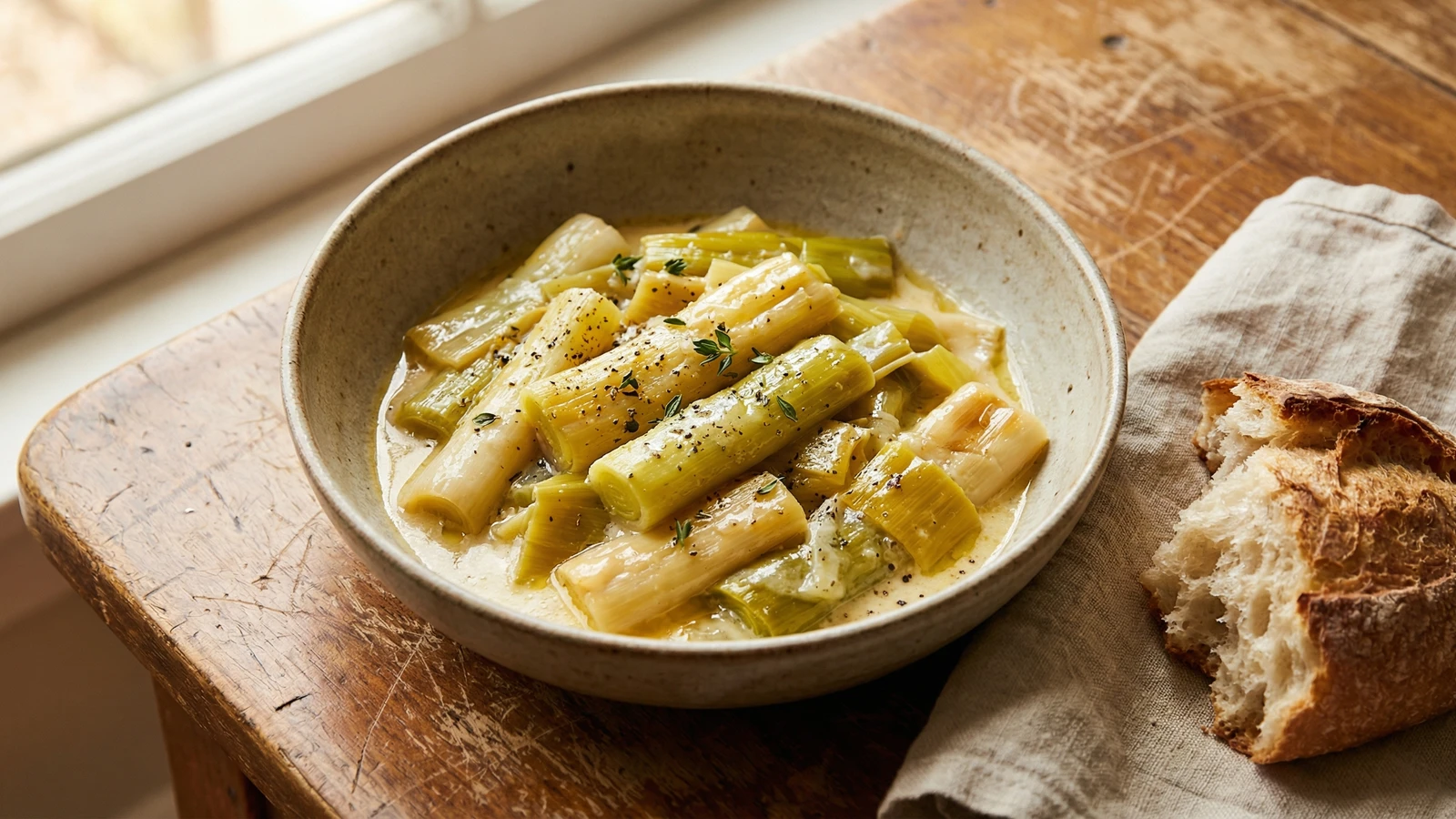
Braised Leeks in Butter and Cream
Created by Chef Thomas
Leeks surrendered to butter and cream until they turn silky, sweet and yielding, the kind of side dish that quietly becomes the reason you sat down to dinner in the first place.
January. The garden is bare except for the leeks, standing in their rows like patient sentries, unbothered by the frost. This is their season. They've been in the ground since spring, thickening slowly, and the cold has turned their sugars up. A leek pulled from frozen soil in January tastes different from one bought in a plastic sleeve in July. Sweeter. More itself. If you can get them from a garden or a market stall where someone grew them, you'll taste the difference in the pan.
This is not a complicated dish. Butter, cream, leeks, heat, time. That's the whole of it. The leeks go into the butter and start to soften, then the cream goes in and everything braises together until the leeks have gone from firm and fibrous to something silky and yielding that barely holds its shape on the spoon. The sauce isn't really a sauce. It's what happens when good cream reduces around good vegetables in a warm pan. You don't make it. It makes itself.
I cook this more often than almost anything else between November and March. Beside a piece of fish. Next to a roast chicken. On its own with bread, if that's the kind of evening it is. I wrote it down in the notebook years ago, just three words: leeks, butter, cream. It didn't need more. Some recipes are so simple they barely qualify as recipes at all. A conversation, not a contract. Your kitchen, your rules.
The technique, the tradition, and the story behind every dish.
Discover Culinary AdvisorIngredients
leeks
Quantity
4 large
trimmed, halved lengthways, washed and cut into 3cm lengths
unsalted butter
Quantity
40g
double cream
Quantity
150ml
fine sea salt
Quantity
to taste
black pepper
Quantity
to taste
bay leaf
Quantity
1
thyme
Quantity
a few sprigs
lemon juice (optional)
Quantity
a squeeze
| Ingredient | Quantity |
|---|---|
| leekstrimmed, halved lengthways, washed and cut into 3cm lengths | 4 large |
| unsalted butter | 40g |
| double cream | 150ml |
| fine sea salt | to taste |
| black pepper | to taste |
| bay leaf | 1 |
| thyme | a few sprigs |
| lemon juice (optional) | a squeeze |
Equipment Needed
- •Wide, heavy-based sauté pan or shallow casserole with a lid
- •Tongs for turning the leeks gently
Instructions
- 1
Start the leeks in butter
Melt the butter in a wide, heavy pan over a gentle heat. When it foams, lay the leek pieces in a single layer, cut side down where you can. You want contact with the pan. Season with salt, tuck the bay leaf and thyme among them, and let them sit for a few minutes without stirring. The aim is a gentle sizzle, not a fierce one. If the butter starts to brown, turn the heat down. You're coaxing sweetness out of them, not forcing it.
A wide pan matters here. Crowded leeks stew rather than braise. Give them room and they'll reward you with golden edges instead of grey ones. - 2
Turn and soften
After four or five minutes, when the undersides have taken on a pale gold colour and the kitchen smells of butter and something faintly sweet, turn the leeks gently. They're fragile now. A pair of tongs is kinder than a spoon. Let the other side have its turn for another few minutes. The leeks should be starting to slump and soften, losing their rigid structure.
- 3
Add the cream
Pour in the cream. It will bubble up around the leeks and start to reduce almost immediately. Turn the heat to low, put a lid on slightly ajar, and let everything braise gently for twenty minutes or so. Check it now and then. Give the pan a gentle swirl. The cream will thicken and reduce, coating the leeks in something glossy and rich that's halfway between a sauce and a glaze. If it reduces too fast, add a splash of water. You want it loose enough to pool on the plate.
- 4
Finish and serve
When the leeks are completely tender, offering no resistance when you press them with the back of a spoon, they're done. Fish out the bay leaf and thyme stalks. Taste the sauce. It should be sweet from the leeks, rich from the butter and cream, and it will almost certainly need more salt than you think. A squeeze of lemon at the end lifts everything, cuts through the richness just enough. Spoon them onto a warm plate, sauce and all. Season with black pepper. That's dinner sorted.
The lemon isn't optional, not really. Without it, the dish can feel heavy and one-note. With it, the cream tastes brighter and the leeks taste more like themselves. Just a squeeze. Trust your tongue.
Chef Tips
- •Buy the best leeks you can find. Farmers' market leeks with soil still clinging to them will have more flavour than anything wrapped in plastic. Hold them. They should feel heavy and firm, with tight layers and no sliminess at the top. The darker green parts are tougher, but don't throw them away entirely. Slice them finely and add them to stock, or crisp them in butter for a garnish.
- •Don't rush the initial stage in butter. Those few minutes of gentle contact with the hot pan build a sweetness that carries the whole dish. If you skip straight to the cream, you'll have something pleasant but one-dimensional. The golden edges are where the flavour lives.
- •This sits happily in a warm oven for twenty minutes if dinner isn't quite ready. Cover the dish and keep it at a low heat. The leeks won't mind. They've been patient all their lives.
- •A grating of nutmeg, just a whisper, is the only addition I'd consider. It has an affinity with cream and with leeks that feels almost inevitable. But it isn't compulsory. Season and taste. Then taste again.
Advance Preparation
- •The leeks can be braised several hours ahead and reheated very gently on the hob with a splash of water to loosen the sauce. They soften further as they sit, which is no bad thing.
- •Keeps refrigerated for up to two days. Reheat slowly. The cream may separate slightly if you rush it, so patience serves you here as it does everywhere in this dish.
Frequently Asked Questions
Nutrition Information
1 serving (about 150g)
Where cooking meets culture.
Culinary mentorship, cultural storytelling, and the editorial depth that makes cooking meaningful.
Explore Culinary Advisor