Culinary Advisor
A cooking platform built around craft, culture, and the stories behind what we eat.
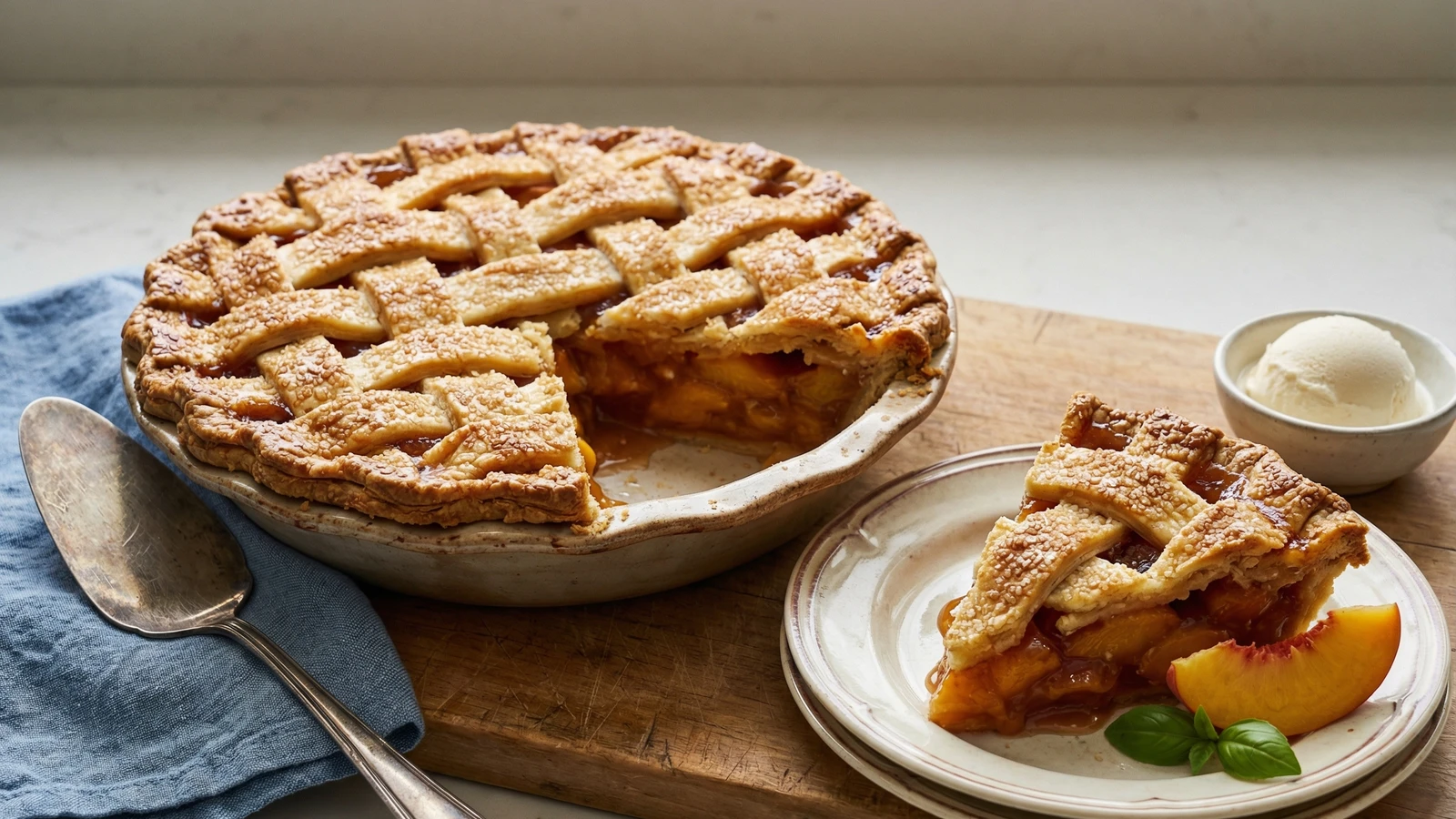
Bourbon Peach Pie with Lattice Crust
Created by
Sun-ripened freestone peaches soaked in good bourbon and pure vanilla, nestled beneath a golden lattice of flaky all-butter pastry. This is the pie that earned the South its reputation for hospitality.
Peach pie belongs to the American South the way bouillabaisse belongs to Marseille. It's not merely regional. It's constitutional. Every family claims their grandmother made the definitive version, and every one of them is correct within the boundaries of their own porch.
The bourbon here isn't decoration. It performs two functions: the alcohol extracts flavor compounds from the peaches that water cannot reach, and it adds a warm, oaky undertone that complements the fruit's natural sweetness. Use something you'd drink neat. Nothing expensive, but nothing you'd hide from company either.
Freestone peaches matter enormously. They release from their pits without clinging, which means clean slices and no frustrating surgery at the cutting board. Look for them from late June through August depending on your latitude. The flesh should yield slightly when pressed near the stem. If they're hard as baseballs, let them ripen on your counter for two or three days. A ripe peach announces itself across the room.
The lattice is traditional but not merely decorative. Those gaps allow steam to escape, preventing a soggy bottom crust. Yes, it takes an extra fifteen minutes to weave. The pie will repay your patience at every slice.
The technique, the tradition, and the story behind every dish.
Discover Culinary AdvisorIngredients
all-purpose flour
Quantity
2 1/2 cups (312g)
granulated sugar (for crust)
Quantity
1 tablespoon
fine sea salt (for crust)
Quantity
1 teaspoon
unsalted butter, very cold
Quantity
1 cup (2 sticks)
cut into 1/2-inch cubes
ice water
Quantity
6-8 tablespoons
ripe freestone peaches
Quantity
3 pounds (about 8 medium)
granulated sugar (for filling)
Quantity
3/4 cup (150g)
bourbon
Quantity
3 tablespoons
fresh lemon juice
Quantity
1 tablespoon
pure vanilla extract
Quantity
1 teaspoon
almond extract
Quantity
1/4 teaspoon
cornstarch
Quantity
1/4 cup (32g)
nutmeg
Quantity
1/4 teaspoon
freshly grated
fine sea salt (for filling)
Quantity
1/4 teaspoon
unsalted butter (for filling)
Quantity
2 tablespoons
cut into small pieces
large egg
Quantity
1
heavy cream
Quantity
1 tablespoon
turbinado sugar
Quantity
2 tablespoons
| Ingredient | Quantity |
|---|---|
| all-purpose flour | 2 1/2 cups (312g) |
| granulated sugar (for crust) | 1 tablespoon |
| fine sea salt (for crust) | 1 teaspoon |
| unsalted butter, very coldcut into 1/2-inch cubes | 1 cup (2 sticks) |
| ice water | 6-8 tablespoons |
| ripe freestone peaches | 3 pounds (about 8 medium) |
| granulated sugar (for filling) | 3/4 cup (150g) |
| bourbon | 3 tablespoons |
| fresh lemon juice | 1 tablespoon |
| pure vanilla extract | 1 teaspoon |
| almond extract | 1/4 teaspoon |
| cornstarch | 1/4 cup (32g) |
| nutmegfreshly grated | 1/4 teaspoon |
| fine sea salt (for filling) | 1/4 teaspoon |
| unsalted butter (for filling)cut into small pieces | 2 tablespoons |
| large egg | 1 |
| heavy cream | 1 tablespoon |
| turbinado sugar | 2 tablespoons |
Equipment Needed
- •9-inch pie plate (glass or light metal preferred)
- •Pastry blender or two knives
- •Rolling pin
- •Pizza wheel or sharp knife for lattice strips
- •Fine-mesh sieve
- •Pastry brush
- •Wire cooling rack
Instructions
- 1
Make the pie dough
Whisk the flour, sugar, and salt together in a large bowl. Add the cold butter cubes and work them into the flour using a pastry blender or your fingertips, pressing and smearing until you have a mix of pea-sized pieces and flattened shards. This variety creates flaky layers. Drizzle 6 tablespoons of ice water over the mixture and stir with a fork until the dough begins to clump. Squeeze a handful: if it holds together, you're done. If it crumbles, add more water one tablespoon at a time. The dough should look shaggy, not smooth.
Cold butter is non-negotiable. If your kitchen runs warm, freeze the cubes for ten minutes before starting. - 2
Chill the dough
Divide the dough in two, making one portion slightly larger than the other. The larger piece becomes your bottom crust. Flatten each into a disk about an inch thick, wrap tightly in plastic, and refrigerate for at least one hour or overnight. This rest allows the gluten to relax and the butter to firm up again, both essential for tender, flaky pastry.
- 3
Prepare the peaches
Bring a large pot of water to a boil. Score a small X on the bottom of each peach. Working in batches of three, lower the peaches into boiling water for 30 seconds, then transfer immediately to a bowl of ice water. The skins will slip off with gentle rubbing. Halve the peaches, remove the pits, and slice into half-inch wedges. You should have about 8 cups of sliced fruit.
- 4
Macerate the filling
Toss the peach slices with the sugar, bourbon, lemon juice, vanilla, and almond extract in a large bowl. Let this mixture sit at room temperature for 30 minutes, stirring once or twice. The peaches will release their juices and absorb the bourbon's warmth. You'll smell it from across the kitchen: that heady perfume of ripe summer fruit mingling with oak and vanilla. This is the heart of the pie.
Don't skip the maceration. It draws out moisture that would otherwise turn your bottom crust to paste. - 5
Roll the bottom crust
On a lightly floured surface, roll the larger dough disk into a circle about 13 inches in diameter and an eighth-inch thick. Roll from the center outward, rotating the dough a quarter turn after each pass to maintain an even circle. Transfer to a 9-inch pie plate by draping it over your rolling pin. Ease the dough into the corners without stretching. Stretched dough shrinks during baking. Trim the overhang to one inch beyond the plate's rim and refrigerate while you roll the lattice strips.
- 6
Cut the lattice strips
Roll the smaller dough disk into a rectangle roughly 12 by 10 inches. Using a sharp knife, pizza wheel, or fluted pastry cutter, slice the dough into strips about three-quarters of an inch wide. You'll need 12 to 14 strips. Slide them onto a parchment-lined baking sheet and refrigerate for 15 minutes. Cold strips weave without tearing.
- 7
Finish the filling
Drain the macerated peaches through a fine-mesh sieve set over a bowl, reserving the liquid. You should collect about half a cup of bourbon-peach syrup. Whisk the cornstarch, nutmeg, and salt into this liquid until smooth, then pour it back over the peaches and fold gently to coat every slice. The cornstarch thickens during baking without turning the filling gluey.
- 8
Fill and dot with butter
Mound the peach filling into the chilled pie shell, creating a slight dome in the center. The fruit will settle as it bakes. Scatter the small butter pieces over the top. These melt into the filling, adding richness and helping the juices thicken into a glossy glaze.
- 9
Weave the lattice
Lay half of the chilled strips across the pie in parallel lines, spacing them about an inch apart. Fold back every other strip halfway. Lay a perpendicular strip across the unfolded strips, then unfold the folded strips over it. Now fold back the strips that weren't folded before, lay another perpendicular strip, and unfold. Continue this over-under pattern until you've woven the entire top. Press the strip ends into the bottom crust overhang, fold the edges under themselves, and crimp decoratively. The lattice should look like a woven basket: tight enough to hold its shape but open enough to vent steam.
If the dough softens and becomes sticky, slide the whole pie into the freezer for ten minutes before continuing. - 10
Apply egg wash and sugar
Beat the egg with the heavy cream until smooth. Using a pastry brush, paint the entire lattice and crimped edge with this wash, taking care not to let it pool in the crevices. Sprinkle the turbinado sugar generously over the top. This coarse sugar won't melt completely, giving you that sparkle and crunch that separates a homemade pie from everything else.
- 11
Chill before baking
Place the assembled pie in the refrigerator for 20 minutes while you preheat the oven to 425°F. Set a rack in the lower third. Place a rimmed baking sheet on the rack below to catch any drips. This final chill firms the butter, ensuring maximum flakiness when that cold dough hits the hot oven.
- 12
Bake at high heat
Bake the pie at 425°F for 20 minutes. The high initial temperature sets the crust structure and begins browning the lattice. You'll hear the butter in the dough sizzle and see the edges start to turn golden. Don't open the oven door during this phase.
- 13
Reduce heat and finish
Lower the oven temperature to 375°F and continue baking for 35 to 45 minutes more. The pie is done when the lattice is deep golden brown, the filling bubbles visibly through the openings, and the juices look thick and syrupy rather than thin and watery. If the edges brown too quickly, tent them loosely with strips of aluminum foil.
- 14
Cool completely
Transfer the pie to a wire rack and let it cool for at least four hours before slicing. I know this tests your patience. But the filling needs time to set; cut too soon and you'll have peach soup. The pie should still be barely warm when you serve it, the filling holding its shape on the plate while the crust shatters at first bite. A scoop of vanilla ice cream alongside is traditional and correct.
Chef Tips
- •Seek out freestone varieties like Red Haven, Cresthaven, or Elberta. Clingstone peaches fight you at every cut and bruise easily.
- •The bourbon you choose matters. Look for something with vanilla and caramel notes: Maker's Mark, Buffalo Trace, or Evan Williams Single Barrel all work beautifully.
- •If your peaches lack sweetness (late season or underripe), increase the sugar by two tablespoons and add another teaspoon of lemon juice for balance.
- •A pie plate made of glass or light-colored metal produces the best bottom crust. Dark metal absorbs too much heat and can burn the bottom before the top finishes.
- •This pie tastes even better the next day, once the flavors have married overnight. Store loosely covered at room temperature for up to two days.
Advance Preparation
- •Pie dough can be made up to 3 days ahead and refrigerated, or frozen for up to 2 months. Thaw overnight in the refrigerator before rolling.
- •Peaches can be peeled and sliced up to 4 hours ahead. Toss with lemon juice to prevent browning and refrigerate until ready to macerate.
- •The fully assembled unbaked pie can be frozen for up to 1 month. Bake directly from frozen, adding 15 to 20 minutes to the total bake time.
- •Baked pie keeps at room temperature, loosely covered, for 2 days. Refrigerate for longer storage and bring to room temperature before serving.
Frequently Asked Questions
Nutrition Information
1 serving (about 350g)
Where cooking meets culture.
Culinary mentorship, cultural storytelling, and the editorial depth that makes cooking meaningful.
Explore Culinary Advisor