Culinary Advisor
A cooking platform built around craft, culture, and the stories behind what we eat.
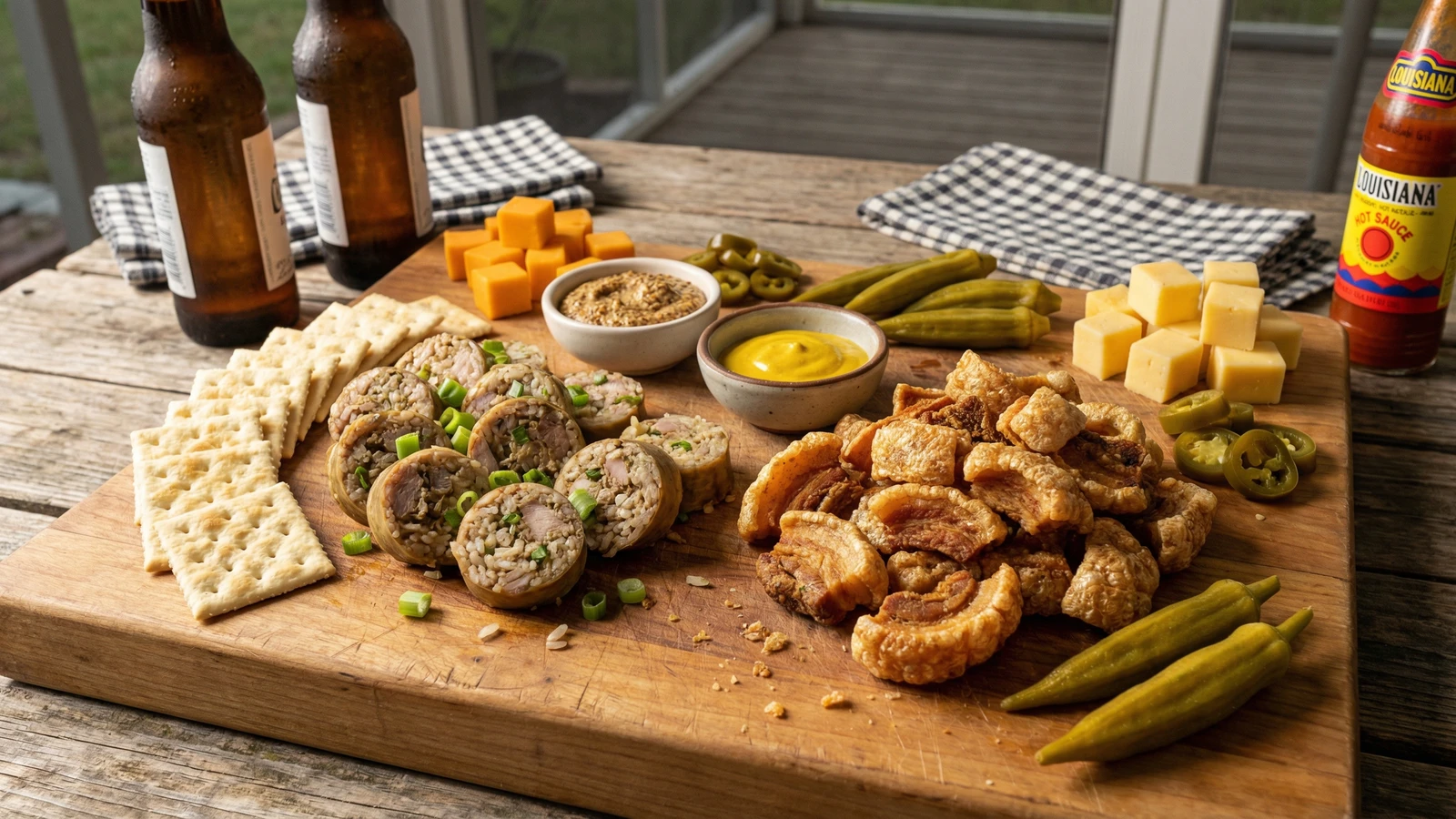
Boudin and Cracklin Board
Created by Chef Remy
The holy trinity of Louisiana snacking: warm, rice-stuffed boudin, shatteringly crisp cracklins, and sharp Creole mustard, all laid out on a board that'll make your guests feel like they just pulled off I-10 at the best meat market in Acadiana.
Every Louisiana cook knows the truth: some of the finest food in our state comes from gas stations. I'm not joking. Pull off the highway anywhere between Lafayette and Lake Charles, walk into a little market with a hand-painted sign, and you'll find boudin and cracklins that'll change your understanding of what snack food can be.
Boudin is the soul of Cajun country in sausage form. Pork, rice, onions, and spices all stuffed into a casing and steamed until the flavors marry into something greater than the parts. At Lagniappe, we've served thousands of pounds of it. The secret isn't complicated: good pork, proper seasoning, and treating it with respect when you warm it up. Boil it hard and you've got mush. Steam it gently and you've got magic.
Cracklins are the other half of this equation. Chunks of pork belly and skin, fried twice until they puff and shatter. The outside crackles between your teeth while the inside stays tender with ribbons of rich fat. My grandmother Evangeline used to make them fresh every fall when we'd butcher hogs. The smell of rendering pork fat still takes me right back to her kitchen.
Put them together on a board with sharp Creole mustard, some pickled vegetables, and a sleeve of saltines, and you've got the finest game day spread Louisiana has to offer. This isn't fancy food. This is honest food, the kind that brings people together around a table with cold beers and good conversation.
The technique, the tradition, and the story behind every dish.
Discover Culinary AdvisorIngredients
fresh boudin links
Quantity
2 pounds
cracklins (gratons)
Quantity
1 pound
Creole mustard
Quantity
1/2 cup
yellow mustard
Quantity
1/4 cup
pickled okra
Quantity
1 jar (16 oz)
pickled jalapeño slices
Quantity
1 jar (12 oz)
saltine crackers
Quantity
1 sleeve
sharp cheddar cheese
Quantity
8 ounces
cubed
pepper jelly (optional)
Quantity
1/4 cup
hot sauce (optional)
Quantity
for serving
| Ingredient | Quantity |
|---|---|
| fresh boudin links | 2 pounds |
| cracklins (gratons) | 1 pound |
| Creole mustard | 1/2 cup |
| yellow mustard | 1/4 cup |
| pickled okra | 1 jar (16 oz) |
| pickled jalapeño slices | 1 jar (12 oz) |
| saltine crackers | 1 sleeve |
| sharp cheddar cheesecubed | 8 ounces |
| pepper jelly (optional) | 1/4 cup |
| hot sauce (optional) | for serving |
Equipment Needed
- •Large pot with steamer basket or colander
- •Large wooden cutting board or sheet pan
- •Sharp knife
- •Small bowls or ramekins for condiments
Instructions
- 1
Set up your steamer
Fill a large pot with about two inches of water and bring it to a gentle simmer. Set a steamer basket or colander inside, making sure the water doesn't touch the bottom of the basket. This is how we warm boudin properly. The steam heats the sausage through without bursting the casing or turning the rice filling into paste.
If you don't have a steamer basket, you can poach the boudin directly in barely simmering water. The key word is barely. You want lazy bubbles, not a rolling boil. - 2
Steam the boudin
Place the boudin links in the steamer basket in a single layer. Cover the pot and let them steam for 15 to 20 minutes. The casings should feel taut but not ready to burst, and the sausage should be heated all the way through. Pick one up (carefully, it's hot) and press gently. It should give slightly but feel uniformly warm.
Fresh boudin from a good Cajun market is already fully cooked. You're just warming it through, not cooking it. This is why gentle heat matters so much. - 3
Slice the boudin
Transfer the warm boudin to a cutting board and let it rest for two minutes. This keeps the filling from spilling everywhere when you slice. Cut the links on a slight diagonal into rounds about one inch thick. The filling should hold together, showing off that beautiful mixture of pork and rice studded with green onion.
Some folks squeeze the filling out of the casing and eat it on crackers. That's perfectly acceptable. In fact, that's how most Cajuns eat it. Offer both options and let your guests choose. - 4
Prepare the cracklins
Spread the cracklins on a sheet pan and warm them in a 250 degree oven for five to ten minutes while you're slicing the boudin. This crisps them back up if they've softened at all. They should shatter when you bite into them. If they're chewy, they need more time. If they're burning, your oven is too hot.
Good cracklins are worth seeking out. Look for ones with a mix of crispy skin, tender meat, and pockets of rendered fat. The best ones come from Cajun meat markets, but some grocery stores in Louisiana carry decent versions. - 5
Arrange the condiments
Spoon the Creole mustard and yellow mustard into small bowls or ramekins. Do the same with the pepper jelly. Drain your pickled okra and jalapeños and arrange them in small dishes. These aren't just garnishes. The sharp, vinegary pickles cut through the richness of the pork. The mustard adds heat and tang. Every element on this board has a job to do.
- 6
Build the board
Start with your largest wooden cutting board or a sheet pan lined with parchment. Pile the warm boudin slices in one area, letting them overlap naturally. Mound the cracklins in another section. Scatter the cheese cubes around the board. Tuck in the bowls of mustard, pepper jelly, and pickled vegetables. Fan out the saltine crackers along one edge. Add a bottle of hot sauce for those who want extra heat.
- 7
Serve immediately
Set the board in the middle of your gathering and step back. This is communal food, meant to be eaten standing around the kitchen or the tailgate, cold beer in hand, reaching across each other for another piece. The boudin is best warm, so don't let it sit too long. At Lagniappe, we say the best compliment is an empty board.
Keep extra boudin warm in the steamer with the heat turned off. Replenish the board as needed. Cold boudin is still good, but warm boudin is transcendent.
Chef Tips
- •The best boudin comes from small Cajun meat markets, not big grocery stores. If you're not in Louisiana, look for online sources that ship fresh. It's worth the effort.
- •Cracklins are sometimes labeled 'gratons' at Cajun markets. They're the same thing. Avoid the pork rinds in the chip aisle. Those are a different product entirely.
- •Creole mustard is spicier and more complex than regular brown mustard. Zatarains makes a good one that's available nationwide. At Lagniappe, we make our own, but store-bought works fine.
- •This board scales easily. Figure about a quarter pound of boudin and two ounces of cracklins per person for a substantial snack, less if you're serving other food.
- •Leftover boudin makes excellent breakfast. Squeeze the filling into a hot skillet, crisp it up, and serve with eggs. Four generations of Boudreaux cooks have started their mornings this way.
Advance Preparation
- •Cracklins can be stored in an airtight container at room temperature for up to a week. Re-crisp in a low oven before serving.
- •Boudin should be purchased as close to serving time as possible. It can be refrigerated for two to three days but is best fresh.
- •The board itself cannot be assembled ahead. The boudin needs to be warm and the cracklins need to be crisp. Do your prep, then assemble right before guests arrive.
Frequently Asked Questions
Nutrition Information
1 serving (about 310g)
Where cooking meets culture.
Culinary mentorship, cultural storytelling, and the editorial depth that makes cooking meaningful.
Explore Culinary Advisor