Culinary Advisor
A cooking platform built around craft, culture, and the stories behind what we eat.
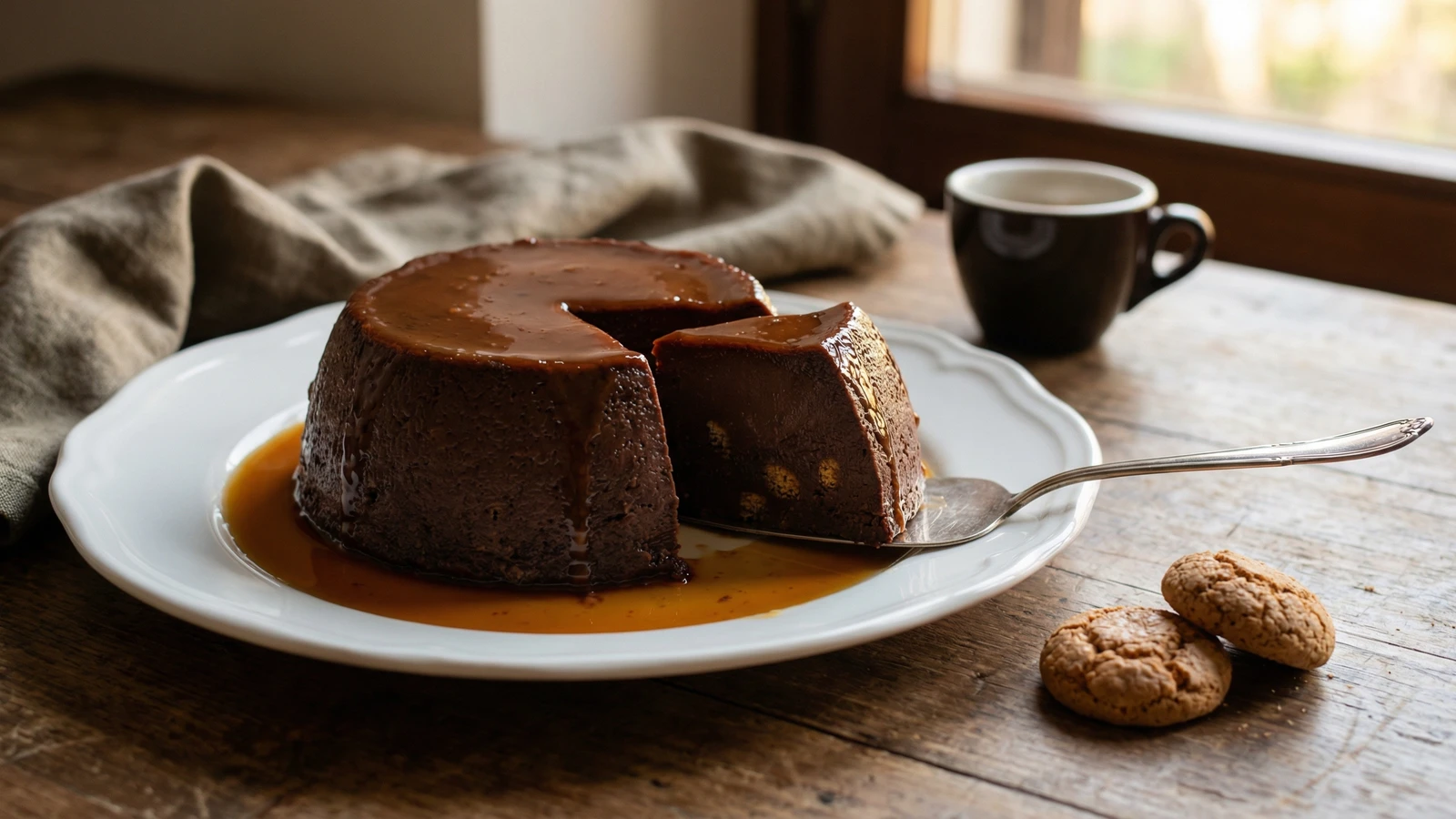
Bonet Piemontese
Created by Chef Graziella
The chocolate custard of Piedmont, dense with cocoa and crushed amaretti, crowned with bitter caramel. This is the dessert your Torinese grandmother made for feast days.
Panna cotta has seduced the world, but bonet is the dessert Piedmontese grandmothers actually made. It sat in the cold room overnight, waiting for Sunday pranzo. The children asked for it by name. No one asked for panna cotta because panna cotta was restaurant food, invented to impress tourists. Bonet was home.
The name means 'hat' in Piedmontese dialect, a reference to the copper mold that gave it shape. The custard is dense, almost fudgy, dark with cocoa and studded with crushed amaretti. The rum is not optional. It cuts through the richness and makes the chocolate sing. Without it, you have a pleasant dessert. With it, you have bonet.
This is a forgiving recipe if you understand one thing: custards demand gentle heat. Rush the oven and you will have sweet scrambled eggs surrounded by caramel. Give it time, let the water bath do its work, and you will unmold something that proves Piedmont understood chocolate long before anyone called it a chocolate region.
Bonet predates chocolate in Piedmont by several centuries. Medieval versions combined eggs, milk, and amaretti without cocoa, which arrived only after Spanish ships brought cacao from the Americas. By the 18th century, when Turin's chocolatiers were inventing gianduja and bicerin, the chocolate bonet had become the definitive version, the earlier recipes nearly forgotten.
The technique, the tradition, and the story behind every dish.
Discover Culinary AdvisorIngredients
granulated sugar
Quantity
1 cup, divided
water
Quantity
3 tablespoons
large eggs
Quantity
4
large egg yolks
Quantity
2
whole milk
Quantity
2 1/2 cups
Dutch-process cocoa powder
Quantity
1/3 cup
unsweetened
amaretti cookies
Quantity
4 ounces (about 20 small cookies)
finely crushed
dark rum
Quantity
3 tablespoons
pure vanilla extract
Quantity
1 teaspoon
| Ingredient | Quantity |
|---|---|
| granulated sugar | 1 cup, divided |
| water | 3 tablespoons |
| large eggs | 4 |
| large egg yolks | 2 |
| whole milk | 2 1/2 cups |
| Dutch-process cocoa powderunsweetened | 1/3 cup |
| amaretti cookiesfinely crushed | 4 ounces (about 20 small cookies) |
| dark rum | 3 tablespoons |
| pure vanilla extract | 1 teaspoon |
Equipment Needed
- •6-cup ring mold or 9-inch round cake pan
- •Large roasting pan for water bath
- •Fine-mesh sieve (optional)
- •Heavy-bottomed small saucepan for caramel
Instructions
- 1
Make the caramel
Combine half a cup of sugar with the water in a small heavy saucepan. Stir once to moisten the sugar, then stop stirring entirely. Place over medium-high heat and cook, swirling the pan occasionally but never stirring, until the sugar turns deep amber. This takes 8 to 10 minutes. Watch carefully in the final minutes. Caramel goes from perfect to burnt in seconds.
The caramel should be the color of dark honey, almost mahogany. Lighter caramel tastes merely sweet. Darker caramel provides the bitter edge that balances the custard. - 2
Coat the mold
Immediately pour the hot caramel into a 6-cup ring mold or 9-inch round cake pan. Wearing oven mitts, tilt the pan to coat the bottom and partway up the sides. Work quickly. The caramel hardens within a minute. Set aside while you prepare the custard. Preheat your oven to 325 degrees Fahrenheit.
- 3
Warm the milk
Pour the milk into a medium saucepan and heat over medium until small bubbles form around the edges. Do not boil. Remove from heat.
- 4
Build the custard base
In a large bowl, whisk the eggs and egg yolks with the remaining half cup of sugar until pale and slightly thickened, about 2 minutes. Sift in the cocoa powder and whisk until no lumps remain. The mixture will be thick and dark, like chocolate paste.
- 5
Temper the eggs
Whisking constantly, pour the warm milk into the chocolate mixture in a slow, steady stream. If you add it too fast, you will cook the eggs. Once combined, stir in the crushed amaretti, rum, and vanilla. The amaretti will absorb liquid and soften. Let the mixture rest 5 minutes.
Strain the custard through a fine-mesh sieve if you want a perfectly smooth texture. Traditional bonet has visible amaretti flecks. Both are correct. - 6
Prepare the water bath
Pour the custard into the caramel-lined mold. Place the mold inside a larger roasting pan. Transfer to the oven, then pour hot water into the roasting pan until it reaches halfway up the sides of the mold. This gentle, surrounding heat prevents curdling.
- 7
Bake the custard
Bake until the custard is set around the edges but still trembles slightly in the center when gently shaken, 55 to 70 minutes. The timing depends on your mold depth. A shallow pan cooks faster. Do not wait for the center to be completely firm. It continues cooking after you remove it from the oven.
- 8
Cool and chill
Carefully remove the mold from the water bath. Let it cool to room temperature on a wire rack, about 1 hour. Cover with plastic wrap and refrigerate at least 8 hours or overnight. The custard must be thoroughly cold before unmolding.
- 9
Unmold and serve
Run a thin knife around the edge of the custard. Place a serving plate over the mold, then invert both together in one confident motion. The bonet should release onto the plate, caramel pooling around it like a dark mirror. If it resists, dip the bottom of the mold briefly in hot water. Cut into wedges and serve cold.
Chef Tips
- •Use proper amaretti, the dry crisp kind from Saronno, not soft macaroons. They should shatter when you crush them. The best ones come wrapped in tissue paper, two cookies twisted together.
- •The rum is traditional. Amaretto liqueur is acceptable, though it adds sweetness where the dish needs none. Do not omit the alcohol entirely. It transforms the flavor from simple to complex.
- •Bonet improves after a day in the refrigerator. The flavors meld, the texture firms. Make it two days ahead for a dinner party and you give yourself a gift.
Advance Preparation
- •Bonet must be made at least 8 hours ahead to set properly. Overnight is better.
- •The custard keeps beautifully for up to 4 days refrigerated in its mold, unmolded just before serving.
- •Do not freeze. The texture becomes grainy and the caramel weeps.
Frequently Asked Questions
Nutrition Information
1 serving (about 155g)
Where cooking meets culture.
Culinary mentorship, cultural storytelling, and the editorial depth that makes cooking meaningful.
Explore Culinary Advisor