Culinary Advisor
A cooking platform built around craft, culture, and the stories behind what we eat.
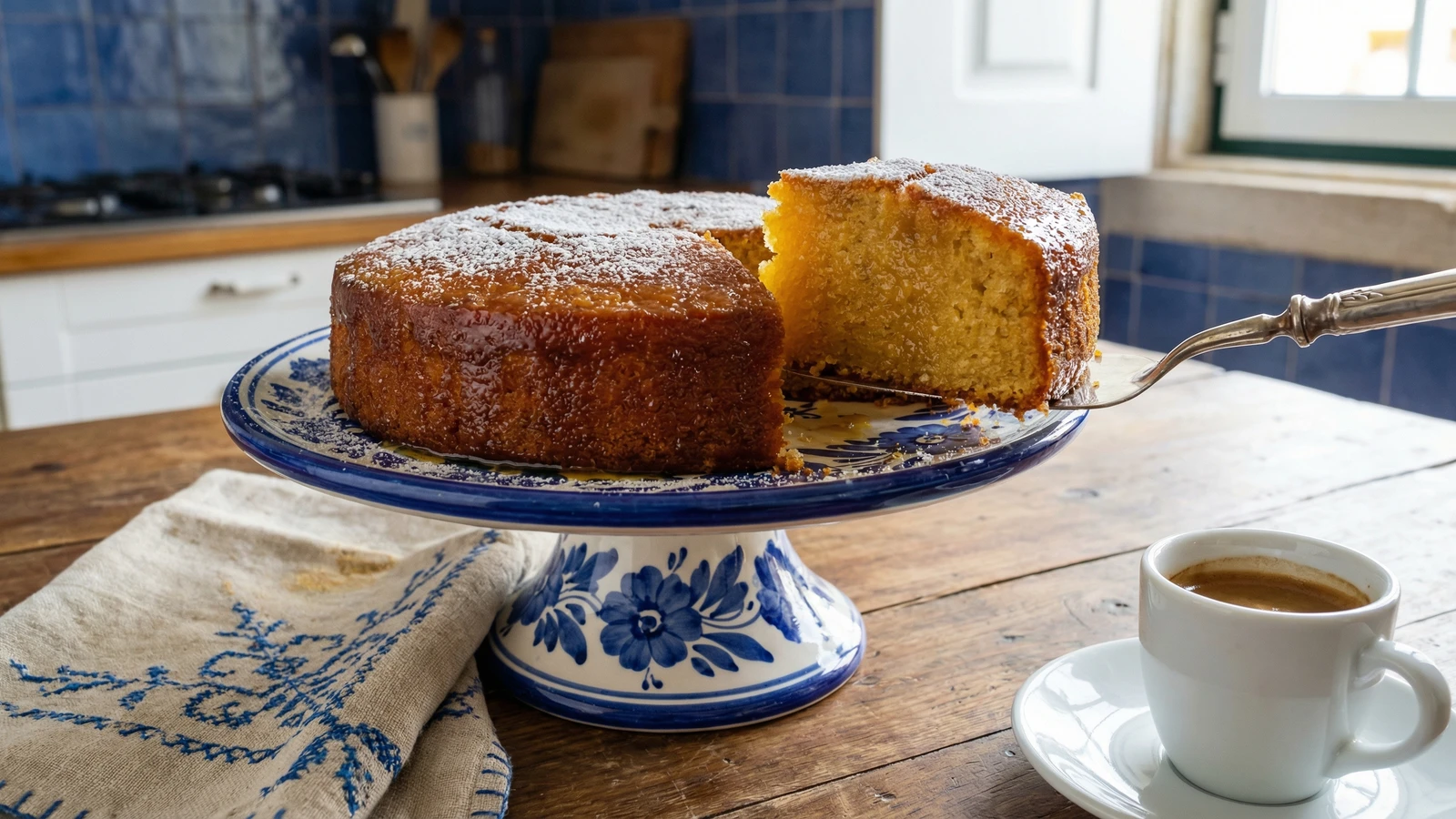
Bolo Húmido de Laranja
Created by
The orange cake that sits on every Portuguese counter, waiting for whoever walks through the door. Soaked in citrus syrup, fragrant with azeite, humble in the way only truly perfect things can be.
This is the cake that was always there. On the counter at Avó Leonor's house, under a glass dome that had been her mother's, waiting for anyone who needed a slice. She made it every week without fail, the same way she'd made it for fifty years, the same way her mother had taught her.
Bolo húmido de laranja. Moist orange cake. The name tells you everything and nothing. Yes, it's moist. Yes, it's orange. But that doesn't capture the way the house smells while it bakes, or how the syrup soaks into the warm crumb, or the way it tastes three days later when it's somehow even better than the first day.
This isn't a complicated cake. Four eggs, sugar, flour, oranges, azeite. No fancy techniques. No temperamental steps. This is the cake Portuguese grandmothers make when they want something on the counter, something to offer with coffee, something to wrap in foil for grandchildren to take home. It's the cake that says 'I was thinking of you' without saying anything at all.
The secret, if there is one, is the olive oil. Not butter. Azeite. It keeps the cake moist for days in a way butter can't. And the syrup, poured over while everything is still warm, that's what makes it húmido. That's what makes it the cake everyone remembers.
Orange cakes have been baked in Portugal since the fruit arrived from Asia via Arab traders in the Middle Ages. The Algarve became famous for its citrus groves, and laranja do Algarve remains prized for its intense sweetness. The olive oil version of this cake reflects the pre-butter traditions of rural Portugal, where azeite was abundant and dairy was precious.
The technique, the tradition, and the story behind every dish.
Discover Culinary AdvisorIngredients
eggs
Quantity
4 large
at room temperature
granulated sugar
Quantity
200g
oranges
Quantity
2 large
zested
fresh orange juice
Quantity
150ml (about 2 oranges)
extra virgin olive oil (azeite)
Quantity
150ml
all-purpose flour
Quantity
250g
baking powder
Quantity
1 tablespoon
fine sea salt
Quantity
pinch
fresh orange juice (for syrup)
Quantity
100ml
granulated sugar (for syrup)
Quantity
50g
cinnamon stick
Quantity
1
| Ingredient | Quantity |
|---|---|
| eggsat room temperature | 4 large |
| granulated sugar | 200g |
| orangeszested | 2 large |
| fresh orange juice | 150ml (about 2 oranges) |
| extra virgin olive oil (azeite) | 150ml |
| all-purpose flour | 250g |
| baking powder | 1 tablespoon |
| fine sea salt | pinch |
| fresh orange juice (for syrup) | 100ml |
| granulated sugar (for syrup) | 50g |
| cinnamon stick | 1 |
Equipment Needed
- •24cm round cake tin
- •Electric mixer or stand mixer
- •Small saucepan for syrup
- •Skewer for testing and poking
Instructions
- 1
Prepare your pan
Heat your oven to 170°C (340°F). Grease a 24cm round cake tin with butter and dust with flour, tapping out the excess. Or line with parchment if you prefer. Avó Leonor always used butter and flour. She said the cake releases better, gets a better crust. I don't argue.
- 2
Beat eggs and sugar
In a large bowl, beat the eggs and sugar together with an electric mixer until pale, thick, and tripled in volume. This takes 5 to 7 minutes. Don't rush it. When you lift the beaters, the mixture should fall in thick ribbons that hold their shape for a moment before dissolving. This is where the cake's lightness comes from.
Room temperature eggs are essential. Cold eggs won't whip properly. If you forgot to take them out, place them in warm water for 10 minutes. - 3
Add the orange
With the mixer on low, add the orange zest and juice. The batter will thin out and look a bit curdled. This is fine. Then drizzle in the olive oil slowly, letting it incorporate. The oil makes this cake moist in a way butter never could. This is why we use azeite.
- 4
Fold in the flour
Sift the flour, baking powder, and salt together. Add to the batter in two additions, folding gently with a spatula. Don't overmix. The moment you stop seeing flour streaks, stop folding. Overmixing makes the cake tough. We want tender.
- 5
Bake until golden
Pour the batter into your prepared tin. Bake for 40 to 45 minutes, until the top is golden and a skewer inserted in the center comes out clean, or with just a few moist crumbs. The cake should spring back when you press it gently. The kitchen will smell of oranges and warmth. That smell is the smell of Sunday.
- 6
Make the syrup
While the cake bakes, combine the orange juice, sugar, and cinnamon stick in a small pot. Bring to a simmer, stirring until the sugar dissolves. Let it bubble gently for 3 minutes. Remove from heat and discard the cinnamon. The syrup should be thin, not thick. It needs to soak into the cake.
- 7
Soak the warm cake
The moment the cake comes from the oven, poke it all over with a skewer or fork. Pour the warm syrup slowly over the warm cake, letting it absorb before adding more. The cake drinks the syrup while it's hot. This is what makes it húmido. Let the cake cool completely in the tin before turning out.
Patience here. Pour a little syrup, wait, pour more. If you dump it all at once, it pools and the cake gets soggy in some places, dry in others. - 8
Serve with pride
Turn the cake onto a serving plate. It needs nothing else. No glaze, no frosting, no decoration beyond perhaps a dusting of powdered sugar if you're feeling fancy. Serve at room temperature with strong coffee. This is the cake that waits on the counter for whoever needs it.
Chef Tips
- •Use the best oranges you can find. In Portugal, we'd use laranjas do Algarve, sweet and fragrant. Wherever you are, look for oranges that smell like oranges when you hold them to your nose. If they smell like nothing, they'll taste like nothing.
- •The olive oil should be good but not your most expensive bottle. You want fruity, not peppery. The orange should be the star. The oil is the supporting actor that makes everything work.
- •This cake is better the next day. The syrup continues to distribute, the flavors deepen. Make it Saturday for Sunday lunch. It keeps well for four or five days, covered at room temperature. If it lasts that long.
- •Some families add a splash of orange liqueur to the syrup. Avó Leonor didn't, but her neighbor Dona Fernanda always did. Both cakes were wonderful. Do what feels right.
Advance Preparation
- •Bring eggs to room temperature at least 1 hour before baking. This is not optional.
- •The cake improves overnight and keeps well for 4 to 5 days at room temperature, covered. Do not refrigerate; it dries out the crumb.
- •The syrup can be made while the cake bakes, or up to a day ahead and gently rewarmed before using.
Frequently Asked Questions
Nutrition Information
1 serving (about 100g)
Where cooking meets culture.
Culinary mentorship, cultural storytelling, and the editorial depth that makes cooking meaningful.
Explore Culinary Advisor