Culinary Advisor
A cooking platform built around craft, culture, and the stories behind what we eat.
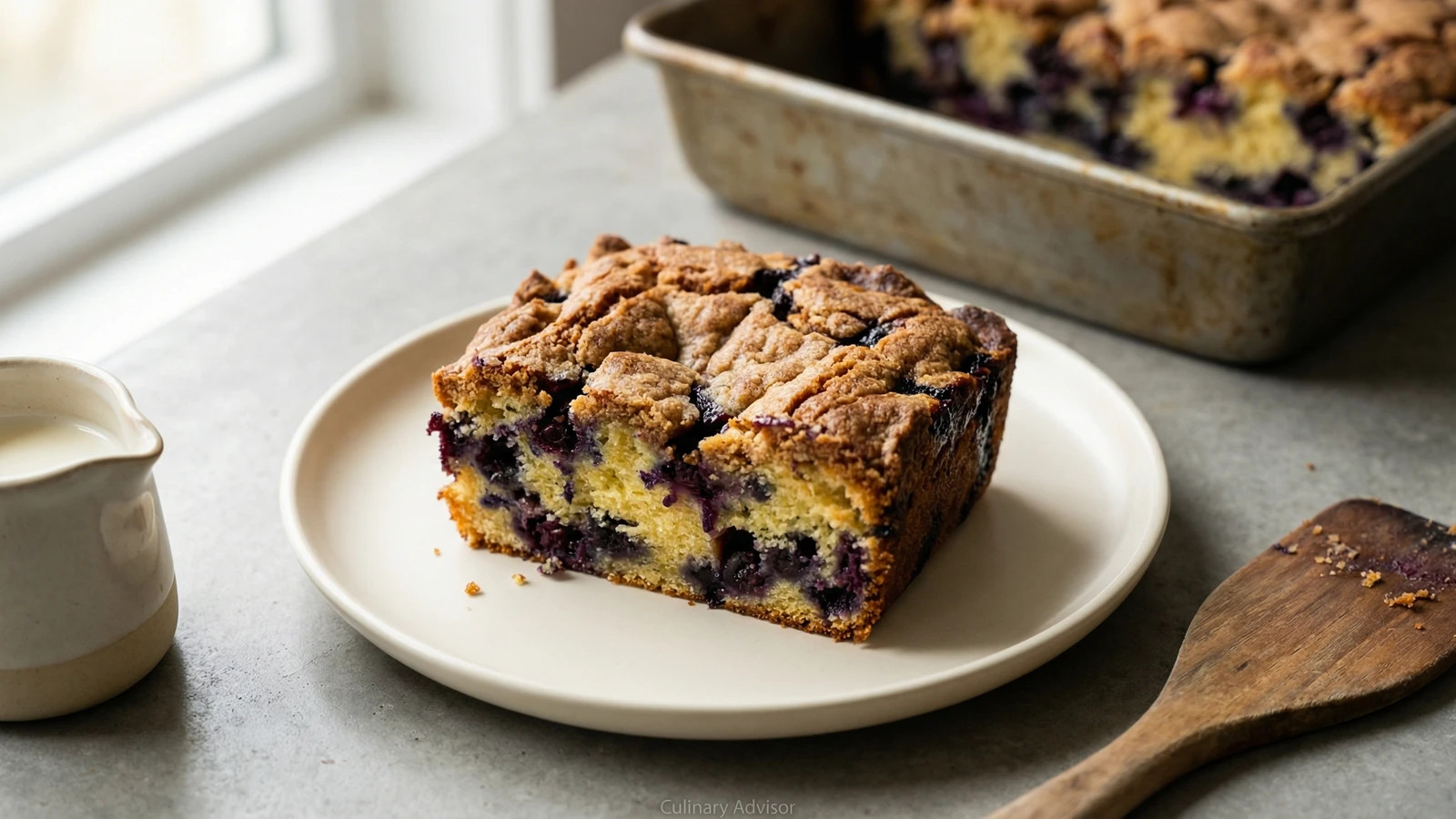
Blueberry Buckle
Created by
A golden-topped New England treasure where tender butter cake, jammy wild berries, and a craggy cinnamon streusel buckle and crack into something your grandmother would recognize as honest summer baking.
The buckle belongs to a proud American family of fruit desserts. Crisps, crumbles, cobblers, grunts, slumps, and buckles. Each has its own character. The buckle distinguishes itself by starting with a proper butter cake batter, not a fruit base. You fold berries into that batter, blanket the whole thing with streusel, and as the cake rises in the oven, the topping cracks and buckles into a craggy, golden landscape.
New England grandmothers have been making buckles since before anyone thought to write down recipes. They made them with whatever berries grew nearby: blueberries in Maine, cranberries on Cape Cod, beach plums on the shore. The technique traveled well. Southern cooks adopted it for peaches. Midwesterners used it for cherries.
This version honors the original intention. A tender crumb that supports but doesn't overpower the fruit. Berries that burst and stain the cake around them. A streusel that provides textural contrast and visual drama. It comes together in one bowl with ordinary pantry ingredients, requires no special skills, and produces a dessert worthy of any celebration.
Bring this to a potluck and watch it disappear. Make it ahead for a holiday breakfast. Serve it warm with vanilla ice cream softening against its golden crust. A buckle asks only for good berries and a little attention. It gives back tenfold.
The technique, the tradition, and the story behind every dish.
Discover Culinary AdvisorIngredients
granulated sugar (streusel)
Quantity
1/2 cup (100g)
all-purpose flour (streusel)
Quantity
1/3 cup (42g)
ground cinnamon
Quantity
1/2 teaspoon
freshly grated nutmeg
Quantity
1/4 teaspoon
cold unsalted butter (streusel)
Quantity
1/4 cup (57g)
cut into small cubes
all-purpose flour (cake)
Quantity
2 cups (250g)
baking powder
Quantity
2 teaspoons
fine sea salt
Quantity
1/2 teaspoon
unsalted butter (cake)
Quantity
1/2 cup (1 stick/113g)
softened
granulated sugar (cake)
Quantity
3/4 cup (150g)
large egg
Quantity
1
at room temperature
pure vanilla extract
Quantity
1 teaspoon
whole milk
Quantity
1/2 cup (120ml)
at room temperature
fresh blueberries
Quantity
2 cups (about 10 ounces)
| Ingredient | Quantity |
|---|---|
| granulated sugar (streusel) | 1/2 cup (100g) |
| all-purpose flour (streusel) | 1/3 cup (42g) |
| ground cinnamon | 1/2 teaspoon |
| freshly grated nutmeg | 1/4 teaspoon |
| cold unsalted butter (streusel)cut into small cubes | 1/4 cup (57g) |
| all-purpose flour (cake) | 2 cups (250g) |
| baking powder | 2 teaspoons |
| fine sea salt | 1/2 teaspoon |
| unsalted butter (cake)softened | 1/2 cup (1 stick/113g) |
| granulated sugar (cake) | 3/4 cup (150g) |
| large eggat room temperature | 1 |
| pure vanilla extract | 1 teaspoon |
| whole milkat room temperature | 1/2 cup (120ml) |
| fresh blueberries | 2 cups (about 10 ounces) |
Equipment Needed
- •9-inch square baking pan
- •Stand mixer or hand mixer
- •Wire cooling rack
- •Rubber spatula
Instructions
- 1
Prepare the streusel
Whisk together the sugar, flour, cinnamon, and nutmeg in a medium bowl. Add the cold butter cubes and work them into the dry ingredients using your fingertips or a pastry cutter, pinching and rubbing until the mixture resembles coarse crumbs with some pea-sized pieces remaining. These larger chunks will become the golden, craggy bits you'll fight over. Refrigerate while you prepare the batter.
Cold butter is essential. Warm butter creates a paste instead of crumbs, and paste won't buckle properly. - 2
Set up for success
Position a rack in the center of your oven and heat to 375°F. Butter a 9-inch square baking pan generously, then dust with flour, tapping out the excess. This old-fashioned approach releases the buckle more reliably than cooking spray.
- 3
Combine dry ingredients
Whisk together the flour, baking powder, and salt in a medium bowl. Set aside. These dry ingredients need even distribution before they meet the wet, or you'll have pockets of bitter baking powder in your finished cake.
- 4
Cream butter and sugar
Beat the softened butter and sugar in a large bowl using a stand mixer or hand mixer on medium-high speed for three to four minutes. The mixture should turn pale and noticeably fluffy, nearly doubling in volume. Scrape down the sides twice during this process. This step builds the tender structure of your cake. Rushing it produces a denser crumb.
Properly softened butter yields easily to finger pressure but holds its shape. If your butter is too cold, it won't cream. If it's too warm or greasy, start over with a fresh stick. - 5
Add egg and vanilla
Add the egg and vanilla to the creamed butter, beating on medium speed until fully incorporated, about thirty seconds. The mixture may look slightly curdled. Don't worry. It will smooth out when the flour joins the party.
- 6
Alternate wet and dry
Add the flour mixture in three additions, alternating with the milk in two additions, beginning and ending with flour. Mix on low speed just until each addition disappears before adding the next. The batter should be thick and smooth, pulling away from the bowl in ribbons when you lift the beater.
- 7
Fold in blueberries
Scatter the blueberries over the batter and fold them in gently using a rubber spatula. Work carefully here. Overmixing will crush berries and turn your batter purple. Some berries will sink during baking. Others will rise. This is the nature of a buckle.
- 8
Assemble and top
Spread the batter evenly in your prepared pan, using an offset spatula or the back of a spoon to push it into the corners. The batter is thick, so this takes a gentle hand. Retrieve the streusel from the refrigerator and scatter it evenly over the surface, pressing lightly so it adheres.
- 9
Bake until buckled
Bake for 45 to 55 minutes, rotating the pan halfway through. The buckle is done when the streusel is deeply golden with darker edges, the top has cracked and buckled dramatically, and a toothpick inserted into the center emerges with just a few moist crumbs clinging to it. The cake will pull slightly away from the sides of the pan.
Every oven runs differently. Start checking at 45 minutes. If the top browns too quickly, tent loosely with foil for the final fifteen minutes. - 10
Cool and serve
Let the buckle cool in the pan on a wire rack for at least twenty minutes before cutting. It's magnificent warm, with the berries still soft and jammy. But it's also lovely at room temperature the next day, the flavors having deepened overnight. Serve straight from the pan, as generations of New England cooks have done.
Chef Tips
- •Fresh wild blueberries are the gold standard if you can find them. Smaller than cultivated varieties, they pack more intense flavor into every bite. Farmers' markets in July and August are your best source.
- •Frozen blueberries work admirably when fresh aren't available. Do not thaw them first. Toss them with a tablespoon of flour before folding into the batter to absorb excess moisture and prevent purple streaking.
- •The buckle wants a square pan, but a 9-inch round cake pan works identically. For a deeper buckle with more dramatic buckling, use an 8-inch square pan and add ten minutes to the baking time.
- •Leftover buckle makes surprisingly good breakfast. Warm a square in a low oven while your coffee brews. The Puritans would have approved of such sensible thrift.
Advance Preparation
- •The streusel can be made up to one week ahead and refrigerated in an airtight container. The flavors actually improve with time.
- •The assembled unbaked buckle can be covered tightly and refrigerated overnight. Add five minutes to the baking time when baking cold.
- •Baked buckle keeps beautifully at room temperature, covered, for three days. It actually improves on day two as the flavors meld and the streusel softens slightly against the cake.
- •Freeze individual portions wrapped in plastic for up to two months. Thaw at room temperature or rewarm in a 300°F oven until warmed through.
Frequently Asked Questions
Nutrition Information
1 serving (about 117g)
Where cooking meets culture.
Culinary mentorship, cultural storytelling, and the editorial depth that makes cooking meaningful.
Explore Culinary Advisor