Culinary Advisor
A cooking platform built around craft, culture, and the stories behind what we eat.
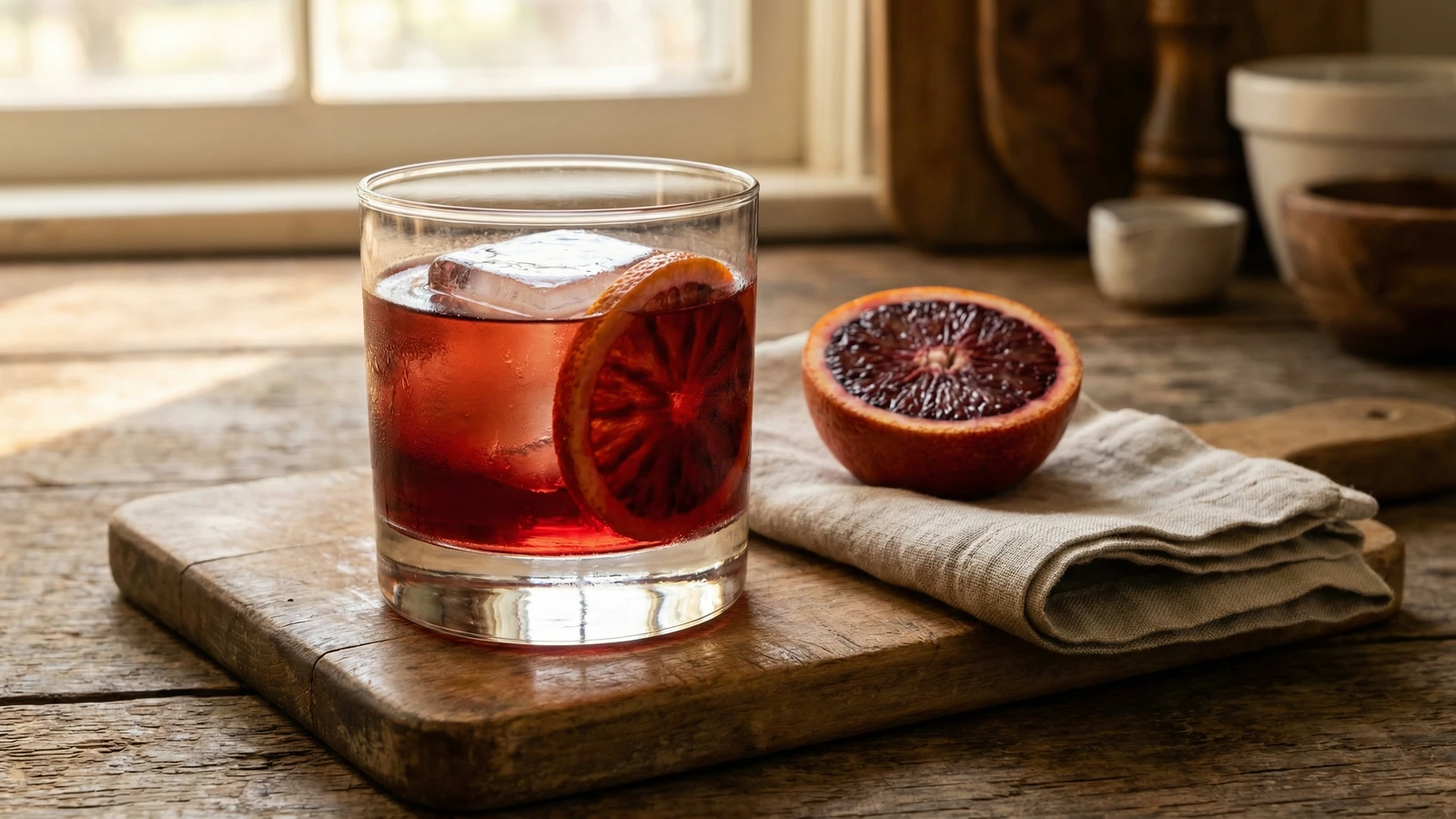
Blood Orange Negroni
Created by Chef Ally
The classic Italian aperitivo transformed by winter's most dramatic citrus, a ruby-hued drink that balances bitter Campari with the sweet-tart complexity of blood oranges at their peak.
Blood oranges arrive in the dark months, and they feel like a gift. That first cut through the skin reveals flesh the color of garnets, sometimes streaked, sometimes solid crimson. The flavor sits somewhere between a navel orange and wild raspberries, with a bittersweet edge that belongs in a Negroni.
The classic Negroni is already perfect: equal parts gin, Campari, and sweet vermouth, nothing more. But when blood oranges are at their peak, fresh juice adds a layer of complexity that honors both the cocktail and the season. The drink turns the color of a winter sunset. The bitterness of Campari finds a partner in the fruit's own tannic notes.
This is not a sweet drink. The blood orange softens the edges without hiding them. If you want something that tastes like candy, this is not for you. If you want something honest, balanced, and alive with the best of what winter offers, pour yourself one and sit with it. A Negroni rewards patience.
The technique, the tradition, and the story behind every dish.
Discover Culinary AdvisorIngredients
London dry gin
Quantity
1 ounce
Campari
Quantity
1 ounce
sweet vermouth
Quantity
1 ounce
fresh blood orange juice
Quantity
1 ounce
freshly squeezed
blood orange
Quantity
1 wheel or twist
for garnish
ice cubes
Quantity
as needed
| Ingredient | Quantity |
|---|---|
| London dry gin | 1 ounce |
| Campari | 1 ounce |
| sweet vermouth | 1 ounce |
| fresh blood orange juicefreshly squeezed | 1 ounce |
| blood orangefor garnish | 1 wheel or twist |
| ice cubes | as needed |
Equipment Needed
- •Mixing glass or sturdy pint glass
- •Bar spoon or long-handled spoon
- •Fine-mesh strainer
- •Citrus reamer or juicer
- •Rocks glass
Instructions
- 1
Select your blood orange
Start with the fruit. A blood orange at its peak feels heavy for its size and gives slightly when pressed. The skin may show blushes of crimson, though color varies by variety. Moro oranges run nearly burgundy inside. Tarocco are sweeter, with lighter ruby flesh. Both work beautifully here. Cut one in half and smell it. That fragrance, somewhere between orange and raspberry, tells you the fruit is alive.
Blood oranges peak from December through March. If you cannot find them, a good navel orange with a splash of pomegranate juice approximates the color and complexity. - 2
Juice the orange
Squeeze the blood orange by hand or with a simple reamer. You need one ounce of juice, roughly half a medium fruit. Strain out any seeds but let the pulp through. That texture belongs in the drink. Bottled juice has no place here. The aliveness of fresh citrus is the whole point.
Room temperature oranges yield more juice. Roll the fruit firmly on the counter before cutting to break down the membranes. - 3
Combine and stir
Fill a mixing glass or sturdy pint glass with ice. Add the gin, Campari, sweet vermouth, and blood orange juice. Stir slowly with a long spoon for thirty seconds. You are chilling and diluting, not aerating. The motion should be gentle, almost meditative. Watch the ruby color deepen as the ice does its work.
- 4
Strain and serve
Place one large ice cube or several smaller cubes in a rocks glass. Strain the cocktail over the ice. The drink should glow like stained glass held to winter light, somewhere between garnet and pomegranate.
- 5
Garnish with intention
Cut a thin wheel from the remaining blood orange half, or use a vegetable peeler to remove a wide strip of peel. If using a twist, hold it over the glass and give it a gentle squeeze to release the oils before dropping it in. The citrus oil on the surface catches the light and perfumes each sip.
Chef Tips
- •Seek out blood oranges at farmers' markets where they were picked within the week. Supermarket fruit often sits too long and loses that vital fragrance.
- •Good vermouth matters. Once opened, store it in the refrigerator and use within a month. Oxidized vermouth will ruin any cocktail.
- •If your blood oranges are particularly sweet, reduce the juice to three-quarters of an ounce. Taste and adjust. The balance should lean bitter, not sweet.
- •A large single ice cube melts more slowly than smaller cubes, keeping the drink cold without diluting it too quickly.
Advance Preparation
- •Blood orange juice can be squeezed up to four hours ahead and refrigerated, though it tastes brightest when fresh.
- •Chill your rocks glass in the freezer for ten minutes before serving for the coldest first sip.
Frequently Asked Questions
Nutrition Information
1 serving (about 150g)
Where cooking meets culture.
Culinary mentorship, cultural storytelling, and the editorial depth that makes cooking meaningful.
Explore Culinary Advisor