Culinary Advisor
A cooking platform built around craft, culture, and the stories behind what we eat.
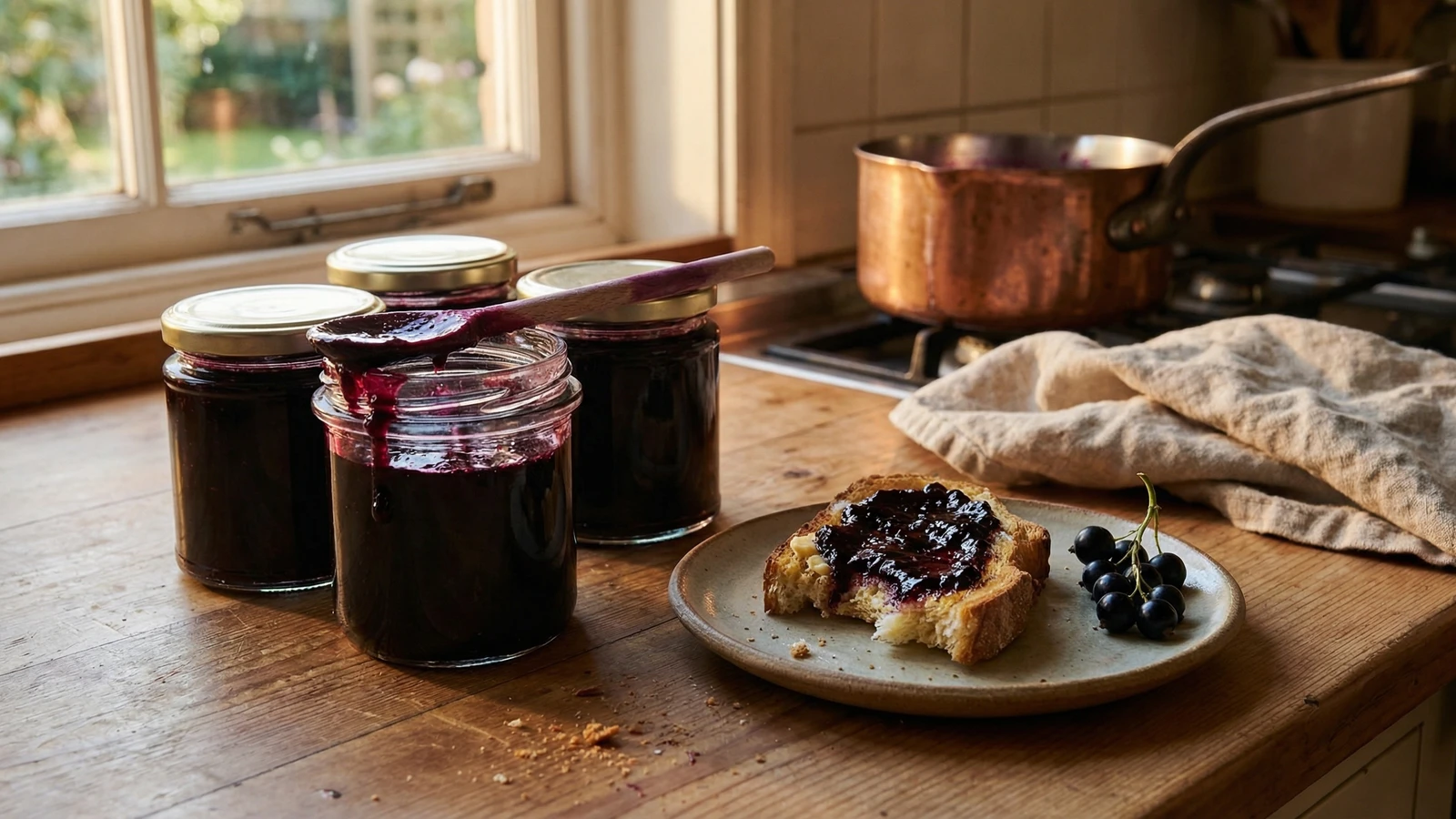
Blackcurrant Jam
Created by Chef Thomas
A dark, sharp, properly old-fashioned blackcurrant jam, made in one afternoon at the height of summer and good enough to make winter toast feel like an event.
Blackcurrants come and go in a fortnight. Miss them and you wait a year. That's why this jam exists: to hold a particular week in July inside a jar, so that some morning in February, when the light is thin and the bread is cold, you can spread a thick layer on toast and remember what summer tasted like.
There's no special skill required. Blackcurrants are full of pectin, which means they set firmly with nothing more than sugar and a hard boil. No added pectin, no lemon juice, no fuss. The fruit does the work. Your job is to stand at the hob with a wooden spoon and pay attention for thirty minutes. We're only making jam.
I make a batch every year when the bushes give up their fruit, and I always make more than I need, because there's nothing quite like handing a jar to someone who didn't expect it. A blackcurrant jam is a gift that holds its colour and its sharpness for months. The notebook entry from last year reads: "Stripped the currants while listening to the radio. Kitchen smelled like summer rain." That was the whole afternoon.
If the blackcurrants haven't come in yet where you are, wait. Frozen will do at a push, but they're worth catching fresh. The market decides.
The technique, the tradition, and the story behind every dish.
Discover Culinary AdvisorIngredients
blackcurrants
Quantity
1kg
stripped from their stalks
water
Quantity
300ml
granulated sugar
Quantity
1kg
unsalted butter (optional)
Quantity
knob
to settle the foam
| Ingredient | Quantity |
|---|---|
| blackcurrantsstripped from their stalks | 1kg |
| water | 300ml |
| granulated sugar | 1kg |
| unsalted butter (optional)to settle the foam | knob |
Equipment Needed
- •Wide, heavy-bottomed preserving pan or large saucepan
- •Wooden spoon
- •Four 300ml jam jars with lids
- •Ladle and small jam funnel (helpful but not essential)
- •Small saucer for the set test
Instructions
- 1
Prepare the jars
Wash four jam jars and their lids in hot soapy water, rinse well, and put them upside down on a baking tray in a low oven, around 120C, to dry and sterilize. Leave them there until you need them. Warm jars take hot jam without cracking. Cold jars do not.
Pop a small saucer into the freezer at the same time. You'll need it later for the set test. - 2
Strip the currants
Run a fork down each stalk to slip the currants off into a bowl. It's slower than you'd like and meditative in a way the rest of the day rarely is. Don't worry about catching every last bit of stem. A few leaves and the odd green currant won't bother anything. Rinse them in a colander and let the water drain off.
- 3
Soften the fruit
Tip the currants into a wide, heavy pan with the water. Bring to a gentle simmer and cook for ten to fifteen minutes, stirring now and then, until the skins have burst and the fruit has slumped into a deep, dark mass. The kitchen will start to smell sharp and floral and unmistakably of blackcurrants. This is the moment the jam starts to make sense.
Don't skip the softening step. Blackcurrant skins are tough, and if you add the sugar before they've broken down properly, they'll stay tough in the finished jam. - 4
Add the sugar
Tip in all the sugar at once and stir over a low heat until every grain has dissolved. Run a wooden spoon along the bottom of the pan; if you can feel any grittiness, keep going. Sugar that hasn't fully dissolved will crystallize in the jar and you'll regret it in October.
- 5
Boil hard
Turn the heat up and bring the jam to a rolling boil. Not a gentle simmer, a proper, lively boil that you can't stir down. Let it bubble away for eight to ten minutes. The colour will deepen to a dense, inky purple and the texture will start to look glossy rather than watery. Skim off any pink foam that gathers at the edges, or stir in a small knob of butter to settle it.
Trust your nose. When the smell shifts from raw fruit to something jammier and more concentrated, you're close. - 6
Test for the set
Take the pan off the heat. Drop a teaspoon of jam onto the cold saucer from the freezer and leave it for thirty seconds. Push it gently with your fingertip. If the surface wrinkles and the jam holds its shape, it's done. If it stays loose and slides, put the pan back on the heat for another two minutes and try again. Blackcurrants are full of pectin, so the set comes quickly. Don't overcook it or you'll end up with something stiff and dull instead of the soft, spreadable jam you want.
- 7
Jar and seal
Let the jam settle for a couple of minutes off the heat so the fruit doesn't all sink to the bottom of the jars. Ladle it into the warm jars right up to the top, and seal immediately with the lids. As they cool, you'll hear the small, satisfying click of the lids drawing down. Label them with the date once they're cold. You'll be glad of that label in February.
Chef Tips
- •Blackcurrants are one of the few fruits where you genuinely don't need to add pectin or lemon juice. They have plenty of both built in. Trust the fruit and don't overcomplicate it.
- •A wide pan matters more than a deep one. The bigger the surface area, the faster the water evaporates and the quicker you reach the set. A narrow pan turns ten minutes into thirty and dulls the flavour.
- •Don't be afraid of a hard boil. Jam that's been simmered timidly stays loose and tastes flat. A proper, vigorous boil concentrates the fruit and gives you the deep, glossy set you're after.
- •If you fancy a gentler version, soften a knob of butter through the finished jam before potting. It rounds the sharpness and gives the jam a slightly silkier feel on toast. Optional, but worth knowing about.
Advance Preparation
- •Sealed properly into sterilized jars, the jam will keep in a cool, dark cupboard for at least a year. Once opened, refrigerate and use within a month.
- •If you want to get ahead, strip the currants the day before and keep them in the fridge. The jam itself is best made in one go, from soften to seal, in a single afternoon.
Frequently Asked Questions
Nutrition Information
1 serving (about 20g)
Where cooking meets culture.
Culinary mentorship, cultural storytelling, and the editorial depth that makes cooking meaningful.
Explore Culinary Advisor