Culinary Advisor
A cooking platform built around craft, culture, and the stories behind what we eat.
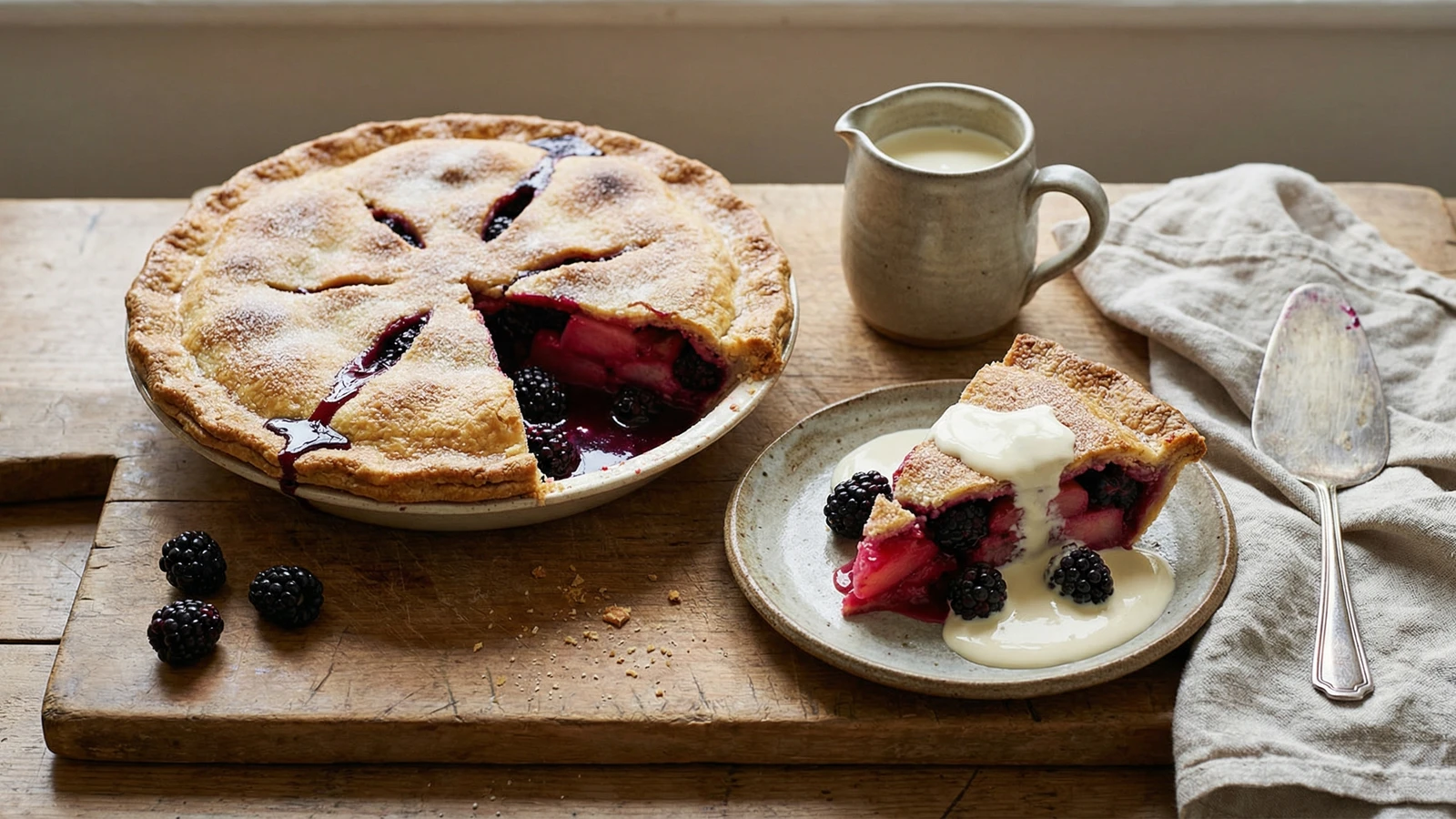
Blackberry and Apple Pie
Created by Chef Thomas
A proper hedgerow pie of Bramley apples and blackberries under a sugar-crusted pastry lid, the kind of pudding that turns a Sunday in September into something you'll remember.
There's a fortnight in early September when the brambles down the lane are heavy with fruit and the first windfall apples are bruising the grass under the tree. If you're paying attention, you take a bowl out and you don't come back until it's full. Purple fingers. Scratched forearms. The smell of the hedge in your jumper. This is the work that makes the pie taste the way it does, and most of it happens before you've even turned the oven on.
Blackberries and Bramleys are one of those pairings that feels less like a recipe and more like an inevitability. The apples go soft and tart and faintly cidery in the heat. The blackberries bleed through them, staining everything a deep purple-pink, sweetening the sharpness, perfuming the whole thing. Under a buttery pastry lid with a scatter of sugar on top, it becomes the pudding that defines the season. Not summer anymore. Not winter yet. This.
I wrote it down in the notebook the first time I made one, years ago, after a Sunday afternoon spent picking with cold hands. The note just says: brambles, Bramleys, cream, the right kind of evening. I haven't written a better description since.
Serve it warm, not hot, with a jug of cold double cream on the table. We're only making dinner. But this is the pudding that makes you glad you bothered.
The technique, the tradition, and the story behind every dish.
Discover Culinary AdvisorIngredients
plain flour
Quantity
250g
plus extra for dusting
cold unsalted butter
Quantity
150g
cubed
caster sugar
Quantity
1 tablespoon
fine sea salt
Quantity
pinch
large egg yolk
Quantity
1
very cold water
Quantity
2-3 tablespoons
Bramley apples
Quantity
600g
peeled, cored and sliced thickly
blackberries
Quantity
350g
picked over
golden caster sugar
Quantity
100g
plus extra for the top
plain flour or cornflour
Quantity
1 tablespoon
lemon zest
Quantity
from half a lemon
small egg
Quantity
1
beaten, for glazing
double cream or vanilla ice cream
Quantity
to serve
| Ingredient | Quantity |
|---|---|
| plain flourplus extra for dusting | 250g |
| cold unsalted buttercubed | 150g |
| caster sugar | 1 tablespoon |
| fine sea salt | pinch |
| large egg yolk | 1 |
| very cold water | 2-3 tablespoons |
| Bramley applespeeled, cored and sliced thickly | 600g |
| blackberriespicked over | 350g |
| golden caster sugarplus extra for the top | 100g |
| plain flour or cornflour | 1 tablespoon |
| lemon zest | from half a lemon |
| small eggbeaten, for glazing | 1 |
| double cream or vanilla ice cream | to serve |
Equipment Needed
- •23cm pie dish (ceramic or enamelled)
- •Rolling pin
- •Pastry brush
- •Sharp knife
Instructions
- 1
Make the pastry
Tip the flour, salt and tablespoon of caster sugar into a wide bowl. Add the cold cubed butter and rub it in with your fingertips, lifting the mixture as you go to keep it cool. Stop when it looks like coarse breadcrumbs with some butter pieces still the size of small peas. Those flecks of butter are what make the pastry flake. Stir the egg yolk into a tablespoon of the cold water, add to the bowl, and bring it together with a knife, adding more water a teaspoon at a time only if it needs it. The dough should just hold. Press it into a flat disc, wrap it, and rest it in the fridge for at least thirty minutes.
Cold butter, cold hands, cold water. Pastry that is overworked or warm goes tough. If your kitchen is hot, run your wrists under the cold tap before you start. - 2
Pick over the fruit
If your blackberries came from a hedgerow, pick them over carefully. There will be the odd leaf, the odd unripe one, the occasional small thing that wasn't expecting to be picked. A quick rinse under cold water, then drain them on a tea towel. Don't soak them. Blackberries are mostly water already and you don't want to wash the flavour away.
The best blackberries are the ones that come away from the stem with no resistance. If you have to tug, leave them. They'll be ready in a few days. - 3
Prepare the filling
Peel the Bramleys, quarter them, take out the cores, and slice them into thick wedges, not slivers. Bramleys collapse in the oven, so if you cut them too small you'll end up with sauce instead of fruit. Tip them into a bowl with the blackberries, the sugar, the spoonful of flour or cornflour, and the lemon zest. Toss gently with your hands. The blackberries will start to bleed into the apples almost immediately, staining them pink. That's the point.
- 4
Roll and line the dish
Set the oven to 200C/180C fan. Cut the rested pastry roughly in two, with one piece slightly larger than the other. The bigger piece is for the base. Roll it out on a lightly floured surface to about the thickness of a pound coin and use it to line a 23cm pie dish, letting the edges hang over. Tip the fruit in, mounding it generously in the middle. It will look like a lot. It will cook down.
- 5
Top and seal
Roll out the second piece of pastry for the lid. Brush the edge of the base pastry with a little beaten egg, then lay the lid over the fruit. Press the edges together with your fingers or the tines of a fork. Trim away the overhang with a knife. Cut two or three small slashes in the lid so the steam can escape. Brush all over with the beaten egg and scatter with a generous pinch of caster sugar. The sugar gives you that crackled, sparkling top.
Save the trimmings. You can re-roll them for a leaf or two on top of the pie if you feel like it. I usually don't, but it's a nice touch when you do. - 6
Bake until golden
Put the pie in the oven and bake for forty-five to fifty minutes. You're looking for a deep, even gold on top and bubbling purple-black juice escaping through the slashes. The smell will tell you before the timer does. When the kitchen smells of warm apples and butter and something faintly jammy, you're nearly there. If the top is browning faster than you'd like, drape a piece of foil loosely over it for the last ten minutes.
- 7
Rest before serving
Take the pie out and let it sit for at least twenty minutes before cutting. I know. It is difficult. But a hot pie cut straight from the oven runs everywhere and the slices fall apart. A rested pie holds its shape and the flavours settle into themselves. Serve in generous wedges with cold cream poured over from a jug, or a scoop of vanilla ice cream melting into the warm fruit. Both are right.
Chef Tips
- •Bramleys are the apple for this. No other variety collapses into that distinctive tart, fluffy texture that makes a proper British pie filling. Eating apples will hold their shape too well and the pie will taste of nothing in particular. If you can't find Bramleys, use a sharp cooking apple, but the pie will be a different thing.
- •The pastry can be made the day before and rested overnight in the fridge. It actually rolls out better after a long rest because the gluten has had time to relax. Bring it back to a workable temperature for ten minutes before rolling.
- •Don't be tempted to add cinnamon or cloves or anything else. Apples and blackberries don't need help. The lemon zest is there to lift the fruit, not to flavour it. Anything more and you start to drown out what the hedgerow gave you for free.
- •If you have a glut of blackberries from a really good picking afternoon, freeze them on a tray in a single layer, then bag them up. They keep for months and you can pull a handful out in February when the world feels grey and make this pie out of season. Not as good as the September version, but a small act of defiance against the calendar.
Advance Preparation
- •The pastry can be made up to two days ahead and kept wrapped in the fridge, or frozen for up to a month.
- •The fruit filling can be tossed together a couple of hours ahead, but no longer, or the juices will start to pool and make the bottom pastry soggy.
- •The whole pie reheats well the next day. Twenty minutes in a moderate oven brings it back almost to itself. Cold blackberry and apple pie for breakfast is also a quietly defensible decision.
Frequently Asked Questions
Nutrition Information
1 serving (about 250g)
Where cooking meets culture.
Culinary mentorship, cultural storytelling, and the editorial depth that makes cooking meaningful.
Explore Culinary Advisor