Culinary Advisor
A cooking platform built around craft, culture, and the stories behind what we eat.
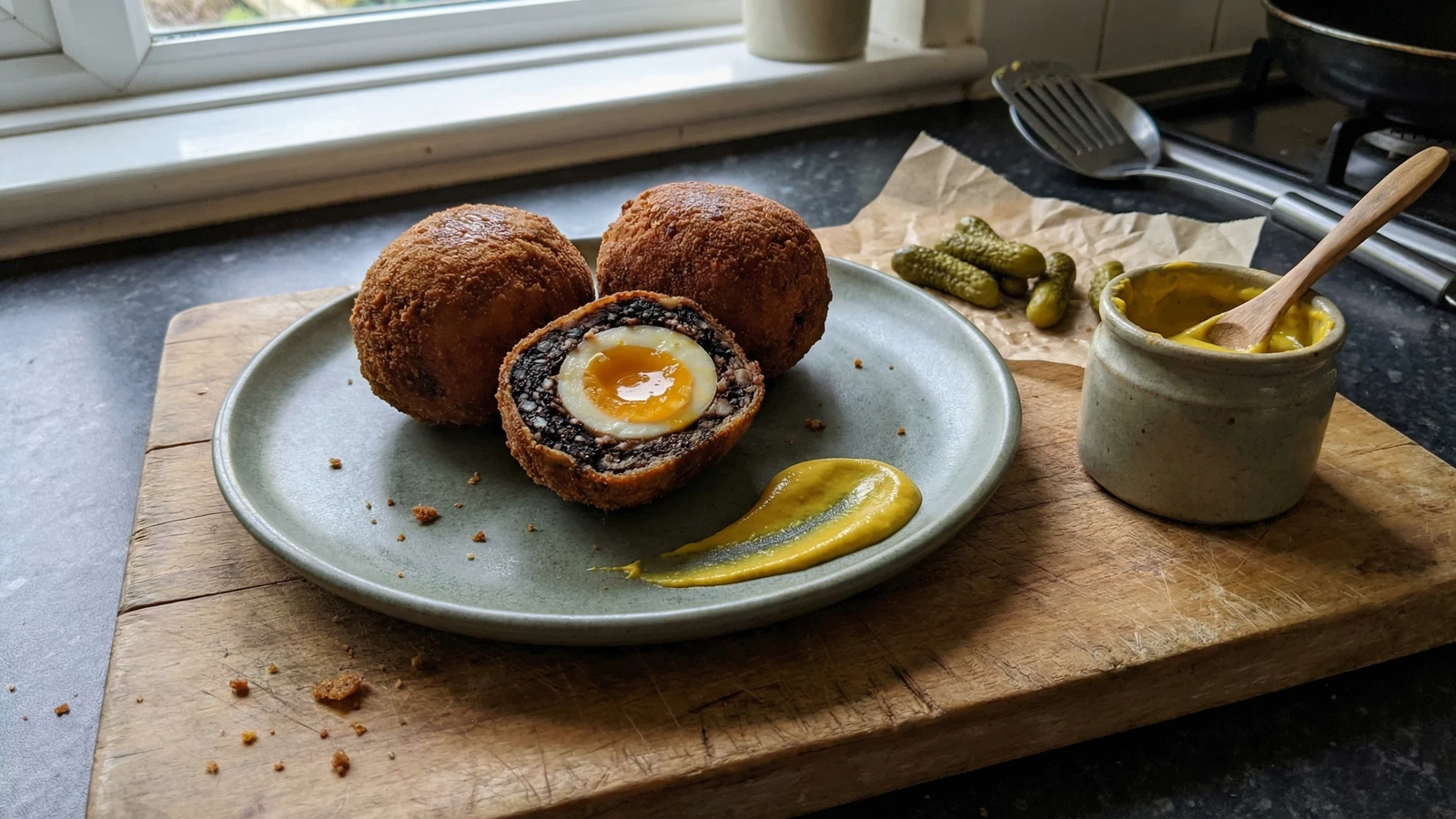
Black Pudding Scotch Eggs
Created by Chef Thomas
Boiled eggs wrapped in a dark, spiced coat of sausage meat and crumbled black pudding, fried to a deep gold. The kind of thing you eat standing up in the kitchen, still warm, with mustard on your thumb.
October, and the market had black pudding from the same stall that's been there since before I started going. A good one, dark and crumbly, with enough oatmeal and spice to smell like a proper kitchen. I brought it home with some sausage meat and half a dozen eggs and knew what the afternoon was going to look like.
A scotch egg is a generous thing. There's no delicate way to eat one, and that's part of the appeal. You pick it up, you bite through the crust into the meat, and then the egg gives way in the middle. When the black pudding is mixed through the sausage meat, the whole thing goes darker, richer, with that warm, iron-edged savouriness that pudding brings to anything it touches. It smells of the north.
This is picnic food, or cold-weather food eaten at the kitchen table with a jar of mustard and a few pickled onions. It travels well, wrapped in greaseproof paper in a bag. It tastes just as good cold the next day, maybe better, the flavours settled and firm. I wrote it down in the notebook: "Black pudding scotch eggs. October. Worth the mess."
A recipe is a conversation, not a contract. If your butcher's pudding is different from mine, if your eggs are a different size, adjust. Trust your hands. The wrapping is the only part that takes a bit of care, and even that gets easier after the second one.
The technique, the tradition, and the story behind every dish.
Discover Culinary AdvisorIngredients
free-range eggs
Quantity
7 large
pork sausage meat
Quantity
400g
black pudding
Quantity
200g
skin removed, crumbled
English mustard
Quantity
1 teaspoon
nutmeg
Quantity
a few gratings
sage leaves
Quantity
a few
finely chopped
fine sea salt
Quantity
to taste
black pepper
Quantity
to taste
plain flour
Quantity
75g
for coating
fresh white breadcrumbs
Quantity
100g
vegetable or sunflower oil
Quantity
for deep frying
| Ingredient | Quantity |
|---|---|
| free-range eggs | 7 large |
| pork sausage meat | 400g |
| black puddingskin removed, crumbled | 200g |
| English mustard | 1 teaspoon |
| nutmeg | a few gratings |
| sage leavesfinely chopped | a few |
| fine sea salt | to taste |
| black pepper | to taste |
| plain flourfor coating | 75g |
| fresh white breadcrumbs | 100g |
| vegetable or sunflower oil | for deep frying |
Equipment Needed
- •Deep, heavy-bottomed saucepan or deep-fat fryer
- •Kitchen thermometer (helpful, not essential)
- •Slotted spoon
- •Three shallow bowls for coating
Instructions
- 1
Boil and peel the eggs
Bring a pan of water to a rolling boil. Lower six of the eggs in gently with a spoon and cook for exactly six and a half minutes. You want the white set firm and the yolk still soft in the centre, somewhere between jammy and just-set. The moment the time is up, lift them out and drop them into a bowl of iced water. Leave them there for at least five minutes. Cold eggs peel cleanly. Warm eggs don't. Peel them carefully. The shell should come away in a few pieces if they've cooled properly. Set them aside.
This is the one place where timing matters precisely. A minute either side changes everything. Six and a half minutes from a rolling boil gives you a yolk that holds its shape when you cut but still has that golden, almost-liquid centre. - 2
Make the meat mixture
Crumble the black pudding into a bowl, breaking it up with your fingers until there are no large lumps. Add the sausage meat, the mustard, the nutmeg, and the chopped sage. Season with a little salt (the pudding is already well seasoned, so go carefully) and a good grinding of pepper. Mix it all together with your hands until the black pudding is distributed evenly through the sausage meat. The mixture should be dark, speckled, and smell warmly of spice. Fry a small pinch in a pan and taste it. Adjust the seasoning now, not later.
Good sausage meat is the foundation. Ask your butcher, or squeeze it from proper pork sausages with a high meat content. The cheap sort full of rusk and water won't hold together or taste of much. - 3
Wrap the eggs
Divide the meat mixture into six equal portions. Flatten each one into a rough oval on a floured surface, about as thick as a fifty-pence piece. Dust a peeled egg lightly in flour, set it in the centre of the meat, and bring the edges up around it, pressing and smoothing gently until the egg is completely enclosed. Try to keep the thickness even all the way round. No thin spots. No cracks. Wet your hands slightly if the meat sticks. Repeat with the remaining eggs.
Cling film helps if you find the wrapping difficult. Place the portion of meat between two sheets of cling film, flatten it, peel off the top layer, set the egg in the middle, and use the bottom sheet to lift the meat around the egg. - 4
Coat in flour, egg, and crumbs
Set up three shallow bowls: flour in the first, the remaining egg beaten in the second, breadcrumbs in the third. Roll each wrapped egg in flour, shaking off the excess. Dip it into the beaten egg, turning to coat it completely. Then roll it through the breadcrumbs, pressing them on gently so they stick. A good even coating is what you want. If you prefer a thicker crust, dip in egg and crumbs a second time.
- 5
Fry until deep golden
Fill a deep, heavy-bottomed pan about a third full with oil and heat it to 160C. If you don't have a thermometer, drop a breadcrumb in: it should fizz steadily and turn golden in about thirty seconds. Lower the scotch eggs in, two or three at a time so you don't crowd the pan, and fry for seven to eight minutes, turning them occasionally so they colour evenly. The crust should be a deep, burnished gold, and when you lift one out it should feel firm all the way through. Drain on kitchen paper. Let them rest for a few minutes before cutting.
Keep the oil temperature steady. Too hot and the outside burns before the meat cooks through. Too cool and they soak up oil and go heavy. A steady, moderate heat gives you a crisp shell and a cooked, juicy interior. - 6
Rest and serve
Let them sit on the kitchen paper for five minutes. This isn't optional. The meat finishes cooking in the residual heat, and the egg settles. Cut one in half to check: a ring of dark, spiced meat around a just-set yolk that's still golden in the middle. Serve warm or at room temperature with a good mustard and something sharp alongside, pickles, or a simple dressed salad of bitter leaves.
Chef Tips
- •The black pudding matters. Find one you'd eat on its own, fried in a pan for breakfast. A good pudding from a proper butcher will be crumbly, well-spiced, and smell of oatmeal and pepper. The vacuum-packed sort from a supermarket shelf will do, but it won't be the same.
- •Wet your hands when wrapping the eggs. The mixture is sticky, and cold, slightly damp hands make the whole job simpler. Work quickly. The warmth of your palms softens the fat in the meat, and if it gets too warm it starts to slip.
- •These are best eaten warm or at room temperature, not hot from the oil. Give them a few minutes to settle. The yolk firms just enough, the crust crisps as it cools, and the flavours come together. Patience, again.
- •English mustard on the side. Not wholegrain, not Dijon. The hot, sharp, yellow sort that clears your head. It cuts through the richness of the pudding and the pork like nothing else will.
Advance Preparation
- •The eggs can be boiled and peeled up to a day ahead and kept refrigerated. Bring them to room temperature before wrapping, as a fridge-cold egg inside warm meat cooks unevenly.
- •Wrapped and crumbed scotch eggs can be chilled for up to four hours before frying. The coating sets firmer in the cold, which helps it stay intact in the oil.
- •Cooked scotch eggs keep in the fridge for two days and are very good eaten cold. Pack them for a picnic wrapped in greaseproof paper.
Frequently Asked Questions
Nutrition Information
1 serving (about 180g)
Where cooking meets culture.
Culinary mentorship, cultural storytelling, and the editorial depth that makes cooking meaningful.
Explore Culinary Advisor