Culinary Advisor
A cooking platform built around craft, culture, and the stories behind what we eat.
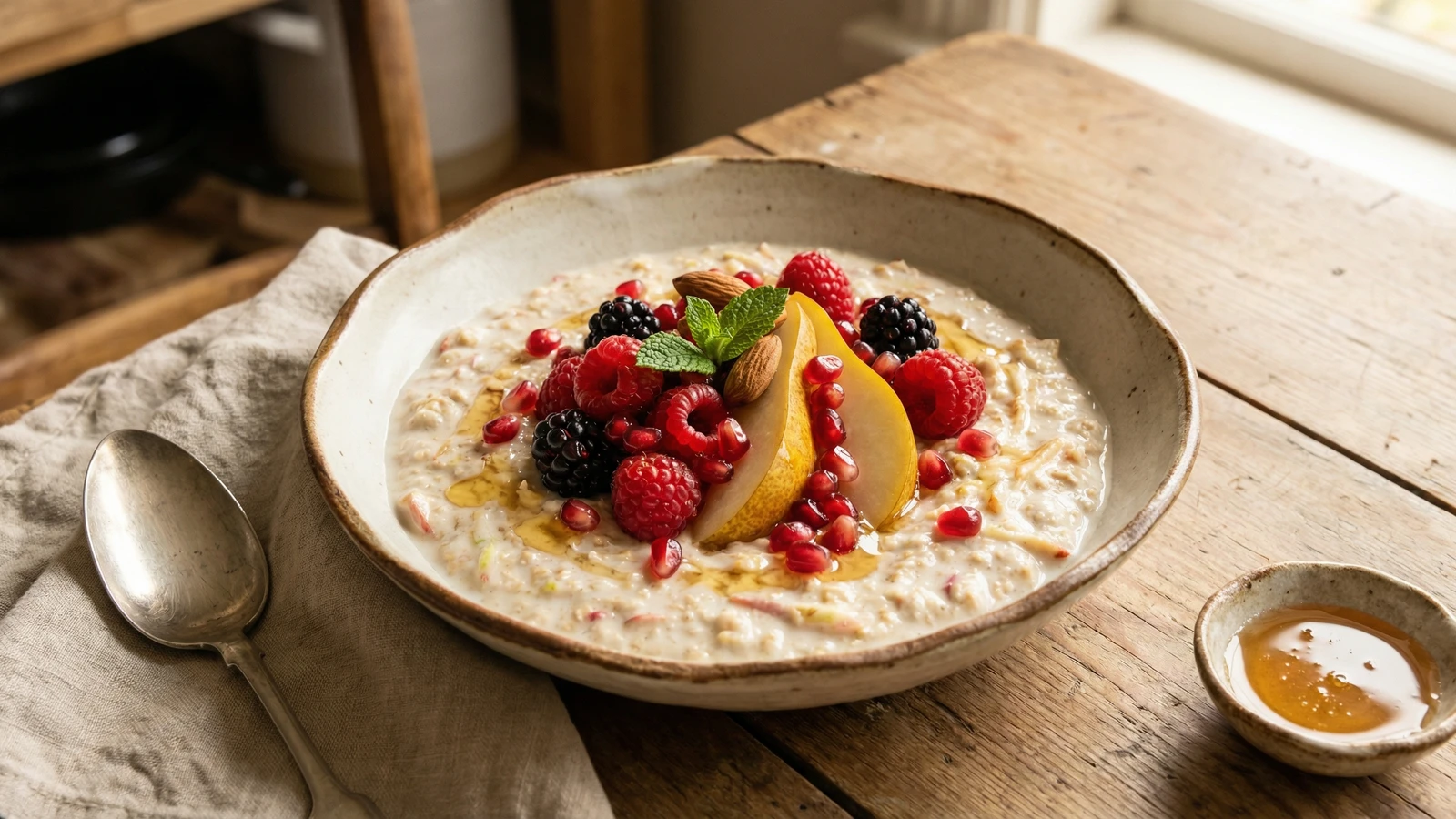
Bircher Muesli with Fresh Orchard Fruit
Created by Chef Ally
Oats softened overnight in yogurt and orchard cider, then crowned with whatever fruit the morning and the season bring to your table. A breakfast that asks almost nothing of you and gives back everything.
Dr. Maximilian Bircher-Benner created this dish in Switzerland over a century ago, not as a recipe but as a philosophy. He believed raw food held life force that cooking destroyed. The muesli was his way of feeding patients something alive.
The genius is in what you do not do. No heat. No fuss. You combine oats with yogurt and fresh apple juice the night before, and time does the rest. By morning, the oats have softened into something creamy and whole. The grated apple has melted into the base. All that remains is to pile on whatever fruit is at its peak.
This is breakfast built around the market, around the orchard, around what is ripe right now. In July, that means berries so fragile they would not survive a truck ride. In October, crisp pears and the first pomegranates. The muesli base stays the same. The fruit changes with the weeks. That is the point.
Every meal is a meaningful choice. Buying your apple juice from a local cider press, your yogurt from a small dairy, your fruit from farmers you recognize: these choices shape the food system and they shape the bowl in front of you.
The technique, the tradition, and the story behind every dish.
Discover Culinary AdvisorIngredients
old-fashioned rolled oats
Quantity
2 cups
plain whole milk yogurt
Quantity
1 cup
fresh-pressed apple juice or cider
Quantity
1 cup
raw honey or pure maple syrup
Quantity
2 tablespoons
crisp apple
Quantity
1 large
such as Honeycrisp or Gravenstein
lemon
Quantity
half
juiced
raw almonds
Quantity
1/4 cup
roughly chopped
raw hazelnuts
Quantity
2 tablespoons
roughly chopped
mixed seasonal fruit
Quantity
2 cups
such as berries, sliced stone fruit, or pear
pomegranate seeds (optional)
Quantity
from half a pomegranate
toasted pumpkin seeds
Quantity
2 tablespoons
| Ingredient | Quantity |
|---|---|
| old-fashioned rolled oats | 2 cups |
| plain whole milk yogurt | 1 cup |
| fresh-pressed apple juice or cider | 1 cup |
| raw honey or pure maple syrup | 2 tablespoons |
| crisp applesuch as Honeycrisp or Gravenstein | 1 large |
| lemonjuiced | half |
| raw almondsroughly chopped | 1/4 cup |
| raw hazelnutsroughly chopped | 2 tablespoons |
| mixed seasonal fruitsuch as berries, sliced stone fruit, or pear | 2 cups |
| pomegranate seeds (optional) | from half a pomegranate |
| toasted pumpkin seeds | 2 tablespoons |
Equipment Needed
- •Large mixing bowl with tight-fitting lid
- •Box grater
- •Serving bowls, preferably ceramic or wood
Instructions
- 1
Combine the base
In a large bowl, stir together the oats, yogurt, and apple juice until everything is evenly coated. The oats should look wet and loose. They will absorb the liquid overnight and soften into something creamy without any heat. This is the whole point of Bircher: time does the work.
Use oats you can see through, the old-fashioned kind with texture. Instant oats dissolve into paste. - 2
Grate the apple
Grate the apple on the large holes of a box grater, skin and all. The skin holds flavor and color. Toss the shreds immediately with the lemon juice to keep them from browning, then fold into the oat mixture. The apple becomes part of the muesli itself, not a topping.
- 3
Add sweetener and nuts
Drizzle in the honey or maple syrup and fold through. Add the chopped almonds and hazelnuts. The nuts will soften slightly overnight but keep enough bite to remind you this is food with substance. Stir everything together until uniform.
Taste your apple juice before adding sweetener. Fresh cider from a good orchard may need less honey than store-bought. - 4
Rest overnight
Cover the bowl tightly and refrigerate for at least eight hours, or up to two days. The oats will drink in the liquid and become tender and creamy. By morning, the texture should be soft but not mushy, with the grated apple melted into the whole.
- 5
Prepare the fruit
The morning of serving, wash and prepare whatever fruit is ripe and alive. In summer, this means berries that stain your fingers and stone fruit sliced off the pit. In fall, thin pear slices and pomegranate jewels. In winter, citrus supremes and persimmon. Let the season decide.
Cut fruit just before serving. The aliveness matters. Fruit prepared yesterday has lost something you cannot recover. - 6
Serve and finish
Divide the muesli among bowls. If it has thickened too much overnight, stir in a splash of apple juice or milk to loosen. Top generously with the prepared fruit, scatter with pumpkin seeds for crunch, and add a small drizzle of honey if you like. Serve cold, with a spoon that can reach the bottom of the bowl.
Chef Tips
- •Seek out fresh-pressed apple cider from a local orchard or farmers market. The flavor is incomparable to pasteurized juice that has traveled thousands of miles.
- •Whole milk yogurt gives the muesli body. Low-fat versions produce something thin and unsatisfying. If you can find yogurt from a small dairy, the difference will be obvious.
- •The base keeps for three days refrigerated, but prepare fresh fruit each morning. Yesterday's berries are not this morning's berries.
- •In deep winter when fresh fruit feels sparse, try roasted pears or baked apples with cinnamon as a warm topping over the cold muesli. The contrast is beautiful.
- •If you cannot find good stone fruit or berries, do not force it. A single perfect apple, sliced thin, is better than mediocre fruit piled high.
Advance Preparation
- •The oat base must be made at least 8 hours ahead and can rest for up to 2 days refrigerated. The flavor deepens with time.
- •Prepare fruit only on the morning of serving. The aliveness of just-cut fruit is the whole point.
- •For meal prep, portion the base into individual jars and refrigerate. Top with fresh fruit each morning before eating.
Frequently Asked Questions
Nutrition Information
1 serving (about 340g)
Where cooking meets culture.
Culinary mentorship, cultural storytelling, and the editorial depth that makes cooking meaningful.
Explore Culinary Advisor