Culinary Advisor
A cooking platform built around craft, culture, and the stories behind what we eat.
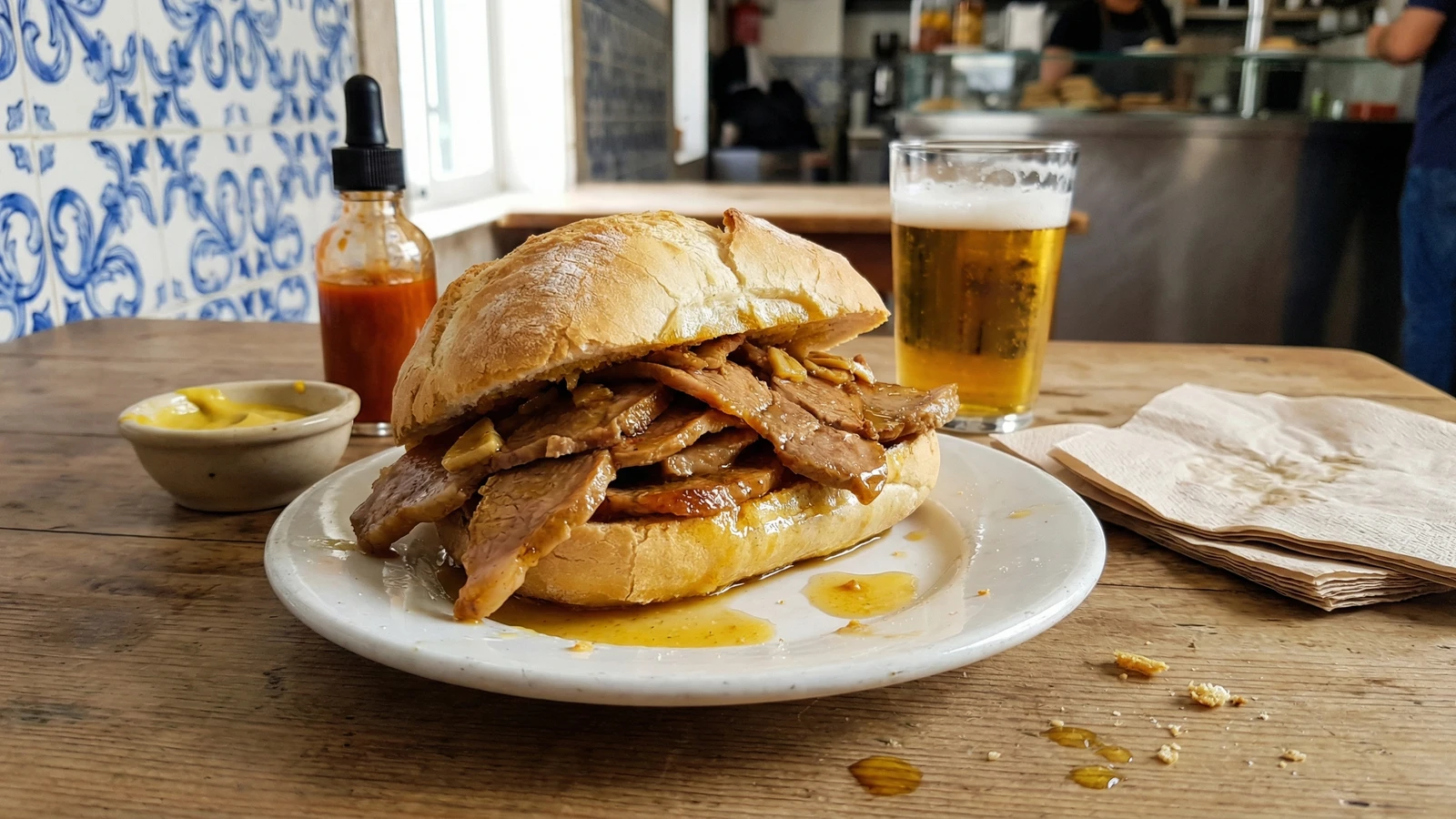
Bifana
Created by
Alentejo's gift to late nights and hungry workers: thin pork bathed in garlic and white wine, stuffed into a crusty roll. Mustard or piri-piri, that's the only question.
If you want to understand Portugal, eat a bifana standing at a zinc counter at midnight.
This is the sandwich that feeds everyone. Workers grabbing lunch. Students after exams. Families after Santos Populares. Strangers at highway rest stops who become friends over bread and pork. The bifana doesn't discriminate. It just feeds.
Avó Leonor didn't make bifanas at home. This was tasca food, she'd say, food you eat standing up, food made by men in aprons who've been flipping pork in the same pan for forty years. But when I started Mesa da Avó, I wanted to understand how they did it. So I spent weeks in tascas across Alentejo and Lisbon, watching, asking, tasting. The secret isn't complicated. It's just time. The pork braises gently in wine and garlic until it practically falls apart when you look at it. Then it goes into a papo seco that's been warmed on the grill, maybe dragged through the cooking juices.
Mustard or piri-piri? That's the eternal debate. In Lisbon, mustard. In the Algarve, piri-piri. In my kitchen, both bottles sit on the table. A cozinha é memória, and your memory gets to choose.
Bifana emerged from the tascas of Alentejo and Lisbon in the early 20th century, becoming the workingman's sandwich across Portugal. The name likely derives from 'bife' (steak), though bifana pork is sliced thin rather than left as a steak. Vendas Novas in Alentejo claims to be the birthplace, hosting an annual festival that serves thousands of bifanas in a single weekend.
The technique, the tradition, and the story behind every dish.
Discover Culinary AdvisorIngredients
pork loin or leg
Quantity
600g
sliced very thin (about 3mm)
garlic cloves
Quantity
4
smashed
dry white wine
Quantity
1 cup
white wine vinegar
Quantity
2 tablespoons
bay leaves
Quantity
2
sweet paprika (colorau)
Quantity
1 teaspoon
hot paprika or piri-piri paste (optional)
Quantity
1/2 teaspoon
lard or olive oil
Quantity
3 tablespoons
sea salt
Quantity
1 teaspoon
black pepper
Quantity
freshly ground, to taste
papo seco rolls
Quantity
4
yellow mustard
Quantity
for serving
piri-piri sauce (optional)
Quantity
for serving
| Ingredient | Quantity |
|---|---|
| pork loin or legsliced very thin (about 3mm) | 600g |
| garlic clovessmashed | 4 |
| dry white wine | 1 cup |
| white wine vinegar | 2 tablespoons |
| bay leaves | 2 |
| sweet paprika (colorau) | 1 teaspoon |
| hot paprika or piri-piri paste (optional) | 1/2 teaspoon |
| lard or olive oil | 3 tablespoons |
| sea salt | 1 teaspoon |
| black pepper | freshly ground, to taste |
| papo seco rolls | 4 |
| yellow mustard | for serving |
| piri-piri sauce (optional) | for serving |
Equipment Needed
- •Wide heavy pan or skillet
- •Meat mallet (if pounding pork thin)
- •Tongs for turning
Instructions
- 1
Prepare the pork
If your butcher hasn't sliced the pork thin enough, place it between sheets of plastic wrap and pound gently with a meat mallet until about 3mm thick. You want pieces that will cook quickly and become tender. Season both sides with salt and pepper.
- 2
Build the braising liquid
In a wide, heavy pan or skillet, combine the white wine, vinegar, smashed garlic, bay leaves, sweet paprika, and hot paprika if using. Bring to a simmer over medium heat and let it bubble for 2 minutes. The kitchen should smell sharp and garlicky. This is the perfume of every tasca in Portugal.
Some cooks add a splash of beer to the braising liquid. Others swear by a touch of aguardente. The wine and garlic are non-negotiable; everything else is regional preference. - 3
Braise the pork
Add the lard to the simmering liquid and stir until melted. Lay the pork slices in a single layer (work in batches if needed). Reduce heat to medium-low and let the pork simmer gently in the liquid, turning once, until cooked through and very tender, about 8 to 10 minutes per batch. The meat should almost melt when you press it. Transfer cooked slices to a warm plate and keep covered while you finish the rest.
- 4
Reduce the molho
Once all the pork is cooked, increase heat to medium-high and let the braising liquid reduce by about half, becoming glossy and concentrated. This is your molho, the sauce that makes a bifana a bifana. Taste it. It should be intensely savory, slightly acidic, punchy with garlic. Return all the pork to the pan and turn off the heat, letting the slices bathe in the sauce.
The molho is liquid gold. Don't throw it away. Every drop should end up in the sandwich or soaked into the bread. - 5
Prepare the rolls
Split the papo secos in half horizontally. Toast them cut-side down in a dry pan or on a grill for a minute until slightly golden and warm. For the authentic experience, drag the cut sides through the molho in the pan. The bread should drink the sauce but not turn soggy.
- 6
Assemble and serve
Pile the braised pork generously into each roll. Spoon a little extra molho over the meat. Serve immediately with mustard and piri-piri sauce on the side. Let everyone choose their own path. Eat standing up if you want the full experience. This is not a fork and knife situation. This is a napkin-tucked-into-collar, juice-running-down-your-wrist situation. Embrace it.
Chef Tips
- •Ask your butcher to slice the pork thin. In Portugal, this cut is sold specifically for bifanas. If you can't find it, pork loin pounded thin works perfectly.
- •Lard is traditional and gives the best flavor. If you can find Portuguese banha (rendered pork fat), use it. Olive oil works but tastes different.
- •The papo seco is essential. It's crusty outside, soft inside, and drinks sauce without falling apart. If you can't find them, a good Portuguese roll or a crusty Italian roll will do. Soft hamburger buns are not acceptable. I'm sorry, but they're not.
- •Make extra molho. Serious bifana eaters like to dip their sandwich as they eat, or pour more sauce on halfway through.
- •Leftovers (if there are any) reheat well. Warm the pork gently in the molho over low heat. The bread must be fresh.
Advance Preparation
- •The pork can be braised up to a day ahead and refrigerated in its molho. Reheat gently before serving.
- •For best results, assemble the sandwiches just before eating. The bread should be freshly toasted.
Frequently Asked Questions
Nutrition Information
1 serving (about 220g)
Where cooking meets culture.
Culinary mentorship, cultural storytelling, and the editorial depth that makes cooking meaningful.
Explore Culinary Advisor