Culinary Advisor
A cooking platform built around craft, culture, and the stories behind what we eat.
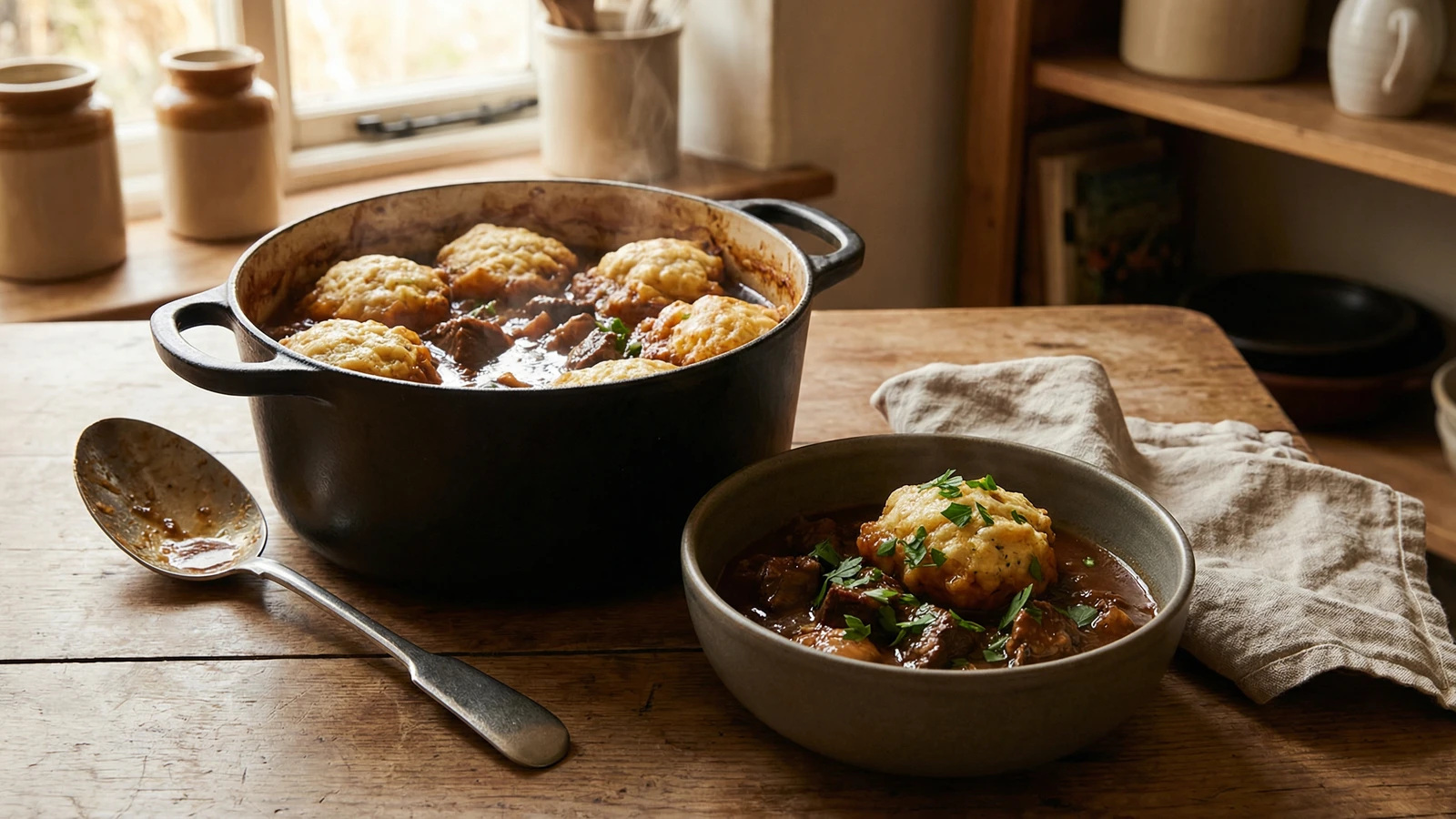
Beef Stew with Suet Dumplings
Created by Chef Thomas
Chuck beef braised until it gives way, root vegetables gone soft and sweet in a dark, glossy gravy, with suet dumplings steamed on top until they puff into something pillowy and golden. The kind of pot you carry to the table with both hands.
January rain on the window. The kitchen dark by four o'clock. The oven has been on for two hours and the whole house smells of something slow and good: beef and onions and thyme, the warmth of it meeting you in the hallway before you've even taken your coat off. This is the evening this stew was made for.
I don't know when beef stew with dumplings stopped being fashionable. I don't much care. Fashion has nothing to say about a pot of braised chuck with root vegetables and suet dumplings steamed on top. This is food that does a job. It feeds people. It warms them through. It turns a dark, cold evening into something you'd choose rather than endure. That's enough. That's more than enough.
The stew itself is patient work, not difficult work. You brown the beef properly, build the gravy from the sticky bits in the pan, and let the oven do the rest. The dumplings go on near the end, six or eight rough balls of suet dough dropped onto the surface to steam and swell in the last twenty minutes. They come out puffed and light on top, soaked with gravy underneath. I wrote it down in the notebook years ago: dumplings, rain, Tuesday. It was all I needed to remember exactly how the kitchen felt.
A recipe is a conversation, not a contract. The vegetables can change with what's in the house. A parsnip instead of the swede. A turnip if you've got one. The stout can stand in for the wine. What matters is the method: slow heat, good stock, attention to the browning, and the confidence to leave it alone while it does its work. We're only making dinner.
The technique, the tradition, and the story behind every dish.
Discover Culinary AdvisorIngredients
chuck beef
Quantity
800g
cut into generous chunks
plain flour
Quantity
2 tablespoons
seasoned with salt and pepper
beef dripping or vegetable oil
Quantity
2 tablespoons
onions
Quantity
2
peeled and roughly chopped
carrots
Quantity
3
peeled and cut into thick rounds
celery
Quantity
2 sticks
sliced
swede
Quantity
1 small
peeled and cut into chunks
garlic
Quantity
2 cloves
crushed
tomato purée
Quantity
1 tablespoon
red wine or stout
Quantity
200ml
good beef stock
Quantity
500ml
bay leaves
Quantity
2
thyme
Quantity
a few sprigs
Worcestershire sauce
Quantity
1 teaspoon
fine sea salt
Quantity
to taste
black pepper
Quantity
to taste
self-raising flour
Quantity
150g
shredded beef suet
Quantity
75g
fresh flat-leaf parsley
Quantity
1 tablespoon
chopped
fine sea salt (for dumplings)
Quantity
pinch
cold water (for dumplings)
Quantity
5-6 tablespoons
| Ingredient | Quantity |
|---|---|
| chuck beefcut into generous chunks | 800g |
| plain flourseasoned with salt and pepper | 2 tablespoons |
| beef dripping or vegetable oil | 2 tablespoons |
| onionspeeled and roughly chopped | 2 |
| carrotspeeled and cut into thick rounds | 3 |
| celerysliced | 2 sticks |
| swedepeeled and cut into chunks | 1 small |
| garliccrushed | 2 cloves |
| tomato purée | 1 tablespoon |
| red wine or stout | 200ml |
| good beef stock | 500ml |
| bay leaves | 2 |
| thyme | a few sprigs |
| Worcestershire sauce | 1 teaspoon |
| fine sea salt | to taste |
| black pepper | to taste |
| self-raising flour | 150g |
| shredded beef suet | 75g |
| fresh flat-leaf parsleychopped | 1 tablespoon |
| fine sea salt (for dumplings) | pinch |
| cold water (for dumplings) | 5-6 tablespoons |
Equipment Needed
- •Large, heavy casserole dish with a lid (cast iron is ideal)
- •Mixing bowl for dumplings
- •Wooden spoon
Instructions
- 1
Brown the beef
Toss the beef chunks in the seasoned flour, shaking off any excess. Get a large, heavy casserole dish properly hot with the dripping or oil. Brown the meat in batches, giving each piece a minute or two on each side until it has a deep, dark crust. Don't crowd the pan. If you pile it all in at once, the temperature drops and the meat steams instead of searing. You'll lose the colour, and the colour is where the flavour starts. Set the browned meat aside on a plate.
Beef dripping, if you can get it, gives a deeper, more savoury crust than oil. A butcher will sell it to you for next to nothing. Worth asking. - 2
Soften the vegetables
Turn the heat down. Add the onions, carrots, celery, and swede to the same pan with its dark, sticky residue. Stir them through the fat and let them cook gently for eight to ten minutes, until the onions have turned translucent and the edges of everything are softening. Add the garlic and the tomato purée. Stir for another minute. The kitchen should be starting to smell like something worth staying home for.
- 3
Build the gravy
Pour in the wine or stout. Let it bubble and reduce by half, scraping up all those dark, caramelised bits from the bottom of the pan. This is where the gravy earns its depth. Return the beef and any resting juices to the pan. Add the stock, bay leaves, thyme sprigs, and Worcestershire sauce. The liquid should come about two-thirds of the way up the meat and vegetables. If it doesn't, add a splash more stock or water. Bring it to a gentle simmer.
Stout works beautifully here if you have it. Something dark and not too bitter. It gives the gravy a rounded, almost malty sweetness that wine doesn't quite achieve. - 4
Braise low and slow
Put the lid on and transfer to an oven set at 160C/140C fan, or keep it on the lowest heat your hob will give. Leave it alone for an hour and a half to two hours. You'll know it's ready when the beef yields to a fork without resistance and the gravy has thickened into something dark and glossy that coats the back of a spoon. Season and taste. Then taste again. Adjust the salt. This is where most stews fail, not enough seasoning at the end.
- 5
Make the dumplings
While the stew is in its final stretch, make the dumplings. Mix the self-raising flour, suet, parsley, and a good pinch of salt in a bowl. Add the cold water a tablespoon at a time, stirring with a fork until it comes together into a soft, slightly sticky dough. Don't overwork it. Handle it lightly. The less you interfere, the lighter they'll be. Shape into six or eight balls, roughly the size of a golf ball. They don't need to be neat. They'll swell as they cook.
Cold hands and cold water make lighter dumplings. If your hands run warm, rinse them under the cold tap before you start shaping. It sounds like an old wives' tale. It isn't. - 6
Steam the dumplings on top
Take the lid off the stew. The gravy should be at a gentle, contented simmer. Place the dumplings on the surface, spacing them so they have room to expand. Put the lid back on and cook for twenty to twenty-five minutes, either in the oven or on the hob over a low heat. Don't lift the lid for the first fifteen minutes. The dumplings steam as much as they simmer, and opening the lid lets the heat escape. When they're done, they'll have doubled in size, puffed and pillowy on top, soaked with gravy underneath.
- 7
Serve from the pot
Bring the whole pot to the table. There are few better feelings than lifting the lid in front of someone and watching the steam rise. Ladle generously into warm bowls: meat, vegetables, plenty of gravy, a dumpling or two perched on top. A scattering of parsley if you think of it. Serve with nothing more than the quiet knowledge that this is exactly the right food for the evening.
Chef Tips
- •Buy the best beef you can. Chuck is the cut here, from the shoulder, well-marbled with fat that melts down during braising and bastes the meat from within. It wants long, slow cooking to become tender. Don't rush it with a leaner cut. The fat is the point.
- •The browning matters more than you think. A deep, dark crust on each piece of beef is the foundation of the whole gravy. If it looks anaemic when you take it out of the pan, put it back. You're not cooking the meat through. You're building flavour on the surface.
- •Dumplings are forgiving, but they ask one thing of you: a light touch. Mix the dough just until it holds together. Shape it gently. If you knead it like bread, you'll get something dense and heavy. A dumpling should be pillowy, not leaden.
- •This stew is better the next day. The flavours settle and deepen overnight. Make it on a Sunday, eat it on Monday. If you're reheating, make fresh dumplings. They don't keep well, but the stew only improves with time.
Advance Preparation
- •The stew, without dumplings, can be made up to two days ahead and refrigerated. The flavour improves with time. Reheat gently on the hob, bring to a simmer, then add freshly made dumplings and cook for twenty-five minutes.
- •Freezes well for up to three months without dumplings. Defrost overnight in the fridge and reheat thoroughly before adding fresh dumplings.
Frequently Asked Questions
Nutrition Information
1 serving (about 400g)
Where cooking meets culture.
Culinary mentorship, cultural storytelling, and the editorial depth that makes cooking meaningful.
Explore Culinary Advisor