Culinary Advisor
A cooking platform built around craft, culture, and the stories behind what we eat.
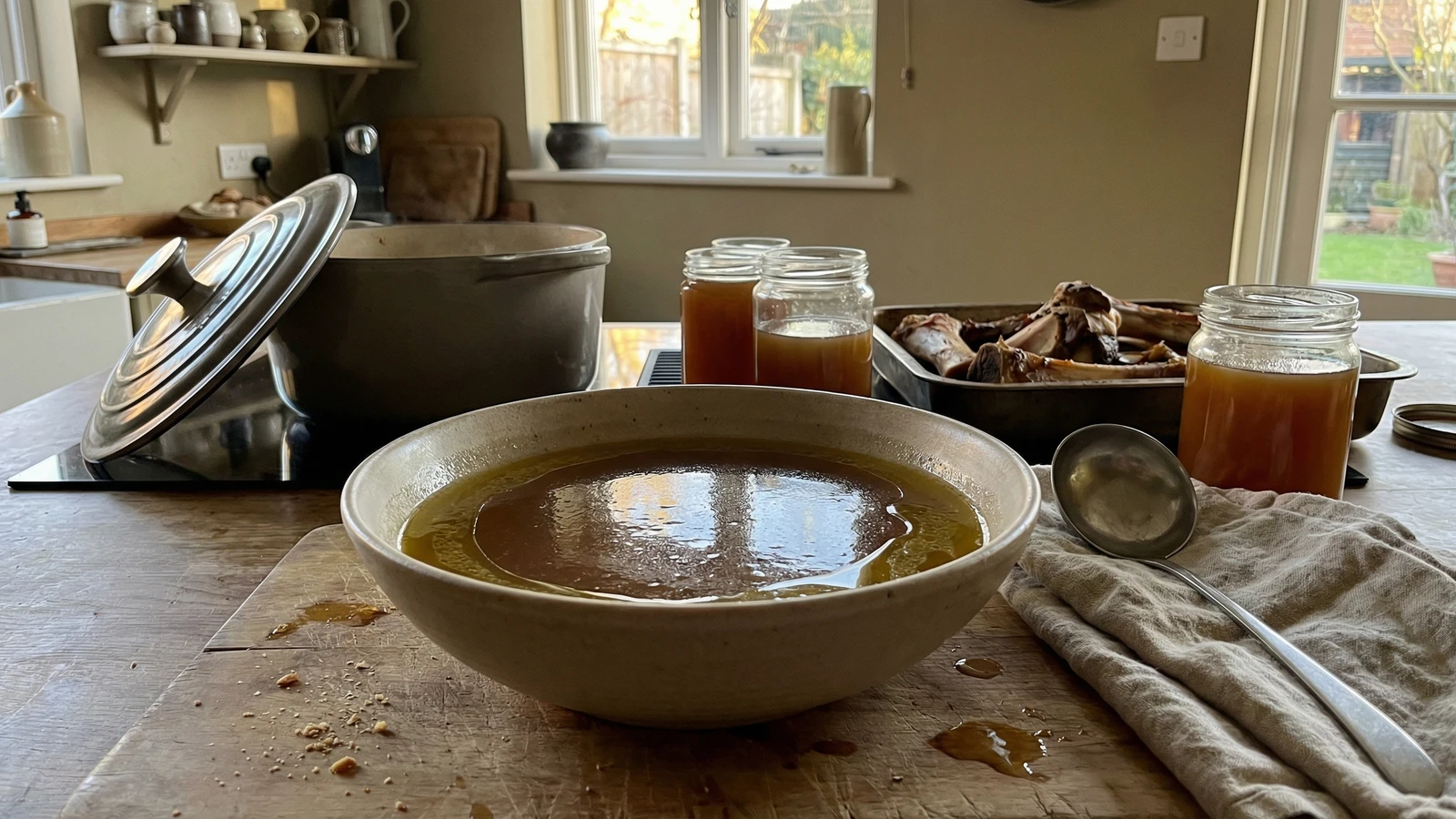
Beef Bone Stock
Created by Chef Thomas
Beef bones roasted until dark, then coaxed for a long afternoon into a deep amber stock, the foundation of every good gravy, every braise, every bowl of winter soup worth the trouble.
Agood beef stock is made on a day when you're going to be at home anyway. A Sunday with the rain coming sideways at the window. A Saturday after the market when the kitchen is already warm and you've nowhere to be. It isn't difficult, this. It just asks for your company.
It starts with proper bones from a proper butcher. Marrow bones for richness, knuckle or shin for the gelatine that gives the stock its body and makes it wobble when it cools. Roasted hard until they're deeply browned, because pale bones make pale stock and pale stock tastes like apology. Then vegetables, water, time. That's it. No stock cube has ever come close.
The kitchen will smell extraordinary for hours. Roasted beef and onions and something slow and patient underneath. I find myself wandering back in just to stand over it, not doing anything, just looking. There are few better feelings than a pot of stock ticking away on the hob while the weather does its worst outside.
I wrote it down in the notebook years ago and haven't changed a word: bones, fire, water, time. Make a big batch and freeze it in useful portions. Come January, when you reach for a jar to start a soup or a stew or a proper gravy, you'll be grateful to the version of yourself who put in the afternoon. Your kitchen, your rules, but trust me on this one.
The technique, the tradition, and the story behind every dish.
Discover Culinary AdvisorIngredients
beef bones
Quantity
2kg
a mix of marrow bones and knuckle or shin
onions
Quantity
2 large
halved, skins left on
carrots
Quantity
2
roughly chopped
celery sticks
Quantity
2
roughly chopped
garlic
Quantity
1 head
halved across the middle
tomato purée
Quantity
1 tablespoon
bay leaves
Quantity
2
parsley stalks
Quantity
small bunch
black peppercorns
Quantity
1 teaspoon
thyme
Quantity
1 sprig
cold water
Quantity
about 3 litres
| Ingredient | Quantity |
|---|---|
| beef bonesa mix of marrow bones and knuckle or shin | 2kg |
| onionshalved, skins left on | 2 large |
| carrotsroughly chopped | 2 |
| celery sticksroughly chopped | 2 |
| garlichalved across the middle | 1 head |
| tomato purée | 1 tablespoon |
| bay leaves | 2 |
| parsley stalks | small bunch |
| black peppercorns | 1 teaspoon |
| thyme | 1 sprig |
| cold water | about 3 litres |
Equipment Needed
- •Large heavy roasting tin
- •Large stockpot, at least 6 litres
- •Fine sieve
- •Muslin or clean tea towel for straining
- •Wooden spoon
- •Jars or freezer tubs for storage
Instructions
- 1
Roast the bones
Heat the oven to 220C/200C fan. Lay the bones out in a single layer in a heavy roasting tin. No oil, no seasoning. Roast for forty minutes, turning once halfway, until the bones are deeply browned and the marrow has started to soften into the tin. The kitchen will smell of roast beef. That's the whole point. Colour on the bones is colour in the stock, and stock without colour tastes of nothing.
Ask your butcher to cut the marrow bones into pieces roughly the length of your thumb. More surface area, more flavour, easier to fit in the pot. - 2
Add the vegetables
Add the onions, carrots, celery, and garlic to the tin. Spoon the tomato purée over the bones, rough and uneven, don't try to spread it. Return the tin to the oven for another twenty minutes, until the vegetables have taken on some colour at their edges and the tomato purée has gone dark and caught in places. You're not burning anything. You're building a deeper flavour.
- 3
Transfer and deglaze
Tip everything from the roasting tin into a large stockpot, scraping out any loose bits but leaving the fat behind. Put the empty tin over a low flame on the hob. Add a splash of water and stir with a wooden spoon, working the stuck, dark, sticky residue off the bottom. This is where half your stock's character lives. Pour it all, every last smear, into the stockpot.
- 4
Cover and simmer
Pour enough cold water over everything to cover the bones by about four fingers. Bring it slowly to a bare tremble, not a boil. A proper boil will give you a cloudy stock and you want clarity. When it starts to tremble, grey scum will rise to the surface. Skim it off with a spoon and discard. Do this two or three times in the first half hour, then stop worrying about it.
- 5
The long afternoon
Add the bay leaves, parsley stalks, peppercorns, and thyme. Leave the lid off, or half on if the stock is reducing too fast. Let it tick over on the lowest heat you can manage for six to eight hours. No fuss. You don't need to watch it. Come back every hour or so, top up with hot water if the bones ever peek above the surface, and skim any fat that pools on top. The stock will slowly turn the colour of strong tea, then of amber, then of something deeper still.
If you can leave it overnight on the very lowest setting, do. A stock that cooks for twelve hours at a tremble is richer than one rushed in four. Time is the ingredient most people skip. - 6
Strain and settle
Lift out the big bones with tongs and discard them. Strain the stock through a fine sieve lined with a piece of muslin, or a clean tea towel at a push, into a clean bowl or another pot. Press gently on the solids to get every drop, then throw them out. They've given everything they had. Let the stock sit for twenty minutes, then skim off any fat that has risen to the top with a spoon. If you can, chill it overnight and lift the solid fat off the next morning. Cleaner, easier, kinder to the stock.
- 7
Store and keep
Taste it. It should taste of beef, of roast, of time. If it tastes thin, put it back on the hob and reduce it by a third. Don't salt it. Salt goes in at the point of use, not here, because whatever you make from this stock will season itself. Decant into jars or freezer tubs. Label them. You will not remember what is in unlabelled tubs in February, no matter how certain you feel about it in October.
Chef Tips
- •The bones are everything. Get to know your butcher and ask for a mix: marrow bones for richness, knuckle or shin for gelatine. A stock made from one type alone is fine, but the mix is better. Bones are cheap. This is the least expensive serious thing you'll cook all year.
- •Never let it boil. A boiling stock is a cloudy stock, always. You want the surface to tremble, the occasional bubble breaking through, nothing more. Low and slow is not a slogan here. It's the whole technique.
- •Don't salt the stock. Ever. You'll reduce it later, or use it in dishes that you'll season to taste, and a stock seasoned up front will betray you the moment it concentrates. Keep it neutral. Seasoning happens at the point of use.
- •Freeze some of it in an ice cube tray, then tip the cubes into a freezer bag. Small hits of stock for when you want to deglaze a pan or finish a risotto without defrosting a whole tub.
- •If the finished stock feels thin, reduce it hard on the hob until it coats the back of a spoon. You can reduce it further still to a proper demi-glace, a dark, sticky, savoury thing that turns a weeknight steak into something far more than it was.
Advance Preparation
- •The stock keeps for up to four days in the fridge, with the layer of solid fat left on top acting as a seal. Lift the fat off when you come to use it.
- •Freezes beautifully for up to six months. Portion into tubs of 500ml and 250ml, and a few ice cube trays for smaller hits. Label everything with the date, because you won't remember.
- •Make this on a day when you're home anyway. It asks for your presence more than your attention.
Frequently Asked Questions
Nutrition Information
1 serving (about 250g)
Where cooking meets culture.
Culinary mentorship, cultural storytelling, and the editorial depth that makes cooking meaningful.
Explore Culinary Advisor