Culinary Advisor
A cooking platform built around craft, culture, and the stories behind what we eat.
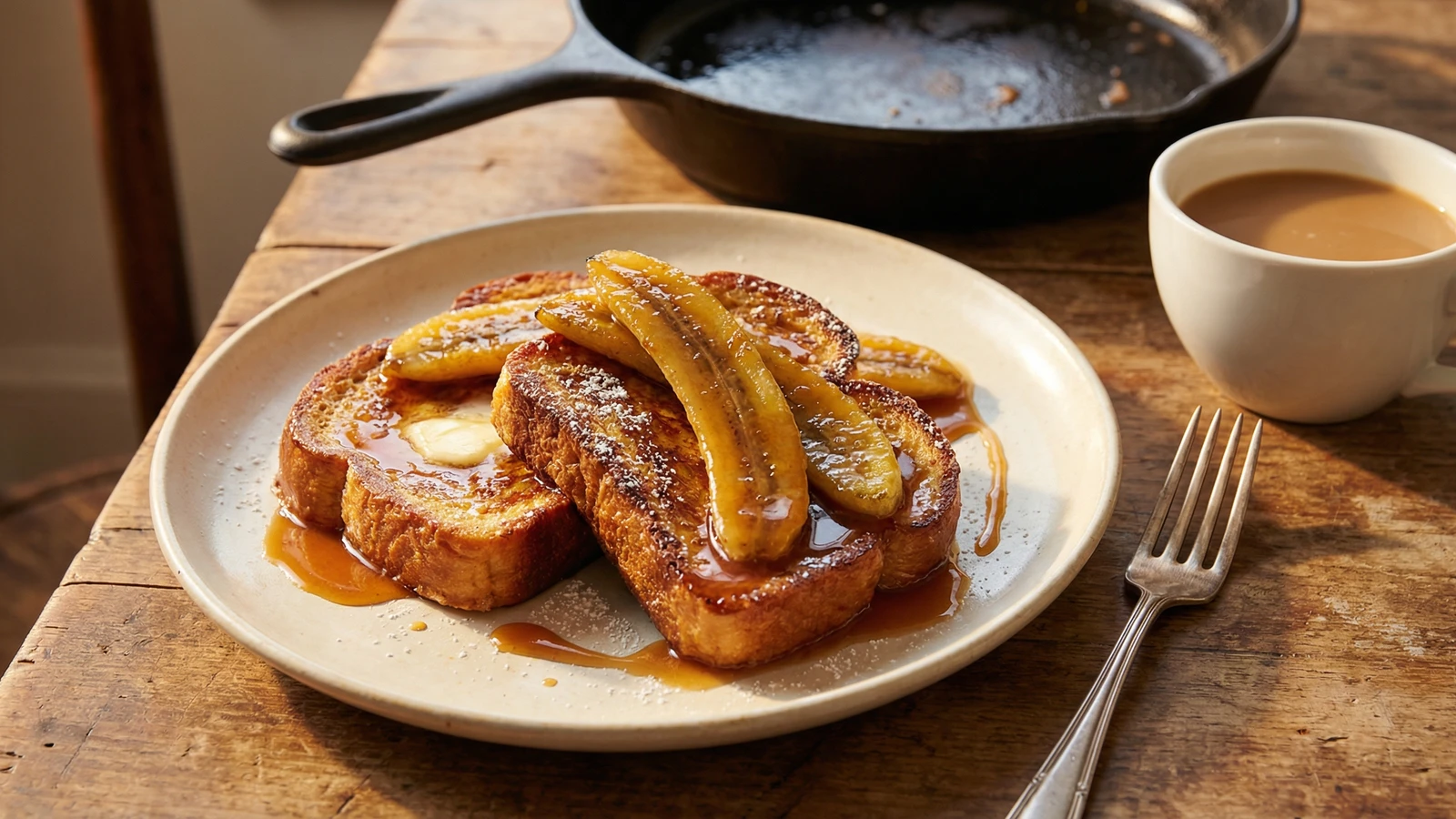
Bananas Foster French Toast
Created by Chef Remy
Thick-cut brioche drenched in vanilla custard, griddled until golden, then crowned with rum-flambéed bananas swimming in butter and brown sugar, the kind of breakfast that makes you cancel your morning plans.
Brennan's Restaurant invented Bananas Foster in 1951, right there in the French Quarter. They named it after a friend of the family, and it became the most famous dessert in New Orleans history. Now, I have spent a lifetime watching tourists and locals alike swoon over those flames licking up from the pan, the smell of caramelizing brown sugar and rum filling the dining room. One morning I thought: why should something this good only come after dinner?
At Lagniappe, we started serving this on Sunday mornings about fifteen years ago, and it has not left the menu since. The secret is in the brioche. You need bread rich enough to stand up to that custardy soak without falling apart, but still absorbent enough to drink in all that eggy goodness. Day-old brioche is ideal. Fresh bread fights you; stale bread surrenders.
The Bananas Foster sauce comes together in minutes, but those minutes demand your full attention. Brown sugar melts into butter, bananas soften without turning to mush, and then the rum goes in and you light it up. The flame burns off the harsh alcohol but leaves behind that deep, complex sweetness. When you spoon it over golden French toast, you have created something that feels like celebration. That's the bayou way: we don't wait for special occasions, we make the occasion special.
The technique, the tradition, and the story behind every dish.
Discover Culinary AdvisorIngredients
brioche bread
Quantity
1 loaf
cut into 8 slices, 1 1/2 inches thick
large eggs
Quantity
6
heavy cream
Quantity
1 cup
whole milk
Quantity
1/2 cup
granulated sugar
Quantity
3 tablespoons
pure vanilla extract
Quantity
2 teaspoons
ground cinnamon
Quantity
1 teaspoon
freshly grated nutmeg
Quantity
1/4 teaspoon
fine sea salt
Quantity
1/4 teaspoon
unsalted butter (for cooking)
Quantity
4 tablespoons
divided
unsalted butter (for sauce)
Quantity
6 tablespoons
dark brown sugar
Quantity
1 cup
packed
ground cinnamon (for sauce)
Quantity
1/2 teaspoon
bananas
Quantity
4
ripe but firm
dark rum
Quantity
1/4 cup
banana liqueur (optional)
Quantity
2 tablespoons
pure vanilla extract (for sauce)
Quantity
1 teaspoon
powdered sugar
Quantity
for dusting
whipped cream or vanilla ice cream (optional)
Quantity
for serving
| Ingredient | Quantity |
|---|---|
| brioche breadcut into 8 slices, 1 1/2 inches thick | 1 loaf |
| large eggs | 6 |
| heavy cream | 1 cup |
| whole milk | 1/2 cup |
| granulated sugar | 3 tablespoons |
| pure vanilla extract | 2 teaspoons |
| ground cinnamon | 1 teaspoon |
| freshly grated nutmeg | 1/4 teaspoon |
| fine sea salt | 1/4 teaspoon |
| unsalted butter (for cooking)divided | 4 tablespoons |
| unsalted butter (for sauce) | 6 tablespoons |
| dark brown sugarpacked | 1 cup |
| ground cinnamon (for sauce) | 1/2 teaspoon |
| bananasripe but firm | 4 |
| dark rum | 1/4 cup |
| banana liqueur (optional) | 2 tablespoons |
| pure vanilla extract (for sauce) | 1 teaspoon |
| powdered sugar | for dusting |
| whipped cream or vanilla ice cream (optional) | for serving |
Equipment Needed
- •12-inch cast iron skillet or griddle
- •Wide sauté pan (12-inch)
- •Shallow baking dish or pie plate for custard
- •Wire cooling rack
- •Long match or grill lighter for flambéing
Instructions
- 1
Build the custard base
Crack all six eggs into a wide, shallow baking dish or pie plate. Add the heavy cream, milk, granulated sugar, vanilla, cinnamon, nutmeg, and salt. Whisk vigorously until completely smooth with no streaks of egg white visible. The custard should be the color of pale gold with tiny flecks of spice throughout. Taste it. You should detect sweetness and vanilla with warm spice notes underneath.
Room temperature eggs blend more smoothly than cold ones. Pull them from the refrigerator twenty minutes before you start. - 2
Soak the brioche
Lay the brioche slices flat in the custard, working in batches if needed. Let them soak for two minutes, then flip and soak another two minutes. The bread should absorb the custard without becoming so saturated it falls apart. Press gently on the center: it should feel heavy and custardy but still hold together when you lift it. Day-old bread absorbs better than fresh.
If your brioche is very fresh, let the slices sit uncovered on a wire rack for an hour before soaking. That slight staleness is your friend here. - 3
Griddle the French toast
Heat a large cast iron skillet or griddle over medium heat. Add two tablespoons of butter and swirl until melted and foaming. When the foam subsides and the butter smells nutty, lay in the soaked brioche slices without crowding. Cook until the bottom turns deep golden brown and forms a slight crust, about three to four minutes. The edges will puff slightly, and you will smell caramelizing sugar. Flip carefully and cook another three minutes until both sides are beautifully bronzed. Transfer to a wire rack set over a baking sheet and keep warm in a 200 degree oven while you finish the remaining slices.
Cast iron holds heat steady and gives you that restaurant-quality crust. If the butter starts to smoke, pull the pan off heat for thirty seconds. - 4
Start the Bananas Foster sauce
While the French toast stays warm, melt six tablespoons of butter in a wide sauté pan over medium heat. Add the dark brown sugar and half teaspoon of cinnamon. Stir constantly until the sugar dissolves completely into the butter and the mixture bubbles gently, about two minutes. The color will deepen to amber and the whole kitchen will smell like pralines. This is the foundation of everything.
- 5
Add the bananas
Peel the bananas and slice them in half lengthwise, then cut each half into two pieces. You want substantial pieces that hold their shape. Lay the banana pieces gently into the bubbling caramel in a single layer. Let them cook undisturbed for one minute to develop a caramelized bottom, then turn them carefully with a spoon. The bananas should soften and take on the color of the sauce but still hold together. Another minute on the second side.
- 6
Flambé with rum
Remove the pan from heat and add the rum and banana liqueur if using. Return to heat and tilt the pan slightly toward the flame to ignite, or use a long match or lighter. The alcohol will catch fire with a dramatic whoosh, flames dancing blue and orange across the surface. Let it burn for about thirty seconds, gently shaking the pan, until the flames subside naturally. Stir in the teaspoon of vanilla. The sauce will be glossy, fragrant, and deeply complex.
Keep your face back when igniting. Have a lid nearby in case flames get too high, but they will calm down on their own. The flambé burns off harsh alcohol and concentrates the rum flavor beautifully. - 7
Plate and serve immediately
Place two slices of golden French toast on each warmed plate, overlapping slightly. Spoon the warm bananas over and around, then drizzle generously with that butter-rum caramel sauce. Make sure everyone gets plenty of sauce. Dust lightly with powdered sugar. Add a dollop of whipped cream or a small scoop of vanilla ice cream if the spirit moves you. Serve immediately while everything is warm and the sauce is still pooling on the plate.
Chef Tips
- •Use dark rum with real molasses character. Cheap white rum tastes thin and sharp. Appleton Estate or Myers's are both excellent choices that will not break the bank.
- •The flambé is dramatic but not dangerous if you follow the rules: remove from heat before adding alcohol, keep your face back, and never pour directly from the bottle. At Lagniappe, we train every cook on this before they touch the sauté station.
- •If you cannot find brioche, challah makes an excellent substitute. Both are enriched egg breads with similar richness and texture.
- •Ripe but firm bananas are essential. Overripe bananas turn to mush in the hot caramel. Look for yellow with just a few brown speckles.
- •This dish does not wait. The French toast loses its crispness and the sauce thickens as it cools. Have your family at the table before you start the Bananas Foster sauce.
Advance Preparation
- •The custard can be whisked together and refrigerated overnight. Give it a good stir before using.
- •Brioche can be sliced and left uncovered on a wire rack overnight to achieve ideal staleness.
- •The Bananas Foster sauce must be made fresh. It takes only five minutes and rewards immediacy.
Frequently Asked Questions
Nutrition Information
1 serving (about 450g)
Where cooking meets culture.
Culinary mentorship, cultural storytelling, and the editorial depth that makes cooking meaningful.
Explore Culinary Advisor