Culinary Advisor
A cooking platform built around craft, culture, and the stories behind what we eat.
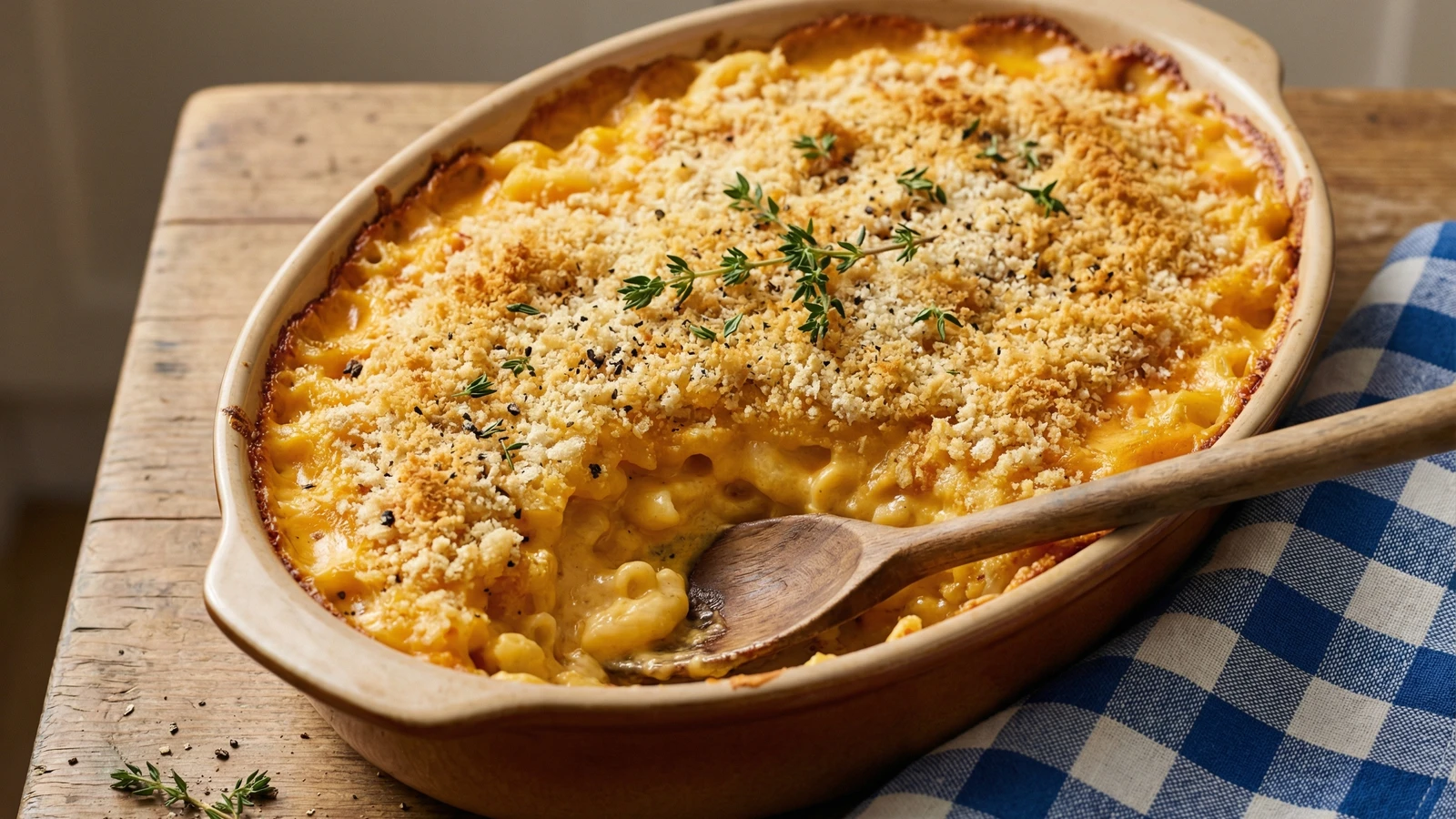
Baked Macaroni and Cheese
Created by
A golden-crusted casserole of tender elbow macaroni swaddled in velvety cheese sauce, this is the macaroni and cheese that defines American comfort cooking. No boxed shortcuts. No apologies.
Macaroni and cheese arrived on American tables courtesy of Thomas Jefferson, who encountered pasta during his years in Paris and brought a pasta machine home to Monticello. His enslaved chef, James Hemings, prepared macaroni with Parmesan for a state dinner in 1802. The dish never left our kitchens. Over two centuries, it evolved from presidential novelty to the most democratic of American foods: church suppers, school cafeterias, holiday tables, late-night cravings.
The secret to great baked macaroni lies in the sauce. Not a thin cheese soup poured over noodles, but a proper Mornay built on butter, flour, and milk, enriched with enough sharp cheddar to make your eyes widen. The pasta should be slightly underdone before it meets the sauce because the oven will finish the job. That final bake transforms the top into something glorious: a crackled golden crust that shatters under your fork while the interior stays creamy and yielding.
I've eaten macaroni and cheese from New England church basements to Texas barbecue joints, from my grandmother's cast iron Dutch oven to restaurants charging twenty dollars a portion. The best versions share common ground: sharp cheese with real bite, a sauce that coats without drowning, and a crust that demands you fight over the corner pieces. This recipe honors all of them.
The technique, the tradition, and the story behind every dish.
Discover Culinary AdvisorIngredients
elbow macaroni
Quantity
1 pound
unsalted butter
Quantity
6 tablespoons
divided
all-purpose flour
Quantity
1/3 cup
whole milk
Quantity
4 cups
warmed
dry mustard powder
Quantity
1 teaspoon
cayenne pepper
Quantity
1/4 teaspoon
nutmeg
Quantity
1/4 teaspoon
freshly grated
sharp cheddar cheese
Quantity
1 pound (about 4 cups)
grated
Gruyère cheese
Quantity
4 ounces (about 1 cup)
grated
kosher salt
Quantity
1 teaspoon
black pepper
Quantity
1/2 teaspoon
freshly ground
panko breadcrumbs
Quantity
1 cup
butter for topping
Quantity
2 tablespoons
melted
Parmesan cheese
Quantity
1/4 cup
freshly grated
| Ingredient | Quantity |
|---|---|
| elbow macaroni | 1 pound |
| unsalted butterdivided | 6 tablespoons |
| all-purpose flour | 1/3 cup |
| whole milkwarmed | 4 cups |
| dry mustard powder | 1 teaspoon |
| cayenne pepper | 1/4 teaspoon |
| nutmegfreshly grated | 1/4 teaspoon |
| sharp cheddar cheesegrated | 1 pound (about 4 cups) |
| Gruyère cheesegrated | 4 ounces (about 1 cup) |
| kosher salt | 1 teaspoon |
| black pepperfreshly ground | 1/2 teaspoon |
| panko breadcrumbs | 1 cup |
| butter for toppingmelted | 2 tablespoons |
| Parmesan cheesefreshly grated | 1/4 cup |
Equipment Needed
- •9x13-inch baking dish
- •Large heavy-bottomed saucepan (4-quart minimum)
- •Box grater or food processor with grating disc
- •Large pot for boiling pasta
- •Flat-bottomed wooden spoon or sturdy whisk
Instructions
- 1
Prepare your mise en place
Set oven to 375°F and position a rack in the center. Butter a 9x13-inch baking dish generously. Grate all your cheeses before you start cooking. Once the sauce comes together, you won't have time to fumble with a grater. The cheddar should be sharp, the kind that makes your tongue tingle. Mild cheddar produces mild results.
Block cheese melts smoother than pre-shredded, which contains anti-caking agents that can make your sauce grainy. - 2
Cook the pasta
Bring a large pot of water to a rolling boil and salt it until it tastes like the sea. Add the elbow macaroni and cook for two minutes less than the package directs. You want the pasta slightly firm at the center because it will continue cooking in the oven. Drain well but don't rinse. A little starch helps the sauce cling. Transfer to a large bowl and set aside.
- 3
Build the roux
Melt 4 tablespoons of butter in a large heavy-bottomed saucepan over medium heat. When the foaming subsides, add the flour all at once and whisk constantly for two minutes. The mixture will bubble and smell faintly of baking biscuits. This cooking eliminates the raw flour taste that ruins lesser cheese sauces. The roux should turn pale golden, like wet sand.
A flat-bottomed wooden spoon reaches corners better than a whisk for this step, preventing flour pockets from hiding. - 4
Create the béchamel
Slowly pour in the warm milk while whisking steadily. The sauce will seize and thicken immediately, then thin as you add more liquid. This is normal. Keep whisking. Once all the milk is incorporated, add the mustard powder, cayenne, and nutmeg. Increase heat slightly and continue whisking until the sauce thickens enough to coat the back of a spoon, about five minutes. When you drag your finger through the coating, it should leave a clear trail that holds.
- 5
Add the cheese
Remove the pan from heat. This is critical. Adding cheese to boiling sauce causes it to break, leaving you with an oily, grainy mess. Add the cheddar and Gruyère in three additions, stirring until each batch melts completely before adding the next. The sauce will become glossy and smooth, coating your spoon thickly. Season with salt and pepper. Taste it. The sauce should be assertively cheesy with a pleasant warmth at the back of your throat from the cayenne.
- 6
Combine pasta and sauce
Pour the cheese sauce over the drained macaroni and fold gently until every piece of pasta is coated. The sauce should seem almost too abundant. It will absorb into the pasta as it bakes. Transfer the mixture to your prepared baking dish and spread evenly. Don't pack it down. Air pockets help the sauce penetrate.
- 7
Prepare the topping
In a small bowl, toss the panko breadcrumbs with the melted butter and Parmesan until evenly coated. The crumbs should look like damp sand. Scatter this mixture over the top of the macaroni, covering the surface completely. This layer will become your crust, so don't be stingy.
- 8
Bake until golden
Place the baking dish on a sheet pan to catch any bubbling overflow. Bake for 30 to 35 minutes, until the top is deeply golden and the edges are bubbling. The smell will fill your kitchen, drawing people to the doorway. Remove from the oven and let rest for ten minutes before serving. This rest allows the sauce to set slightly, making serving easier and preventing burned tongues.
For an even crunchier top, broil for the final two minutes. Watch carefully. Breadcrumbs go from golden to charred in seconds.
Chef Tips
- •Buy a block of good sharp cheddar from the cheese counter, not the pre-shredded bags. The difference in melt and flavor is considerable. Vermont and Wisconsin produce excellent domestic options; English or Irish aged cheddars work beautifully for special occasions.
- •Warming the milk before adding it to the roux prevents lumps and speeds the sauce. Thirty seconds in the microwave or a few minutes in a saucepan does the job.
- •This dish reheats magnificently. Add a splash of milk before covering with foil and warming in a 325°F oven for twenty minutes. The sauce loosens, the top re-crisps, and somehow it tastes even better the second day.
- •For a Southern variation, stir in a cup of diced ham or crumbled bacon with the pasta. New England cooks might add a layer of sliced tomatoes under the breadcrumb topping. Both traditions have merit.
Advance Preparation
- •The cheese sauce can be made up to two days ahead. Press plastic wrap directly onto the surface to prevent a skin from forming and refrigerate. Reheat gently over low heat, adding a splash of milk to loosen before combining with freshly cooked pasta.
- •The fully assembled casserole, unbaked, can be refrigerated overnight. Cover tightly with plastic wrap. Add fifteen minutes to the baking time if baking straight from the refrigerator.
- •Baked macaroni and cheese keeps refrigerated for up to four days. Individual portions reheat well in a 350°F oven for fifteen minutes or in the microwave with a damp paper towel laid over the top.
Frequently Asked Questions
Nutrition Information
1 serving (about 280g)
Where cooking meets culture.
Culinary mentorship, cultural storytelling, and the editorial depth that makes cooking meaningful.
Explore Culinary Advisor