Culinary Advisor
A cooking platform built around craft, culture, and the stories behind what we eat.
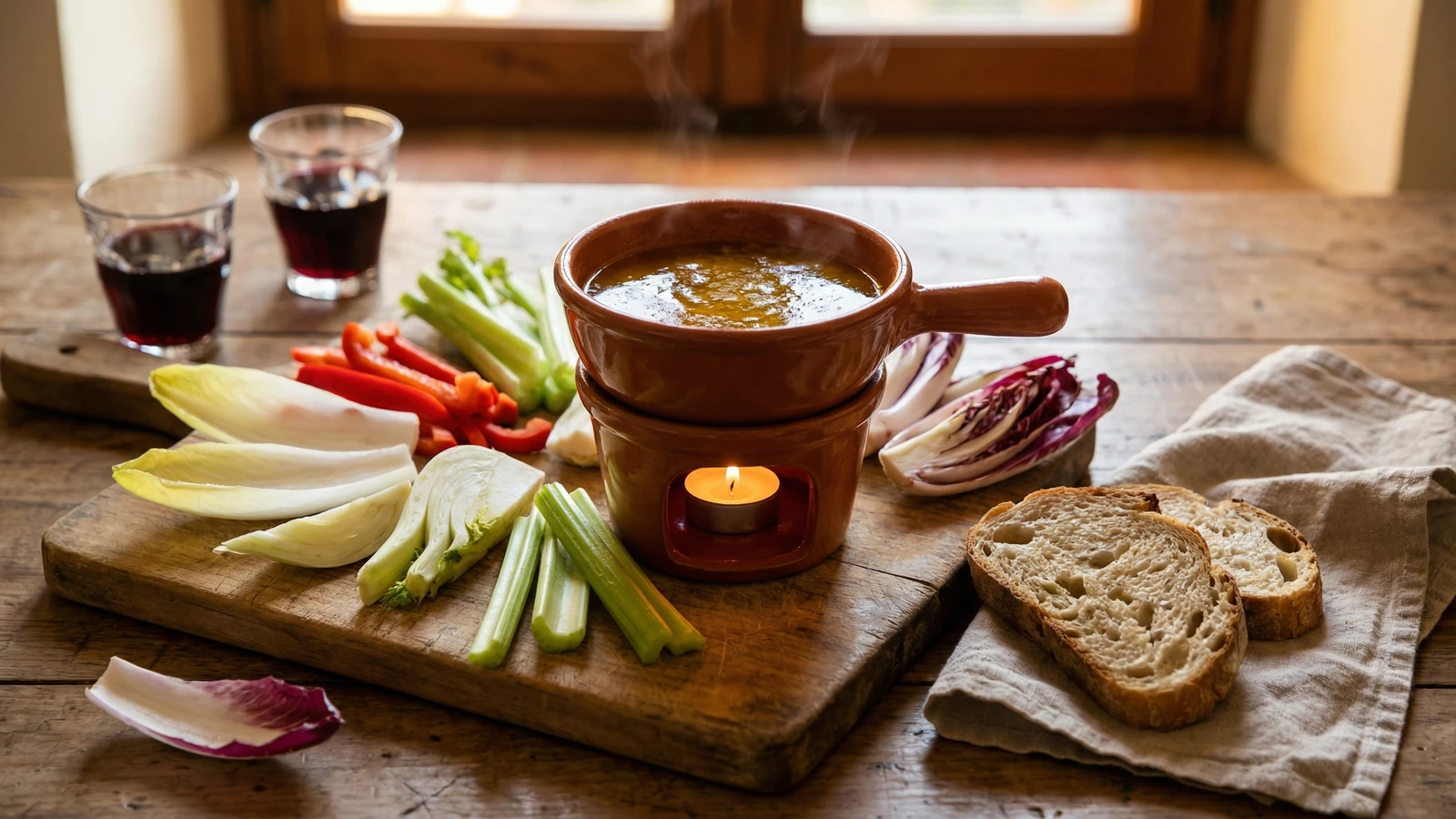
Bagna Cauda Piemontese
Created by Chef Graziella
The warming anchovy bath of Piedmont, where garlic is mellowed to sweetness and anchovies dissolve into something that draws a whole table together around one fragrant pot.
Bagna cauda means 'hot bath,' and this is precisely what you are making: a warm, fragrant bath of anchovy and garlic into which you dip vegetables. It is Piedmont's answer to fondue, though far older and, to my taste, far more interesting. This is not a dish you eat alone. It requires a table of people, good wine, and the willingness to reach across each other.
Now, before you protest about the garlic, understand that bagna cauda contains what appears to be an alarming quantity. This is correct. But the garlic is simmered slowly in milk until it becomes soft, sweet, and utterly transformed. What emerges has none of the harshness that makes raw garlic so difficult. The milk performs a kind of alchemy. Trust it.
The anchovies must be good ones, salt-packed if you can find them, rinsed and filleted with care. They dissolve into the warm fat until you cannot see them, only taste their depth. The vegetables are the vehicle: raw, crisp, cold against the warm sauce. In Piedmont they use cardoons, which are nearly impossible to find elsewhere. Use what you have. The ritual matters more than the specifics.
Bagna cauda emerged from the grape harvest traditions of the Langhe and Monferrato hills, where vineyard workers needed sustaining, warming food during late autumn labor. The anchovies arrived via ancient salt trade routes from Liguria, preserved fish being valuable currency in landlocked Piedmont. By the 19th century, the dish had become the centerpiece of autumn gatherings across the region.
The technique, the tradition, and the story behind every dish.
Discover Culinary AdvisorIngredients
garlic
Quantity
2 heads (about 20 cloves)
cloves separated and peeled
whole milk
Quantity
2 cups
salt-packed anchovies
Quantity
8 ounces (about 20 fillets)
soaked, rinsed, and filleted
unsalted butter
Quantity
1/2 cup (1 stick)
extra virgin olive oil
Quantity
1/2 cup
cardoons (optional)
Quantity
as needed for dipping
Belgian endive
Quantity
2 heads
leaves separated
red bell peppers
Quantity
2
cut into strips
fennel
Quantity
1 bulb
cut into wedges
celery
Quantity
4 stalks
cut into sticks
Savoy cabbage
Quantity
1/4 head
leaves separated
radicchio
Quantity
1 head
leaves separated
| Ingredient | Quantity |
|---|---|
| garliccloves separated and peeled | 2 heads (about 20 cloves) |
| whole milk | 2 cups |
| salt-packed anchoviessoaked, rinsed, and filleted | 8 ounces (about 20 fillets) |
| unsalted butter | 1/2 cup (1 stick) |
| extra virgin olive oil | 1/2 cup |
| cardoons (optional) | as needed for dipping |
| Belgian endiveleaves separated | 2 heads |
| red bell pepperscut into strips | 2 |
| fennelcut into wedges | 1 bulb |
| celerycut into sticks | 4 stalks |
| Savoy cabbageleaves separated | 1/4 head |
| radicchioleaves separated | 1 head |
Equipment Needed
- •Small heavy saucepan or terracotta bagna cauda pot (fujot)
- •Small flame or tea light warmer for serving
- •Wooden spoon or fork for mashing
Instructions
- 1
Prepare the anchovies
If using salt-packed anchovies, soak them in cold water for 30 minutes to remove excess salt. Drain, then gently separate the fillets from the bone, discarding the backbone and any fins. Rinse the fillets and pat dry. You should have about 20 fillets. If using oil-packed anchovies, simply drain them, but know the result will be less nuanced.
Salt-packed anchovies from Sicily or the Cantabrian coast of Spain are worth seeking. They have a depth that oil-packed cannot match. Look for them in Italian groceries or order them. - 2
Simmer garlic in milk
Place the peeled garlic cloves in a small saucepan with the milk. Bring to the gentlest simmer over low heat. Cook for 30 minutes, never allowing the milk to boil. The garlic should become very soft, easily crushed against the side of the pan. This step is not optional. It transforms the garlic from something sharp and aggressive into something sweet and mild.
If the milk threatens to boil, remove the pan from heat for a moment. Boiling milk scorches and the flavor is ruined. - 3
Prepare the vegetables
While the garlic simmers, prepare your vegetables. Cut them into pieces suitable for dipping: strips, wedges, whole leaves. Keep them cold and crisp. Arrange them on a platter with some beauty, though not fussiness. These are the vehicles for the sauce, and their cold crispness against the warm bagna cauda is essential to the experience.
- 4
Mash the garlic
Drain the garlic, reserving a few tablespoons of the milk. Using a fork or wooden spoon, mash the garlic cloves into a rough paste. They should be so soft this takes no effort. If they resist, they were not cooked long enough.
- 5
Build the bagna cauda
In a small heavy saucepan or the traditional terracotta pot called a fujot, combine the butter and olive oil. Warm over the lowest possible heat until the butter melts. Add the mashed garlic and stir. Add the anchovy fillets. Cook, stirring occasionally, until the anchovies dissolve completely into the fat, 10 to 15 minutes. The sauce should be fragrant but never sizzle or brown.
- 6
Adjust consistency
The bagna cauda should be loose enough to coat vegetables but not watery. If it seems too thick, add a spoonful of the reserved garlic milk. Taste and adjust. It should not taste of raw anchovy or sharp garlic. It should taste of warmth and depth.
- 7
Serve communally
Transfer the bagna cauda to a warmed serving vessel and set it over a small flame or candle to keep it warm. Place it in the center of the table. Surround it with the vegetables. Each person dips, catches the drips with bread if they wish, and eats. This continues until the sauce is gone or the company disperses. Pour good Piedmontese wine. Do not rush.
Traditionally, each person had their own small pot. This is ideal but impractical. One communal pot works if you use implements rather than fingers, though fingers are authentic.
Chef Tips
- •The garlic quantity alarms Americans. Do not reduce it. The milk transforms the garlic entirely. You will not taste raw garlic, only a sweet, mellow depth.
- •Seek salt-packed anchovies from a reputable Italian grocery. Agostino Recca from Sicily or Ortiz from Spain are reliable. The quality of your anchovies is the quality of your bagna cauda.
- •Cardoons are traditional, but so difficult to find that I suggest you use what is available. Belgian endive, fennel, peppers, and cabbage all serve well. The cold vegetable against warm sauce is what matters.
- •Keep the sauce warm but never hot. If it sizzles, it will turn bitter and the garlic will lose its mellowness. A gentle warmth is all it needs.
- •Some Piedmontese add a few tablespoons of cream at the end for additional richness. This is a variation, not a requirement.
Advance Preparation
- •The bagna cauda can be made several hours ahead and reheated gently. It will solidify as it cools, but warmth restores it.
- •Vegetables can be cut and held in ice water for several hours, then drained and patted dry before serving.
Frequently Asked Questions
Nutrition Information
1 serving (about 170g)
Where cooking meets culture.
Culinary mentorship, cultural storytelling, and the editorial depth that makes cooking meaningful.
Explore Culinary Advisor