Culinary Advisor
A cooking platform built around craft, culture, and the stories behind what we eat.
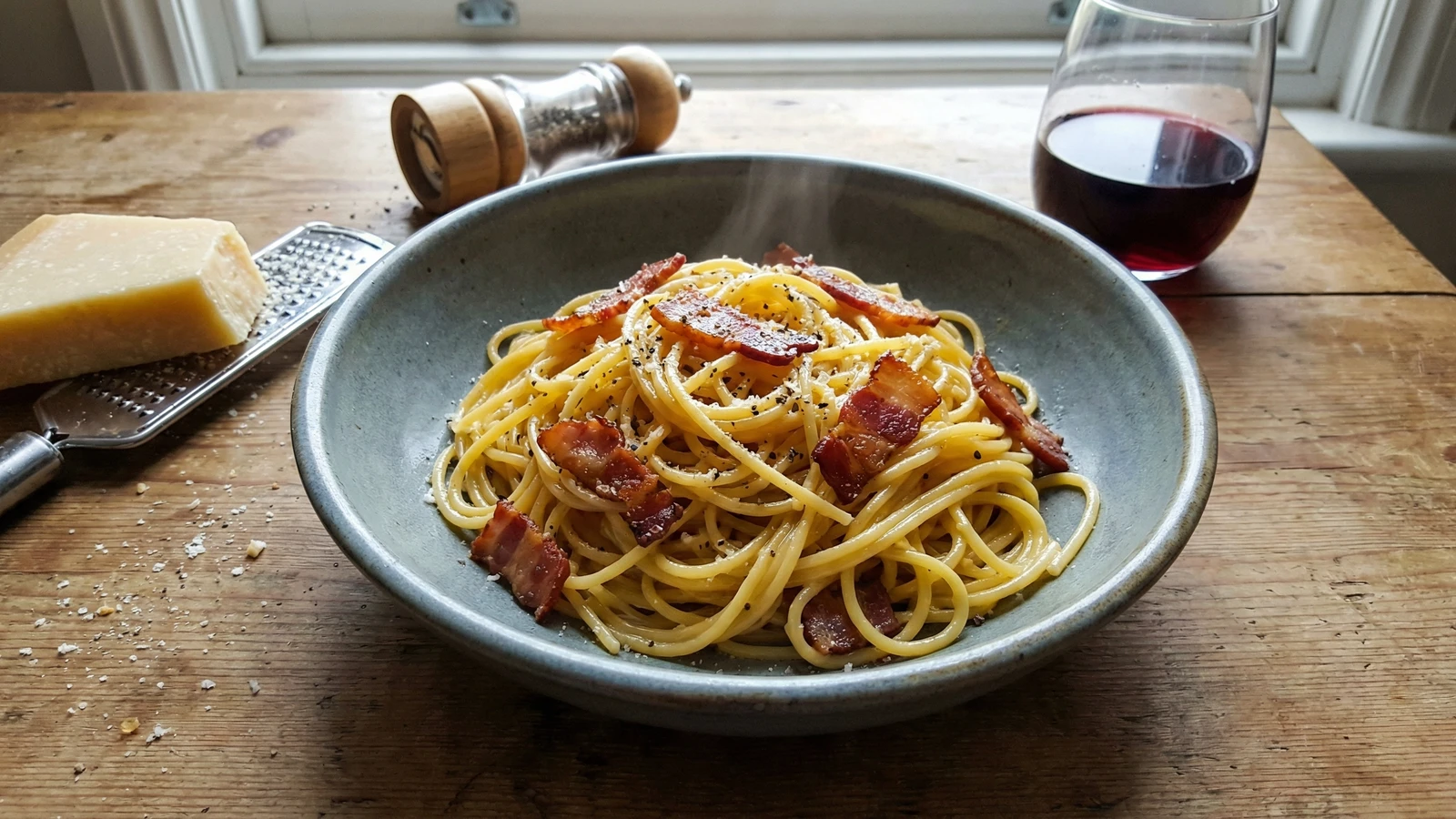
Bacon Carbonara
Created by Chef Thomas
A cold evening carbonara made with good smoked back bacon, eggs, Parmesan, and more black pepper than seems reasonable, tossed together in the time it takes to boil the pasta.
The kitchen is cold when you walk in. Coat still on. The heating hasn't caught up with the evening yet. This is when you want carbonara. Not planned, not considered. Just the quiet recognition that you're tired and hungry and there are eggs in the fridge and bacon in the drawer, and twenty minutes from now you could be sitting down to something genuinely good.
I know the rules. I know that a proper Roman carbonara uses guanciale, pecorino, no cream, no garlic, and would sooner cease to exist than admit a rasher of British back bacon. I respect that tradition. But I don't live in it. I live in a kitchen where the bacon comes from the butcher on the high street and the eggs are from a box at the market, and what I make with those things is not Roman carbonara. It's just a very good plate of pasta for a Tuesday night when nobody has the energy for ambition.
The cream is optional. A small splash, stirred into the egg mixture, gives you a margin of error and a slight richness that I happen to like. Leave it out if you prefer. Your kitchen, your rules. What isn't optional is the pasta water. That starchy, salty liquid is the thing that turns egg and cheese into a sauce. Save a mugful before you drain. It matters more than anything else in this recipe.
A recipe is a conversation, not a contract. This one is short and forgiving. Good bacon. Good eggs. Parmesan you've grated yourself. A generous hand with the pepper mill. We're only making dinner.
The technique, the tradition, and the story behind every dish.
Discover Culinary AdvisorIngredients
spaghetti or linguine
Quantity
200g
smoked back bacon
Quantity
4 rashers
cut into strips
egg yolks
Quantity
2 large
whole egg
Quantity
1 large
Parmesan
Quantity
50g
finely grated
olive oil
Quantity
1 tablespoon
garlic
Quantity
1 fat clove
peeled and lightly crushed
double cream (optional)
Quantity
a splash
black pepper
Quantity
generous amount
freshly ground
fine sea salt
Quantity
for the pasta water
| Ingredient | Quantity |
|---|---|
| spaghetti or linguine | 200g |
| smoked back baconcut into strips | 4 rashers |
| egg yolks | 2 large |
| whole egg | 1 large |
| Parmesanfinely grated | 50g |
| olive oil | 1 tablespoon |
| garlicpeeled and lightly crushed | 1 fat clove |
| double cream (optional) | a splash |
| black pepperfreshly ground | generous amount |
| fine sea salt | for the pasta water |
Equipment Needed
- •Large pan for boiling pasta
- •Wide frying pan or skillet
- •Tongs for tossing pasta
- •Box grater for the Parmesan
Instructions
- 1
Salt the water generously
Put a large pan of water on to boil. Salt it properly when it reaches a rolling boil. Properly means it should taste like mild seawater when you dip a spoon in. This is the only chance you get to season the pasta itself, and unseasoned pasta is a quiet disappointment no amount of sauce will fix.
Before you drain the pasta, save a mugful of the starchy cooking water. You'll need it. It's the thing that turns your egg and cheese mixture into a sauce rather than scrambled eggs on spaghetti. - 2
Crisp the bacon slowly
While the water heats, warm the olive oil in a wide pan over a medium heat. Add the bacon strips and the crushed garlic clove. Let the bacon cook without rushing it. You're not frying it to a crisp, you want it somewhere between chewy and golden, the fat rendered and starting to turn glassy, the edges just catching. The kitchen should smell of smoked bacon and warm garlic. When the garlic has gone a pale gold, fish it out. It's done its work.
- 3
Make the egg mixture
While the pasta cooks, beat the egg yolks and the whole egg together in a bowl with most of the Parmesan and a very generous amount of black pepper. More pepper than you think. If you're using cream, add it here. The mixture should be thick and golden, like a loose custard. This is your sauce. It will seem too thick and too little. That's correct.
- 4
Cook the pasta
Drop the spaghetti into the boiling water and cook it until it's just short of done. A minute less than the packet says. It should have some resistance when you bite it, not soft, not crunchy, just a firmness at the centre. It will finish cooking in the pan with the bacon.
- 5
Bring it together off the heat
This is the moment that matters. Take the bacon pan off the heat entirely. Use tongs to lift the pasta straight from the water into the bacon pan, bringing some of that starchy water with it. Toss it through the bacon and the rendered fat until every strand is coated. Wait thirty seconds. The pan needs to cool just enough that the eggs won't scramble. Then pour in the egg mixture and toss, toss, toss. Add splashes of the reserved pasta water as you go, working it through until the sauce turns glossy and clings to the pasta like silk. It should be loose enough to pool slightly on the plate. If it's too thick, more pasta water. If it looks too thin, give it a moment and it will thicken as the cheese melts.
The pan must be off the heat when the egg goes in. This is not negotiable. A hot pan gives you scrambled eggs on spaghetti. A warm pan gives you carbonara. The residual heat from the pasta and the bacon fat is enough. - 6
Serve immediately
Divide between warm bowls. Scatter the remaining Parmesan over the top and finish with another grinding of black pepper. Serve at once. Carbonara waits for nobody. It thickens as it sits, and you want it eaten in that brief, perfect window when the sauce is still glossy and the bacon still warm. Put it in front of someone. Watch their shoulders drop.
Chef Tips
- •Grate the Parmesan yourself, on the fine side of a box grater. The pre-grated sort in tubs is coated in starch to stop it clumping, which means it won't melt properly into the sauce. Ten seconds of grating saves you from a grainy carbonara.
- •Smoked back bacon from a good butcher is what you want. Dry-cured if you can get it. The supermarket stuff packed in plastic often weeps a milky liquid in the pan and steams rather than crisps. If the bacon isn't good, the carbonara won't be either. Sourcing is the first skill.
- •The whole thing should take about twenty minutes, and half of that is waiting for the water to boil. If you've got the egg mixture made and the bacon crisped before the pasta is done, you're exactly where you need to be. Timing is the only technique here.
- •If you've scrambled the eggs, and it happens to everyone at least once, don't throw it away. Toss it with the pasta anyway, add extra cheese and pepper, and call it something else. It'll still taste good. It just won't be carbonara.
Advance Preparation
- •You can cut the bacon into strips and grate the Parmesan ahead of time, but this is a dish best made in the moment. The sauce won't hold, the pasta won't wait, and the whole thing takes less time than setting the table.
- •The egg and cheese mixture can be whisked together an hour or two before and kept covered in the fridge. Bring it to room temperature before using, or the cold eggs will seize when they hit the warm pasta.
Frequently Asked Questions
Nutrition Information
1 serving (about 320g)
Where cooking meets culture.
Culinary mentorship, cultural storytelling, and the editorial depth that makes cooking meaningful.
Explore Culinary Advisor