Culinary Advisor
A cooking platform built around craft, culture, and the stories behind what we eat.
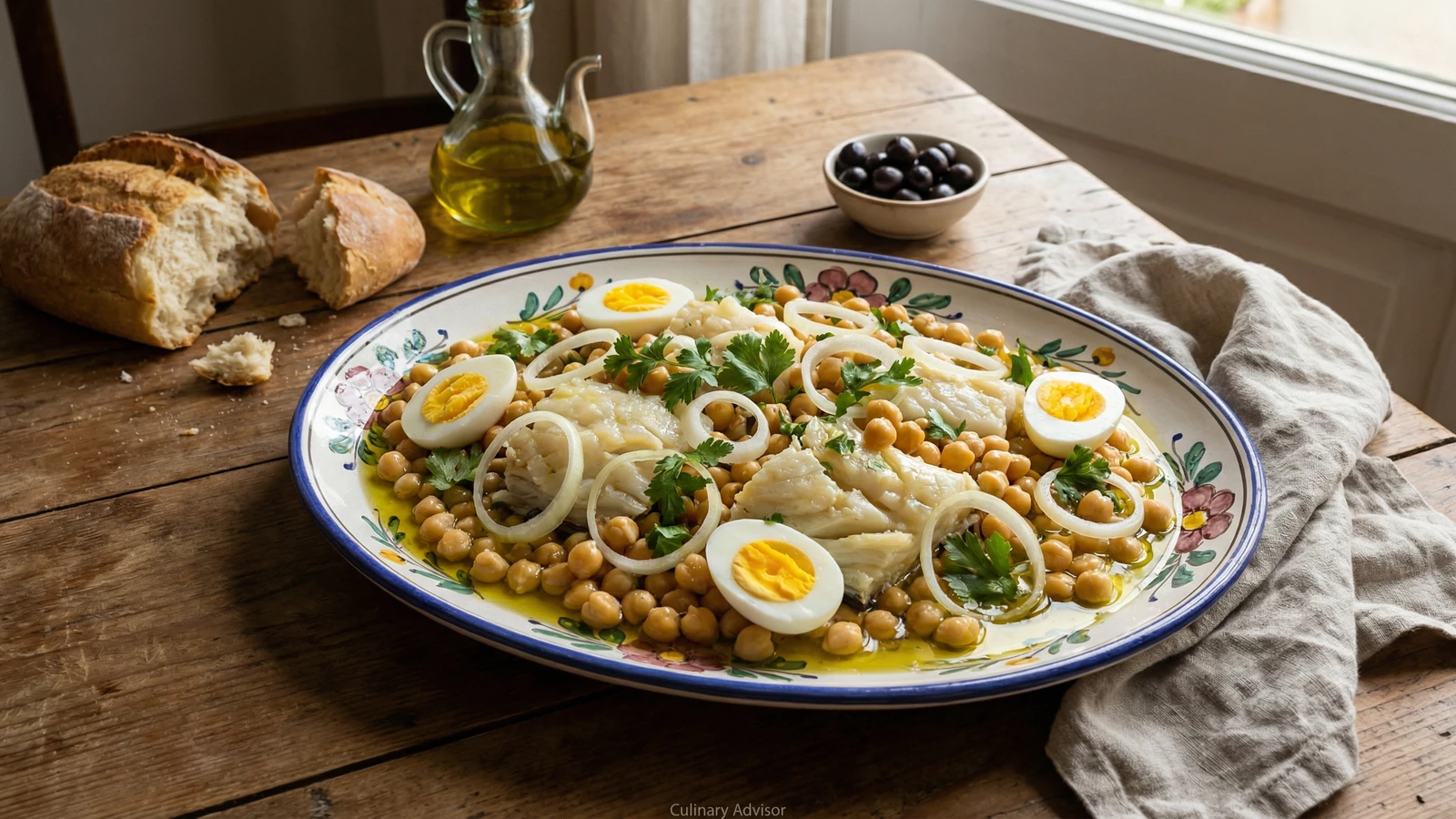
Bacalhau com Grão
Created by
The dish that fed Portugal through every Lent, every Friday, every fast day. Salt cod and chickpeas dressed in nothing but good azeite, onion, and faith that simple things done right are always enough.
This is the dish my grandmother made every Good Friday without fail. The kitchen would fill with the smell of chickpeas simmering, the cod poaching gently, and I knew: this was a sacred day. Not because of church. Because of the table.
Bacalhau com grão is peasant food at its most honest. There's nowhere to hide. No sauce to mask mistakes. Just perfectly soaked cod, tender chickpeas, sweet onion, and enough olive oil to make your soul sing. If your ingredients aren't good, everyone will know. If they are, everyone will know that too.
Avó Leonor served this at room temperature, the way it's meant to be eaten. The cod flaked into big pieces, the chickpeas still warm, the onion sliced thin and scattered raw on top. Then she'd drown everything in azeite from the cooperativa in Moura. "O azeite é o molho," she'd say. The olive oil is the sauce. She was right.
At Mesa da Avó, we serve this dish during Lent to packed tables of people who've forgotten what their grandmothers knew: that fasting food doesn't mean suffering. It means eating simply, eating well, eating with intention. This is the dish that proves restraint can be generous.
Bacalhau com grão became Portugal's definitive Lenten dish during centuries of Catholic fasting traditions, when meat was forbidden but preserved cod was not. The combination with chickpeas, introduced to Iberia by the Moors, created a complete protein that sustained families through forty days of abstinence. Every region claims their version: the north adds potatoes, the Alentejo adds more olive oil, Lisbon adds boiled eggs on top.
The technique, the tradition, and the story behind every dish.
Discover Culinary AdvisorIngredients
dried salt cod (bacalhau)
Quantity
600g
soaked 2 days, water changed 3 times
dried chickpeas (grão-de-bico)
Quantity
400g
soaked overnight
onion
Quantity
1 large
halved and sliced into thin rings
garlic
Quantity
4 cloves
smashed
bay leaves
Quantity
2
eggs
Quantity
6 large
waxy potatoes (optional)
Quantity
500g
extra virgin olive oil (azeite)
Quantity
3/4 cup
red wine vinegar
Quantity
3 tablespoons
flat-leaf parsley
Quantity
1 large bunch
roughly chopped
fresh cilantro (coentros) (optional)
Quantity
1 small bunch
roughly chopped
flaky sea salt
Quantity
to taste
black pepper
Quantity
freshly ground, to taste
black olives (optional)
Quantity
for garnish
| Ingredient | Quantity |
|---|---|
| dried salt cod (bacalhau)soaked 2 days, water changed 3 times | 600g |
| dried chickpeas (grão-de-bico)soaked overnight | 400g |
| onionhalved and sliced into thin rings | 1 large |
| garlicsmashed | 4 cloves |
| bay leaves | 2 |
| eggs | 6 large |
| waxy potatoes (optional) | 500g |
| extra virgin olive oil (azeite) | 3/4 cup |
| red wine vinegar | 3 tablespoons |
| flat-leaf parsleyroughly chopped | 1 large bunch |
| fresh cilantro (coentros) (optional)roughly chopped | 1 small bunch |
| flaky sea salt | to taste |
| black pepper | freshly ground, to taste |
| black olives (optional) | for garnish |
Equipment Needed
- •Large pot for chickpeas
- •Wide shallow pot for poaching cod
- •Large serving platter
Instructions
- 1
Cook the chickpeas
If using dried chickpeas, drain them from their soaking water and place in a large pot. Cover with fresh cold water by at least 8 centimeters. Add one of the smashed garlic cloves and one bay leaf. Bring to a boil, then reduce to a gentle simmer. Cook until completely tender, about 1 to 1.5 hours. The chickpeas should be creamy inside, not chalky. Add salt only in the last 10 minutes of cooking.
Salting too early toughens the skins. Avó Leonor was strict about this. Salt at the end, always. - 2
Poach the bacalhau
While the chickpeas cook, prepare the cod. Drain it from its soaking water and place in a wide pot. Cover with fresh cold water and add the remaining garlic and bay leaf. Bring slowly to just below a simmer over medium heat. You want to see tiny bubbles on the bottom of the pot, nothing more. The moment you see movement in the water, reduce the heat to low. Poach gently for 15 to 20 minutes until the fish flakes easily.
Never boil bacalhau. Never. Boiling turns it tough and stringy. You want heat so gentle you question if anything is happening. That's the right heat. - 3
Cook potatoes and eggs
If using potatoes, peel and cut them into large chunks. Boil in salted water until tender, about 20 minutes. In a separate pot, hard-boil the eggs for 10 minutes, then cool under running water and peel. Slice the eggs into halves or quarters.
- 4
Flake the cod
Carefully lift the cod from the poaching liquid and let it cool slightly on a cutting board. Remove any skin and bones. Flake the fish into large, generous pieces using your hands. Don't shred it fine. You want substantial chunks that hold their shape on the plate. The texture should be moist and tender, not dry.
Save the poaching liquid. It makes an incredible base for soup or rice dishes. Nothing wasted. Isto é como a avó fazia. - 5
Make the dressing
Whisk together the olive oil and red wine vinegar. Season with black pepper. Go easy on the salt since the cod brings its own. Taste and adjust. The dressing should be generous, almost excessive. This is not the time for restraint with azeite.
- 6
Assemble the platter
Drain the chickpeas (save that liquid too) and spread them on a large serving platter while still warm. Arrange the flaked cod over the chickpeas. Tuck the potato chunks around the edges if using. Scatter the raw onion rings over everything. Drizzle the dressing generously over all of it. Let some pool on the plate. That's correct. Arrange the egg halves on top. Scatter the parsley and coentros over everything. Finish with a few olives if you like them.
- 7
Rest and serve
Let the platter sit at room temperature for 10 to 15 minutes before serving. This is not a hot dish. The chickpeas should be warm, the cod at room temperature, everything dressed and mingling. Serve with crusty bread to mop up the olive oil. Pass more azeite at the table for those who want it. They will want it.
Chef Tips
- •The soaking is everything. Two days for the cod, water changed morning and night. Taste a small piece before cooking. It should taste like mild, pleasant fish, not a salt lick. If still too salty, keep soaking.
- •Use the best olive oil you can afford. It's not a background ingredient here. It's the sauce, the star, the whole point. Azeite from Alentejo or Trás-os-Montes will transform this dish.
- •Some families serve the onion cooked soft in the dressing. Others, like mine, serve it raw and sharp. Both are traditional. I prefer raw because the crunch and bite cut through the richness of the oil.
- •Canned chickpeas work in a pinch. Drain them, warm them gently in a pot with a bay leaf, and proceed. The grandmothers would understand. They were practical above all.
- •Leftovers make the best lunch the next day. The flavors deepen overnight. Just bring to room temperature before eating and add a fresh drizzle of oil.
Advance Preparation
- •The bacalhau must soak for 2 days minimum, water changed 3 times. This is not negotiable. Plan accordingly.
- •Chickpeas should soak overnight, about 12 hours.
- •The chickpeas can be cooked a day ahead and refrigerated. Warm gently before assembling.
- •The assembled dish can rest at room temperature for up to 1 hour before serving. Don't refrigerate the finished platter.
Frequently Asked Questions
Nutrition Information
1 serving (about 480g)
Where cooking meets culture.
Culinary mentorship, cultural storytelling, and the editorial depth that makes cooking meaningful.
Explore Culinary Advisor