Culinary Advisor
A cooking platform built around craft, culture, and the stories behind what we eat.
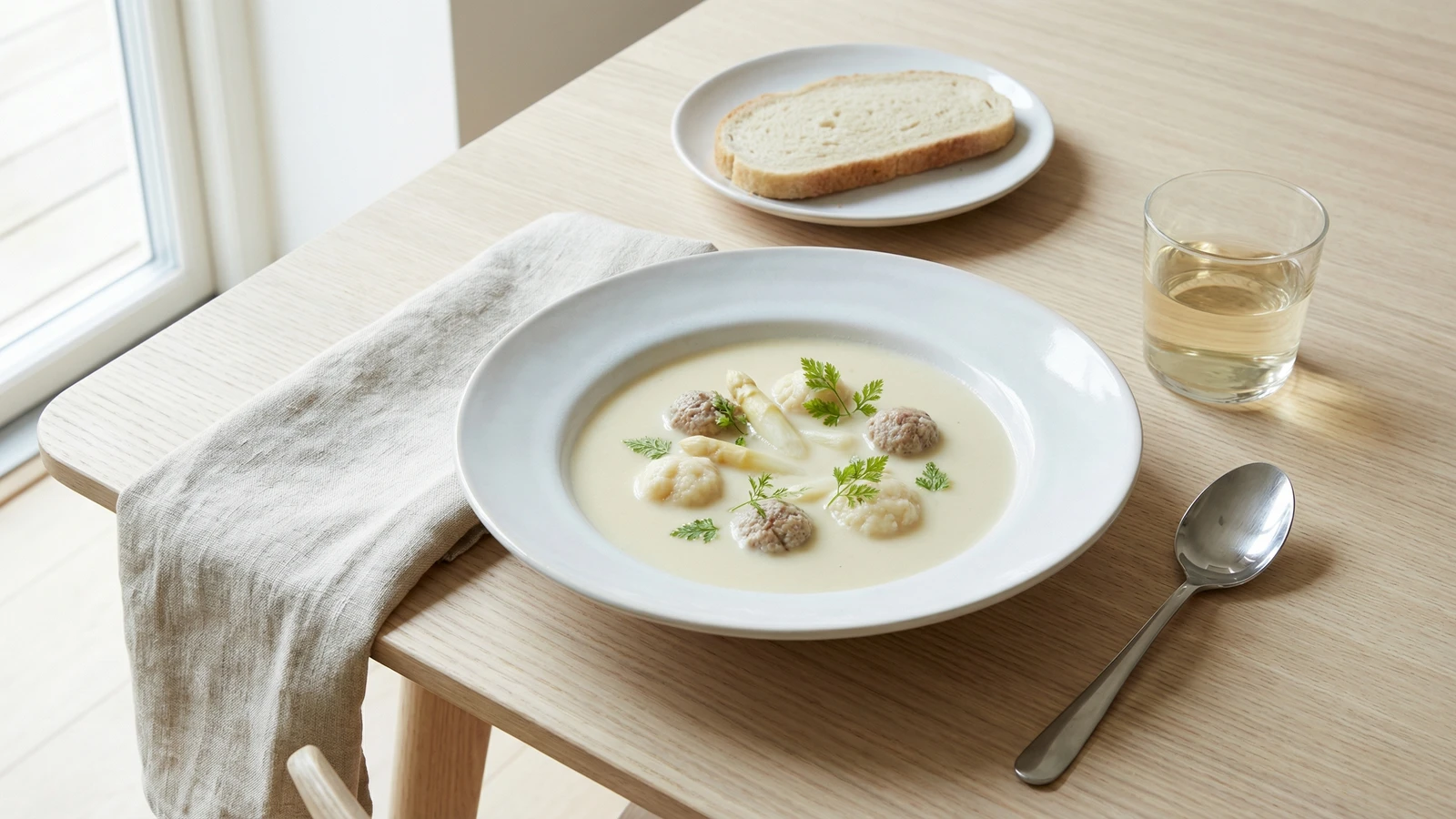
Aspargessuppe med Kødboller og Melboller
Created by Chef Freja
Danish white asparagus velouté with tiny veal meatballs, flour dumplings, and bright green tips scattered on the surface. The Easter soup of Copenhagen, built from five small pans of spring.
White asparagus arrives in Denmark at the very beginning of May and disappears again by the end of June. Eight weeks, no more. The first spears come from Samsø, the small island in the Kattegat where the sandy soil and the long hours of northern light give the asparagus its particular sweetness. When the crates appear at Torvehallerne in Copenhagen, the season has officially begun.
Aspargessuppe is what Danish families make when they want to mark that the long winter is finally over. It is the Easter soup, the dinner-party first course, the bowl that says spring is here and we are paying attention. The recipe asks for a little patience and five small saucepans, one for the stock, one for the asparagus, one for the meatballs, one for the dumplings, one for the velouté itself. That sounds like a lot until you realise that each pan does one simple thing, and together they give you something no single pot could.
Two things matter most. The first is the asparagus peelings. Do not throw them away. They carry more flavor than the spears themselves, and the stock you make from them is the quiet heart of the whole soup. The second is the moment you enrich the velouté with egg yolks and cream. Temper the yolks with a ladle of hot soup first, then whisk everything back together off the heat. Never let it boil after that. If you do, the yolks scramble and the soup breaks. Follow those two instincts and you'll know when it's right. This is a soup cooked with love, and it belongs to the table it is served at.
White asparagus cultivation reached Denmark in the late 18th century through German gardeners working on the estates of the Danish aristocracy, and by the early 1900s the island of Samsø had become the country's asparagus capital, a position it holds to this day. Aspargessuppe with kødboller and melboller appears in Frøken Jensens Kogebog, the 1901 cookbook that shaped a century of Danish bourgeois cooking, where it is presented as the proper opening course for a spring dinner party. The combination of the meatballs and the flour dumplings in a single bowl is a distinctly Danish flourish. German and French asparagus soups typically choose one garnish or the other, while the Danish version insists, generously, on both.
The technique, the tradition, and the story behind every dish.
Discover Culinary AdvisorIngredients
white asparagus
Quantity
1kg
peeled, woody ends snapped off
cold water
Quantity
2 litres
fine sea salt (for the asparagus water)
Quantity
1 teaspoon
unsalted butter (for the soup base)
Quantity
60g
plain flour (for the soup base)
Quantity
50g
veal or chicken stock
Quantity
500ml
double cream
Quantity
150ml
egg yolks
Quantity
2
lemon juice
Quantity
1 tablespoon
fine sea salt
Quantity
to taste
white pepper
Quantity
to taste
minced veal (for the kødboller)
Quantity
250g
onion
Quantity
1 small
finely grated
plain flour (for the kødboller)
Quantity
1 tablespoon
egg (for the kødboller)
Quantity
1 small
whole milk (for the kødboller)
Quantity
4 tablespoons
unsalted butter (for the melboller)
Quantity
60g
whole milk (for the melboller)
Quantity
150ml
plain flour (for the melboller)
Quantity
90g
eggs (for the melboller)
Quantity
2 large
freshly grated nutmeg
Quantity
a pinch
chervil or flat-leaf chives
Quantity
small handful, to finish
| Ingredient | Quantity |
|---|---|
| white asparaguspeeled, woody ends snapped off | 1kg |
| cold water | 2 litres |
| fine sea salt (for the asparagus water) | 1 teaspoon |
| unsalted butter (for the soup base) | 60g |
| plain flour (for the soup base) | 50g |
| veal or chicken stock | 500ml |
| double cream | 150ml |
| egg yolks | 2 |
| lemon juice | 1 tablespoon |
| fine sea salt | to taste |
| white pepper | to taste |
| minced veal (for the kødboller) | 250g |
| onionfinely grated | 1 small |
| plain flour (for the kødboller) | 1 tablespoon |
| egg (for the kødboller) | 1 small |
| whole milk (for the kødboller) | 4 tablespoons |
| unsalted butter (for the melboller) | 60g |
| whole milk (for the melboller) | 150ml |
| plain flour (for the melboller) | 90g |
| eggs (for the melboller) | 2 large |
| freshly grated nutmeg | a pinch |
| chervil or flat-leaf chives | small handful, to finish |
Equipment Needed
- •Five small to medium saucepans
- •Fine mesh sieve
- •Sharp vegetable peeler
- •Slotted spoon
- •Whisk
- •Wooden spoon
Instructions
- 1
Peel the asparagus
Lay each white asparagus spear flat on the counter and peel from just below the tip all the way down to the base. White asparagus has a tough outer skin that stays fibrous no matter how long you cook it, so this step is not optional. Snap off the woody ends where they want to break naturally. Keep the peelings and the ends. They carry most of the flavor, and we are going to make the stock with them.
Use a sharp vegetable peeler and hold the spear just below the tip so you don't snap it. The tips are fragile and you want to keep them whole for garnish. - 2
Make the asparagus stock
Put the peelings and the woody ends in a large pot with the cold water and the teaspoon of salt. Bring to a gentle simmer and cook for twenty minutes. This is the quiet heart of the soup. Everything else is built on it. Strain through a fine sieve and keep the liquid. You want roughly 1.2 litres. Discard the peelings.
- 3
Cook the asparagus and reserve the tips
Cut the tips from the peeled spears, about 4cm long, and set them aside. Cut the remaining stalks into short pieces. Bring the asparagus stock back to a simmer, add the stalk pieces, and cook for six to eight minutes until completely tender. A piece should fall apart under light pressure from a spoon. Lift the stalks out with a slotted spoon and set aside. Drop the tips into the same simmering stock for two minutes only, then lift them out and hold them in a bowl of cold water to stop the cooking and keep them bright. The stock stays in the pot.
- 4
Mix the kødboller
Put the minced veal in a bowl with the grated onion, the tablespoon of flour, the egg, the milk, a good pinch of salt, and a few grinds of white pepper. Work the mixture with a wooden spoon for a full two minutes. This is not optional. The working is what gives the kødboller their smooth, springy texture. A lazy mix gives crumbly meatballs that fall apart in the soup.
The mixture should look pale and slightly glossy when it is ready. If it still looks rough and streaky, keep working it. - 5
Poach the kødboller
Bring a wide pan of lightly salted water to a bare simmer, never a rolling boil. A rolling boil breaks the kødboller apart before they set. Using two small teaspoons, shape the veal mixture into little balls the size of a hazelnut and drop them straight into the water. Work in batches so the pan stays calm. They are done when they rise to the surface and feel firm, about three minutes. Lift them out with a slotted spoon and set aside. Keep the poaching water; it can go into the stock later if you need more liquid.
- 6
Make the melboller dough
In a small saucepan, melt the 60g of butter with the 150ml of milk and a pinch of salt. Bring it to a gentle boil, then tip in the 90g of flour all at once and beat hard with a wooden spoon. The flour will seize up into a smooth, glossy paste that pulls away from the sides of the pan. This is a choux-style dough, and it takes about a minute of steady beating over low heat to come together. Take the pan off the heat and let the dough cool for five minutes, then beat in the two eggs one at a time. Add the nutmeg. The finished dough should be thick, shiny, and hold its shape on the spoon.
- 7
Poach the melboller
Bring another wide pan of lightly salted water to a bare simmer. Dip two small teaspoons in the hot water, scoop a small amount of dough with one, and use the other to push it off into the water. The hot, wet spoons are the trick. The dough slides off cleanly and the dumplings form little oval shapes. Poach for five minutes. They swell as they cook and rise to the surface when they're ready. Lift them out with a slotted spoon and set aside with the kødboller. You now have five small pans of components waiting: the stock, the asparagus stalks, the tips, the kødboller, the melboller. This is the moment the soup comes together.
- 8
Build the velouté
In a large, heavy pot, melt the 60g of butter over medium heat. Add the 50g of flour and stir with a wooden spoon for two minutes to cook out the raw flour taste. You want it pale and smelling faintly of biscuit, never browned. Browned roux makes a dark sauce, and we want this soup the color of clotted cream. Pour in the reserved asparagus stock a ladle at a time, whisking after each addition until smooth, then add the veal or chicken stock. Bring everything to a gentle simmer and cook for ten minutes, stirring now and then. The soup will thicken into a velvety velouté.
- 9
Enrich and season
Stir the cooked asparagus stalk pieces into the soup and let them warm through. In a small bowl, whisk the two egg yolks with the cream. Take a ladle of the hot soup and whisk it into the cream mixture, then whisk the tempered cream back into the pot off the heat. Do not let it boil after this point or the yolks will scramble and the soup will break. Taste and season with salt, white pepper, and the lemon juice. The lemon is small but essential. It lifts the whole thing out of heaviness and makes the asparagus taste more like itself.
You will know the seasoning is right when the soup tastes clearly of asparagus and butter, with a small bright edge at the back of the palate. That bright edge is the lemon doing its work. - 10
Assemble and serve
Drain the reserved asparagus tips. Warm the kødboller and melboller in the soup for a minute, just enough to take the chill off. Ladle the soup into wide, shallow bowls. Make sure each bowl has a generous share of meatballs and dumplings, and scatter the bright asparagus tips across the surface. Finish with a few fronds of chervil or a scatter of snipped chives. Serve immediately, while the soup still catches the light. Tak for mad.
Chef Tips
- •Buy the asparagus the day you plan to cook. White asparagus loses sweetness quickly after it is cut. If the cut ends are dry or brown, the spears have been sitting too long. Fresh ends look moist and pale.
- •If you cannot find white asparagus, green works, but the soup will taste and look different. Skip the peeling, shorten the stock simmer to ten minutes, and know that the result is a close cousin rather than the dish itself. The season decides.
- •A glass of dry Riesling or a crisp Danish white beer sits beside this soup beautifully. The slight sweetness and the acidity both support the asparagus without competing with it.
Advance Preparation
- •The asparagus stock can be made the day before and kept in the fridge. This actually deepens the flavor.
- •The kødboller can be poached a few hours ahead and kept covered in a little of their poaching liquid. Warm them gently in the finished soup before serving.
- •The melboller are best made on the day, within a couple of hours of serving. The dough can be prepared in advance, but the dumplings themselves go soft if they sit too long in liquid.
- •The finished velouté should not be held for long once the egg yolks and cream are added. Build the soup base ahead if you like, but do the final enrichment just before serving.
Frequently Asked Questions
Nutrition Information
1 serving (about 450g)
Where cooking meets culture.
Culinary mentorship, cultural storytelling, and the editorial depth that makes cooking meaningful.
Explore Culinary Advisor