Culinary Advisor
A cooking platform built around craft, culture, and the stories behind what we eat.
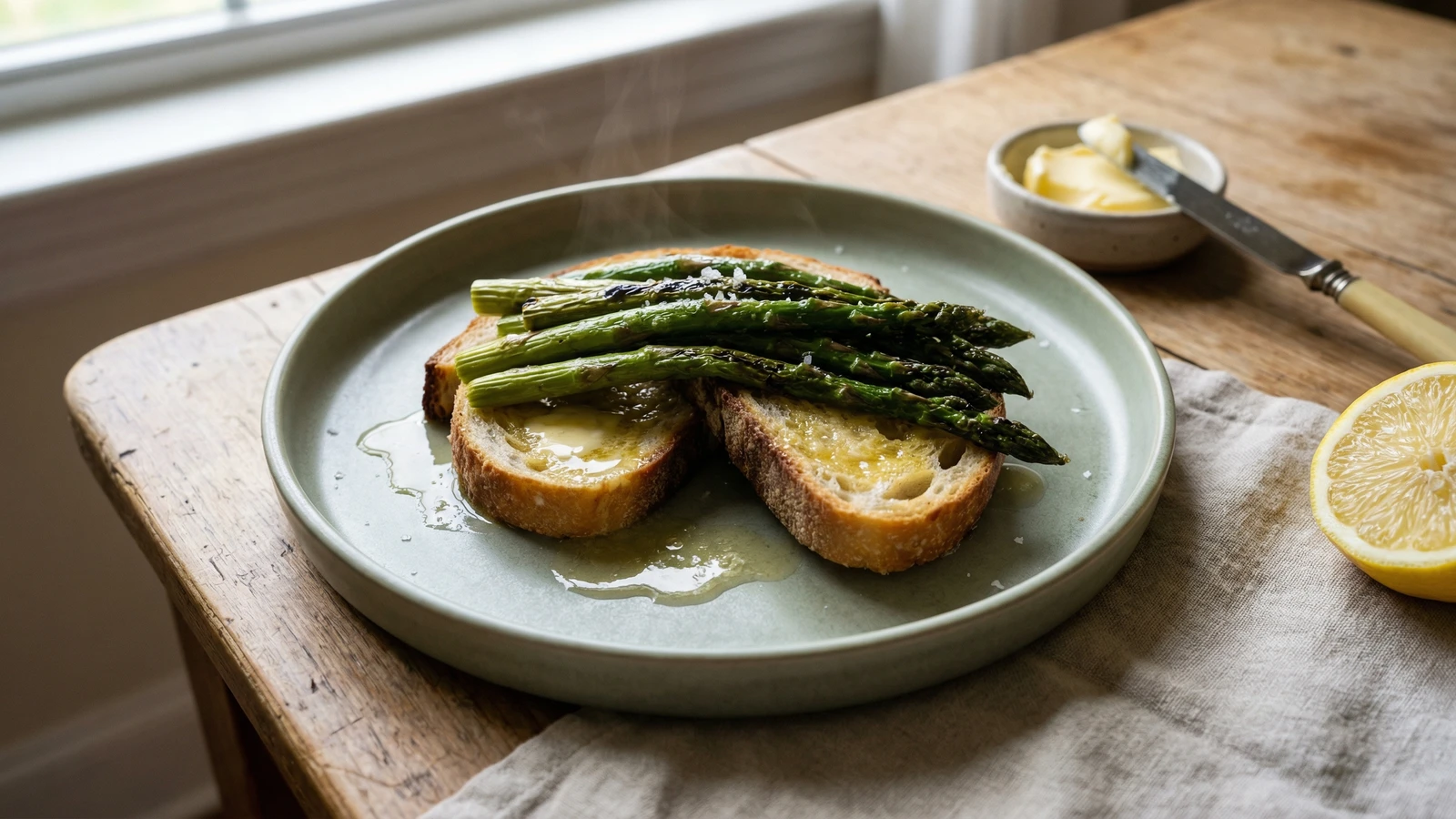
Asparagus on Toast
Created by Chef Thomas
English asparagus, steamed until just tender and laid across thick buttered toast with warm butter pooling beneath it. A dish that belongs to May and asks almost nothing of you except good ingredients and a few minutes of attention.
The asparagus season lasts about six weeks, if you're lucky. It arrives in May, quietly, at the market stall where it wasn't last Saturday. Fat bundles tied with string, the cut ends still damp. By the end of June it's gone, and you won't see it again for eleven months. This is important. It means that when it's here, you pay attention.
Asparagus on toast is not a recipe. It's barely even cooking. But it's one of the things I look forward to more than almost anything else I eat all year, and I've written it in the notebook every spring since I can remember. The entry never changes much. "Asparagus. Toast. Butter. First of the season. Tuesday." That's all it needs.
The whole thing takes ten minutes. Good asparagus, steamed until it bends just slightly, laid across proper toast spread thick with butter, more warm butter poured over the top. The butter pools at the base and soaks into the bread. You eat it with your fingers. The kitchen smells green and sweet and like the year has finally turned a corner.
There is nothing to improve here. No poached egg, no hollandaise, no parmesan shavings. The asparagus is the thing. If it's good, it doesn't need company. If it isn't good, it isn't in season yet, and you should wait. The market decides.
The technique, the tradition, and the story behind every dish.
Discover Culinary AdvisorIngredients
English asparagus
Quantity
1 bundle (roughly 250g)
woody ends snapped off
unsalted butter
Quantity
generous amount
good bread
Quantity
2 thick slices
fine sea salt
Quantity
to taste
black pepper
Quantity
to taste
lemon (optional)
Quantity
half
for squeezing
| Ingredient | Quantity |
|---|---|
| English asparaguswoody ends snapped off | 1 bundle (roughly 250g) |
| unsalted butter | generous amount |
| good bread | 2 thick slices |
| fine sea salt | to taste |
| black pepper | to taste |
| lemon (optional)for squeezing | half |
Equipment Needed
- •Wide shallow pan or deep frying pan with a lid
- •Tongs
- •Small saucepan for melting butter
Instructions
- 1
Prepare the asparagus
Take each spear and bend it near the base. It will snap where the tender part meets the woody part. Your hands know where the break should be. Don't trim with a knife; the spear tells you where it wants to be cut. Discard the ends or save them for stock if you're that way inclined.
The thickness of the spears doesn't matter as much as their freshness. A fat spear picked yesterday will be sweeter and more tender than a thin one that's been sitting in a supermarket chill cabinet for a week. Buy them from somewhere that can tell you when they were cut. - 2
Steam the asparagus
Bring a shallow pan of salted water to a rolling boil. Lay the asparagus in so the spears are mostly submerged but the tips sit just above the waterline. The stems need more cooking than the tips, and steam will do the rest. Three to four minutes for medium spears, less for thin ones. You want them tender enough to yield to a knife but still with a clean bite. Lift one out and test it. If it bends like a willow branch, it's gone too far. If it snaps cleanly, give it another minute.
- 3
Make the toast
While the asparagus cooks, toast the bread properly. Not pale and floppy, but golden and firm enough to hold melting butter without collapsing. Thick slices from a decent loaf. The toast is the plate here, so it needs to carry its weight. Butter it generously the moment it comes out of the toaster, while it's still hot enough for the butter to melt into the bread rather than sit on top of it.
- 4
Warm the butter
Melt a good knob of butter in a small pan over a low heat. Let it foam and go quiet. You're not browning it here, just warming it through so it coats the asparagus in something rich and golden. Take it off the heat the moment it smells sweet and clean.
- 5
Assemble and serve
Lift the asparagus out of the water with tongs, let it drain for a moment on a clean tea towel, and lay the spears across the buttered toast. Pour the warm melted butter over the top. It will pool at the base of the toast and soak into the bread. Season with salt and a few turns of black pepper. A squeeze of lemon if the mood takes you, though it's not compulsory. Eat with your fingers. This is that kind of meal.
Chef Tips
- •Buy English asparagus in season. This sounds obvious, but the imported spears you find year-round in supermarkets are a different vegetable entirely. They taste of transport and cold storage. Wait for the English season, which runs roughly from late April to the summer solstice, and you'll understand why people make a fuss.
- •The butter does most of the work, so use the best you can find. Something with a high fat content and a clean, sweet taste. This is a dish of three ingredients. Each one is exposed. There's nowhere to hide.
- •Don't overcook the asparagus. This is the only thing you can really get wrong. Pull them a touch before you think they're ready. They carry on cooking in their own heat for another thirty seconds after you lift them from the water. A spear that's slightly firm is a pleasure. A spear that's gone limp is a waste of good asparagus.
- •If you come across asparagus that's especially fat and fresh, try it griddled instead of steamed. Roll the spears in a little oil, season, and lay them on a smoking hot griddle pan. Cook them until they have charred lines on both sides and the kitchen smells sweet and grassy. The charring brings out a different kind of sweetness. Still on toast. Still with butter.
Advance Preparation
- •There is no advance preparation. This is a ten-minute dish that should be eaten the moment it's assembled. The toast goes soggy, the butter cools, the asparagus loses its warmth. Make it, eat it, and make it again tomorrow.
- •Buy the asparagus the day you intend to cook it, or at most the day before, stored upright in a jar of water in the fridge like a bunch of flowers. Freshness is everything here.
Frequently Asked Questions
Nutrition Information
1 serving (about 190g)
Where cooking meets culture.
Culinary mentorship, cultural storytelling, and the editorial depth that makes cooking meaningful.
Explore Culinary Advisor