Culinary Advisor
A cooking platform built around craft, culture, and the stories behind what we eat.
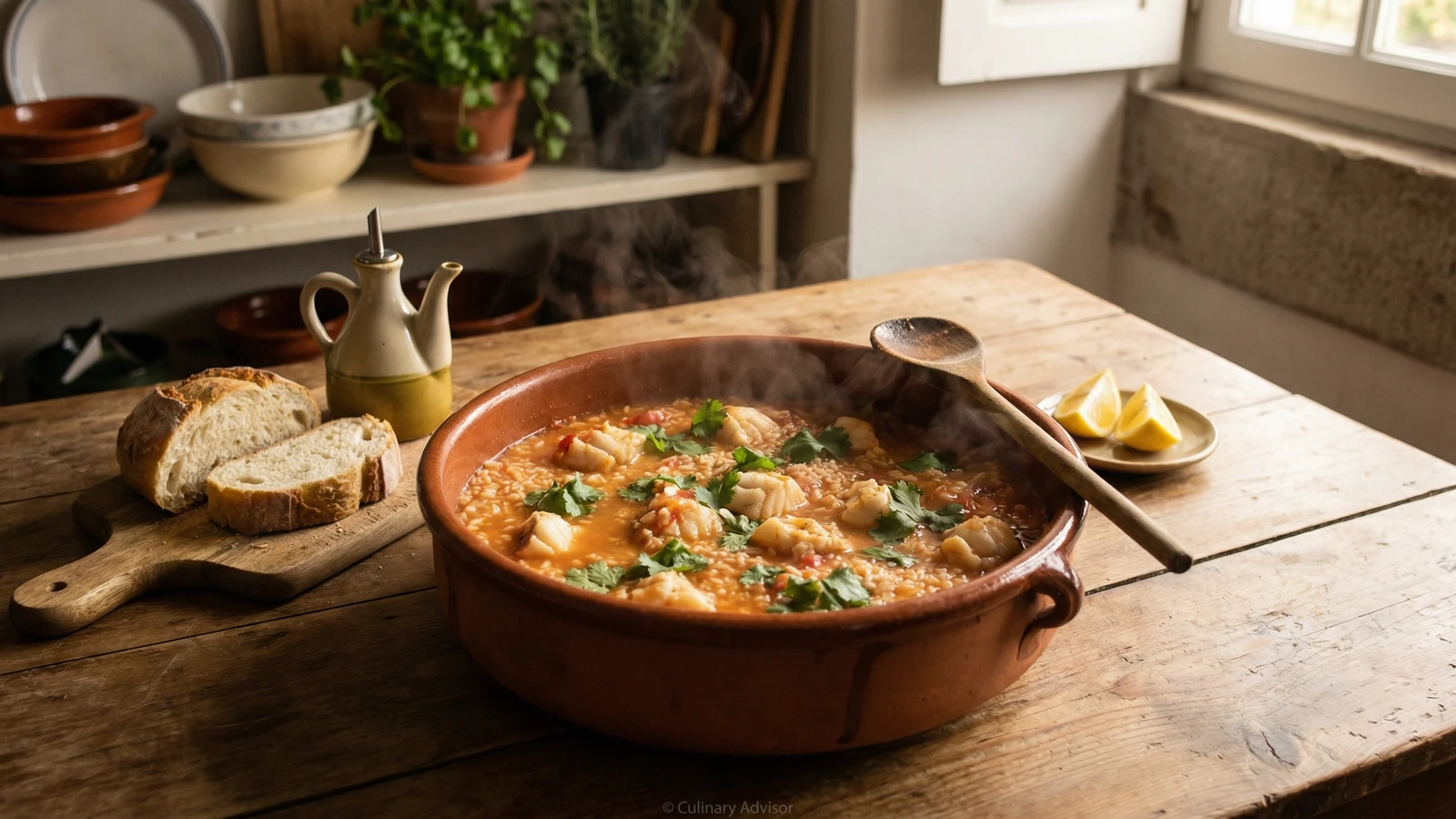
Arroz de Tamboril
Created by
The ugly fish becomes beautiful in the pot. Firm monkfish, creamy rice, rich broth. This is arroz malandrinho, the naughty rice that refuses to behave like a pilaf, and we love it for that.
They call tamboril the ugly fish. And it is. Flat head, gaping mouth, skin like something from a nightmare. But cut away the head, slice into that tail, and you find flesh so white, so firm, so sweet that it makes you forget every pretty fish you've ever seen. The ugly fish becomes beautiful in the pot. That's the lesson here.
This is arroz malandrinho, the naughty rice, the kind that refuses to sit still on the plate. It should be loose, almost soupy, the grains swimming in a broth rich with tomato, wine, and the essence of the sea. If your rice stands in a neat mound, you've made something else. Not this.
Avó Leonor didn't cook much seafood (Alentejo is landlocked, and the fish that reached her came salted in barrels), but when I started documenting recipes from the grandmothers of Setúbal and Peniche, I learned that seafood rice is a religion on the coast. Every family guards their proportions. The debates are endless: more tomato or less, wine or no wine, coentros or salsa. I've eaten this dish in a dozen kitchens and taken notes in all of them.
What I can tell you is this: the refogado matters. The quality of your fish stock matters. And the monkfish goes in last, because overcooking it is a sin. Get those three things right, and the rest takes care of itself.
Arroz de tamboril emerged from Portugal's central coast, particularly the fishing communities between Setúbal and Nazaré, where monkfish has been landed for centuries. The dish follows the same technique as arroz de marisco but showcases a single fish rather than a mixture. Portuguese cooks prize tamboril for its lobster-like texture, calling it "poor man's lobster" despite it now commanding premium prices.
The technique, the tradition, and the story behind every dish.
Discover Culinary AdvisorIngredients
monkfish (tamboril) tail
Quantity
800g
cut into 3cm chunks
short-grain rice (carolino or arborio)
Quantity
300g
extra virgin olive oil (azeite)
Quantity
1/3 cup
onions
Quantity
2 medium
finely chopped
garlic
Quantity
4 cloves
minced
ripe tomatoes
Quantity
2
peeled, seeded, and chopped
bay leaf
Quantity
1
dry white wine
Quantity
1/2 cup
fish stock
Quantity
1 liter
warm
sweet paprika (pimentão doce)
Quantity
1 teaspoon
piri-piri or dried chili (optional)
Quantity
1/4 teaspoon
crushed
fresh cilantro (coentros)
Quantity
1 large bunch
stems and leaves separated, both chopped
sea salt
Quantity
to taste
black pepper
Quantity
to taste
freshly ground
lemon wedges
Quantity
for serving
| Ingredient | Quantity |
|---|---|
| monkfish (tamboril) tailcut into 3cm chunks | 800g |
| short-grain rice (carolino or arborio) | 300g |
| extra virgin olive oil (azeite) | 1/3 cup |
| onionsfinely chopped | 2 medium |
| garlicminced | 4 cloves |
| ripe tomatoespeeled, seeded, and chopped | 2 |
| bay leaf | 1 |
| dry white wine | 1/2 cup |
| fish stockwarm | 1 liter |
| sweet paprika (pimentão doce) | 1 teaspoon |
| piri-piri or dried chili (optional)crushed | 1/4 teaspoon |
| fresh cilantro (coentros)stems and leaves separated, both chopped | 1 large bunch |
| sea salt | to taste |
| black pepperfreshly ground | to taste |
| lemon wedges | for serving |
Equipment Needed
- •Wide heavy-bottomed pot or deep skillet with lid
- •Wooden spoon
- •Terracotta serving dish (optional but traditional)
Instructions
- 1
Season the fish
Season the monkfish chunks generously with salt and pepper. Set aside at room temperature while you build the base. The fish needs these 15 to 20 minutes to come to temperature. Cold fish in hot broth cooks unevenly.
- 2
Build the refogado
Heat the azeite in a wide, heavy-bottomed pot or deep skillet over medium-low heat. Add the onions and cook slowly, stirring occasionally, until soft and translucent, about 12 minutes. You're not looking for color here. Just softness. Add the garlic and the chopped coentros stems, cooking another 2 minutes until fragrant. The stems hold flavor that would be wasted if you threw them away.
Separar as águas: the stems go in now for depth; the leaves come at the end for brightness. Different jobs, same herb. - 3
Add tomato and paprika
Add the chopped tomatoes, paprika, bay leaf, and piri-piri if using. Increase heat to medium and cook, stirring often, until the tomato breaks down and the mixture becomes a thick, rich paste, about 8 minutes. This is the soul of the dish. You'll see the oil start to separate from the tomato at the edges. That's when you know it's ready.
- 4
Deglaze with wine
Pour in the white wine and let it bubble vigorously for a minute or two, scraping up any bits stuck to the bottom. The alcohol should cook off, leaving just the fruit and acidity behind. Your kitchen will smell like a fishing village tavern. This is correct.
- 5
Toast the rice
Add the rice to the pot and stir to coat every grain in the refogado. Let it toast for 2 minutes, stirring constantly. The grains should become slightly translucent at the edges. This step builds a nutty depth and helps the rice absorb liquid evenly.
Never rinse the rice for this dish. You want that starch. It's what makes arroz malandrinho creamy, loose, almost soupy. That's the texture you're after. - 6
Cook the rice
Add the warm fish stock all at once. Stir well, bring to a boil, then reduce to a steady simmer. Cook uncovered for about 12 minutes, stirring occasionally to prevent sticking. The rice should be almost done but still have a slight bite. The liquid should still be loose and brothy. This isn't a pilaf. Portuguese rice swims.
- 7
Add the monkfish
Nestle the seasoned monkfish chunks into the rice, pressing them gently into the liquid. Don't stir. Let them cook undisturbed for 6 to 8 minutes. The fish is done when it's opaque throughout and flakes easily but still holds its shape. Tamboril is forgiving, but overcooking makes it tough.
- 8
Rest and finish
Remove from heat and let rest for 3 minutes. The rice will absorb a bit more liquid but should still be loose and creamy. Remove the bay leaf. Scatter the chopped coentros leaves over the top. Taste and adjust salt. Serve immediately in the pot or a warm terracotta dish, with lemon wedges on the side. This dish waits for no one.
Chef Tips
- •Ask your fishmonger to remove the membrane from the monkfish tail. It shrinks when cooked and distorts the flesh. If you must do it yourself, slide a sharp knife under the grey membrane and pull it away in strips.
- •Make your own fish stock from the monkfish bones if you have them, or from any white fish scraps. Simmer with onion, bay leaf, and a splash of wine for 30 minutes. Nothing from a cube will give you the same depth.
- •The rice should be malandrinho, loose and brothy, not dry. If it tightens too much, add a splash of warm stock before serving. It will continue absorbing liquid as it sits.
- •Some cooks add a handful of clams or mussels in the last 5 minutes. This is showing off, but it's also delicious. Make sure they open before serving.
Advance Preparation
- •The refogado base can be made several hours ahead through step 4. Let it cool, then refrigerate. Reheat gently before continuing.
- •Fish stock can be made 2 days ahead and refrigerated, or frozen for up to 3 months.
- •This dish cannot be made ahead. The rice must be served immediately while it's still loose and the fish is just cooked. Leftovers can be reheated with additional stock, but they won't have the same magic.
Frequently Asked Questions
Nutrition Information
1 serving (about 500g)
Where cooking meets culture.
Culinary mentorship, cultural storytelling, and the editorial depth that makes cooking meaningful.
Explore Culinary Advisor