Culinary Advisor
A cooking platform built around craft, culture, and the stories behind what we eat.
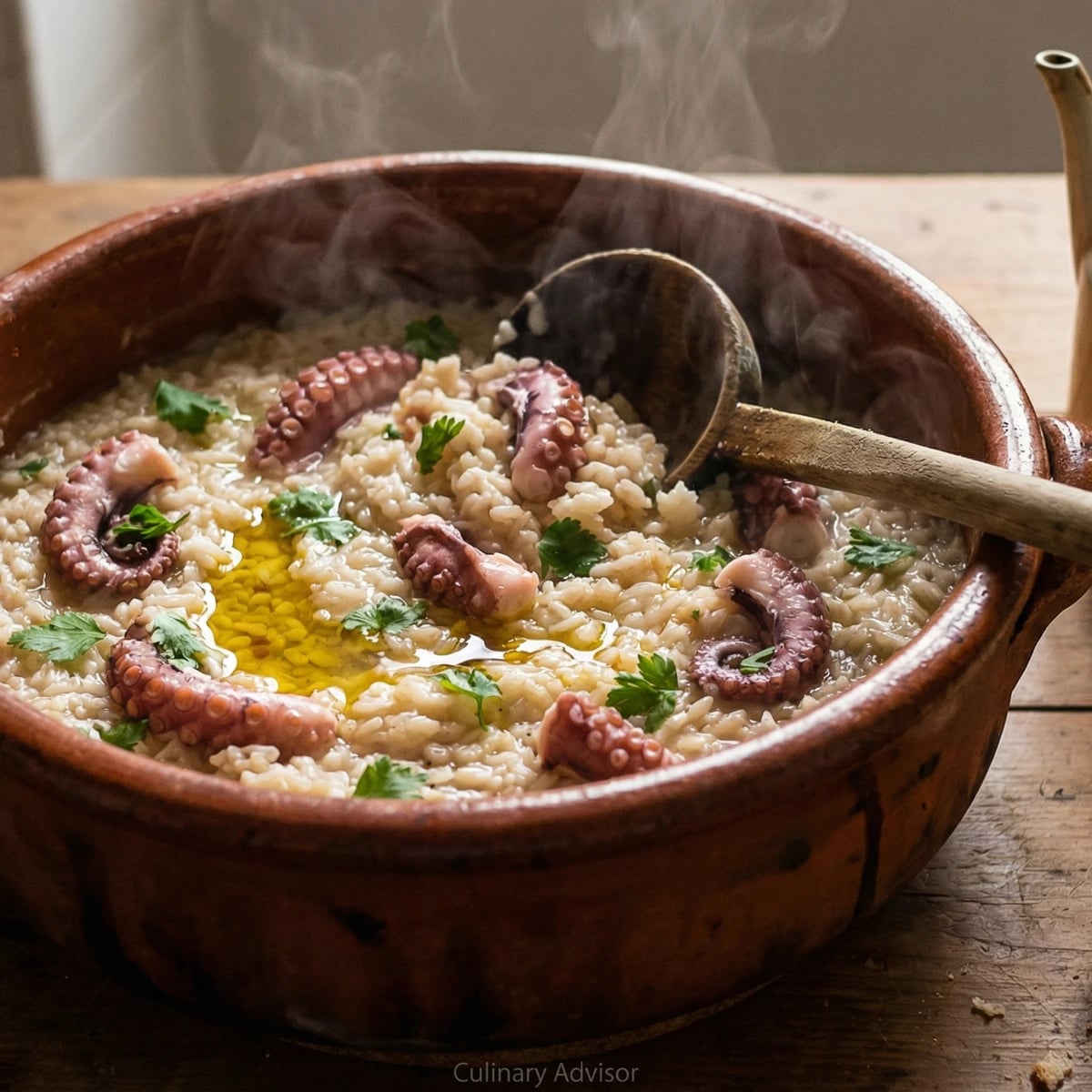
Arroz de Polvo
Created by Chef Margarida
The octopus rice of Portugal's coast, where the sea meets the pot and everything becomes one. Malandrinho style: loose, creamy, and deeply savory with every spoonful tasting of the Atlantic.
This is the dish that makes you understand why the Portuguese have always looked to the sea. Arroz de polvo is comfort food for a maritime nation, the kind of cooking that happens when you have an octopus, some rice, and the good sense to let them become one thing.
Malandrinho. That's the word. It means rogue, rascal, someone who doesn't follow the rules. In cooking, it describes rice that refuses to sit still on the plate. Rice that flows, that slides, that carries its broth with it. This is not risotto, though the technique has echoes. This is not dry rice. This is something in between, something that only makes sense once you've tasted it.
I learned to make arroz de polvo from a grandmother in Setúbal who had been cooking it for sixty years. She laughed when I asked for measurements. "Um bocadinho," she said. A little bit. "Até ficar bem." Until it's right. That's how these dishes work. You learn the technique, you learn the feel, and then you stop measuring.
At Mesa da Avó, we serve this in a clay pot in the center of the table. Everyone shares. Spoons scrape the sides to get the rice that's stuck there, slightly caramelized, impossibly good. The pot empties fast. It always does. A cozinha é memória, and this dish tastes like generations of fishermen coming home.
Ingredients
octopus
Quantity
1 whole (about 1.5 kg)
cleaned
onion for cooking octopus
Quantity
1 medium
halved
bay leaves
Quantity
2
| Ingredient | Quantity |
|---|---|
| octopuscleaned | 1 whole (about 1.5 kg) |
| onion for cooking octopushalved | 1 medium |
| bay leaves | 2 |