Culinary Advisor
A cooking platform built around craft, culture, and the stories behind what we eat.
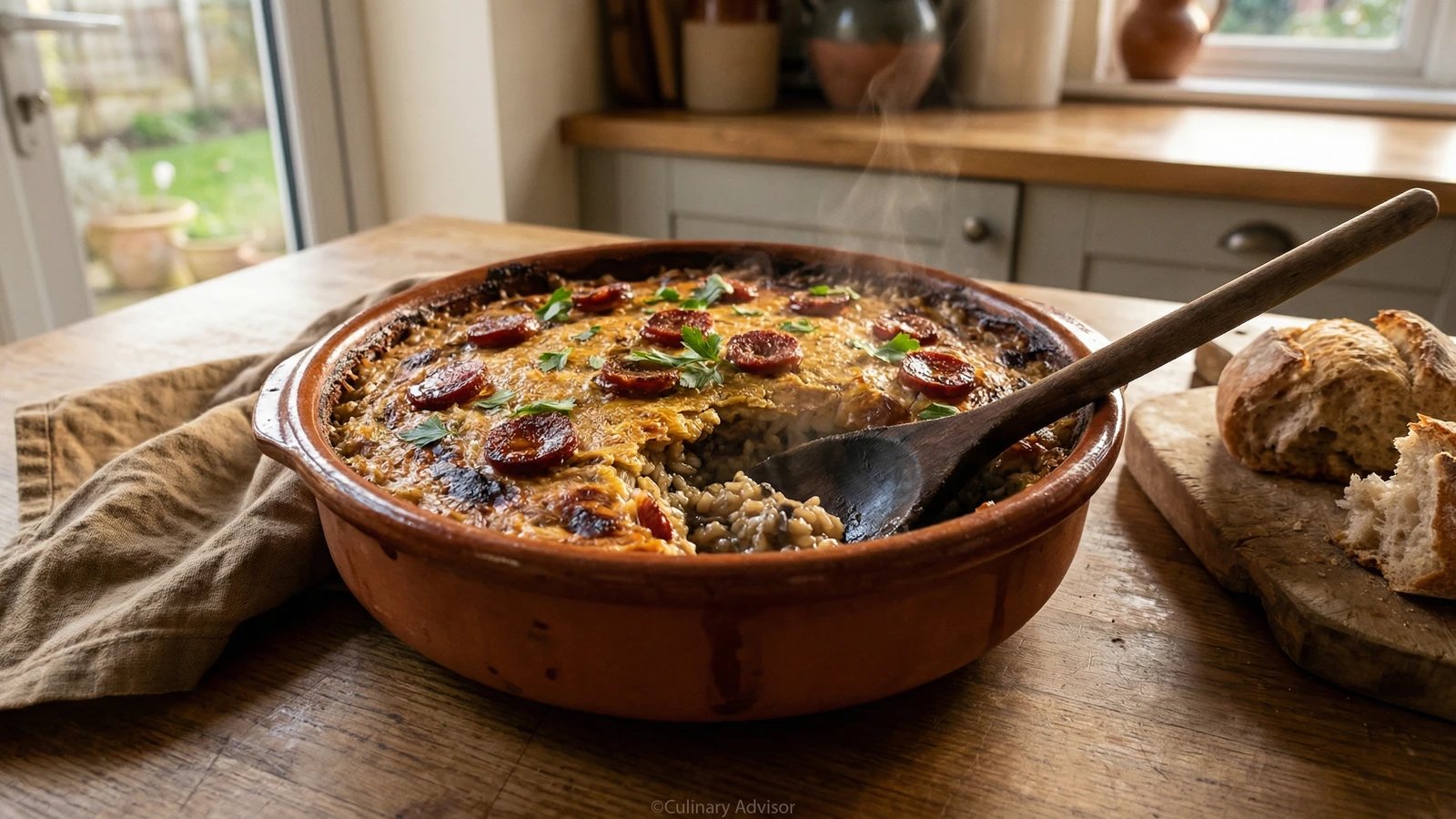
Arroz de Pato
Created by
The celebration rice of northern Portugal, where duck braised until falling-apart tender meets rice that drinks every drop of that precious broth, then bakes until the top shatters like a promise kept
This is not a weeknight dinner. This is a Sunday dish, a Christmas dish, the kind of cooking that happens when you decide the day belongs to the kitchen.
I learned arroz de pato not from Avó Leonor (she was Alentejana, and her rice dishes leaned toward tomato and pork) but from the grandmothers I documented in Braga while researching my cookbook. Dona Fernanda, eighty-three years old, made it in a clay pot that had belonged to her mother. She told me the secret wasn't in the recipe but in the patience: two hours for the duck, no less. "O pato diz-te quando está pronto," she said. The duck tells you when it's ready.
The rice must drink the braising liquid. Every drop of that golden, duck-fat-rich broth should disappear into the grains. Then you layer it with the shredded meat, scatter chouriço on top, and let the oven do its work. The top turns golden and crispy while the rice beneath stays creamy, almost risotto-like. That layer of crust? That's what everyone fights for at the table. I've seen families argue over it.
At Mesa da Avó, I serve this dish for special occasions only. It demands respect. It demands time. But when you pull it from the oven, bronzed and fragrant, steam escaping from the edges, you understand why this rice has been served at Portuguese celebrations for centuries. A cozinha é memória. And this dish holds the memory of every feast that came before it.
Arroz de pato originated in the convents of Braga in northern Portugal, where nuns created elaborate rice dishes for feast days. The technique of baking rice with braised meat spread from monasteries to noble houses, then to family tables across the country. By the 19th century, it had become the definitive celebration dish of Minho, appearing at Christmas, Easter, and weddings.
The technique, the tradition, and the story behind every dish.
Discover Culinary AdvisorIngredients
whole duck
Quantity
1 (about 2 kg)
cut into quarters
onions
Quantity
2 medium
1 quartered, 1 diced
garlic cloves
Quantity
4
smashed
bay leaves
Quantity
2
fresh thyme
Quantity
4 sprigs
dry white wine
Quantity
1 cup
water
Quantity
6 cups
extra virgin olive oil (azeite)
Quantity
1/4 cup
presunto or bacon
Quantity
150g
diced
medium-grain rice
Quantity
400g
chouriço
Quantity
200g
sliced into rounds
salt
Quantity
to taste
black pepper
Quantity
freshly ground, to taste
flat-leaf parsley (optional)
Quantity
for garnish
chopped
| Ingredient | Quantity |
|---|---|
| whole duckcut into quarters | 1 (about 2 kg) |
| onions1 quartered, 1 diced | 2 medium |
| garlic clovessmashed | 4 |
| bay leaves | 2 |
| fresh thyme | 4 sprigs |
| dry white wine | 1 cup |
| water | 6 cups |
| extra virgin olive oil (azeite) | 1/4 cup |
| presunto or bacondiced | 150g |
| medium-grain rice | 400g |
| chouriçosliced into rounds | 200g |
| salt | to taste |
| black pepper | freshly ground, to taste |
| flat-leaf parsley (optional)chopped | for garnish |
Equipment Needed
- •Large heavy pot or Dutch oven with lid
- •Wide oven-safe pan or traditional clay pot (about 30cm)
- •Fine mesh sieve
Instructions
- 1
Season and sear the duck
Season the duck quarters generously with salt and pepper. In a large heavy pot or Dutch oven, heat a thin film of olive oil over medium-high heat. Sear the duck pieces skin-side down until deeply golden, about 8 minutes. Don't move them. Let the fat render and the skin crisp. Flip and sear the other side for 3 minutes. Remove and set aside. Pour off all but 2 tablespoons of the rendered fat (save the rest for cooking potatoes another day).
That rendered duck fat is liquid gold. Don't you dare throw it away. Keep it in a jar in the refrigerator for roasting potatoes. - 2
Build the braising liquid
In the same pot with the reserved fat, add the quartered onion, smashed garlic, bay leaves, and thyme. Cook until the onion softens and takes on color, about 5 minutes. Pour in the wine and let it bubble for a minute, scraping up any browned bits from the bottom. Add the water and bring to a simmer.
- 3
Braise the duck
Return the duck pieces to the pot. The liquid should come about two-thirds up the sides of the meat. Cover and reduce heat to low. Let it braise gently for 2 to 2.5 hours, until the meat wants to fall from the bone. You're not in charge here; the duck tells you when it's ready. The meat should pull apart with no resistance.
Dona Fernanda in Braga told me: if you have to tug the meat from the bone, it's not ready. When it surrenders willingly, it's done. - 4
Shred the meat and strain the broth
Remove the duck from the pot and let it cool slightly. Strain the braising liquid through a fine sieve into a large measuring jug, pressing on the solids. You should have about 5 cups of rich broth. Skim some of the fat from the surface if you like, but leave some for flavor. Shred the duck meat with two forks, discarding the skin and bones. The pieces should be irregular, rough. No knife. You want textures that catch the rice.
- 5
Start the rice
Preheat your oven to 200°C (400°F). In a wide oven-safe pan or clay pot, heat the olive oil over medium heat. Add the diced onion and cook slowly until soft and translucent, about 10 minutes. Add the diced presunto and cook until it renders some fat and turns golden at the edges. Add the rice and stir to coat every grain with the fat. Toast it for 2 minutes, until you smell a nutty fragrance.
- 6
Cook the rice in the broth
Pour 4 cups of the reserved duck broth over the rice. It will sizzle and steam. Stir once, then let it simmer over medium heat until most of the liquid is absorbed but the rice is still slightly underdone, about 12 minutes. The rice will finish in the oven. Taste the broth and adjust the seasoning. Remember, the duck was seasoned, so taste before adding salt.
- 7
Layer and bake
Fold the shredded duck meat into the rice, distributing it evenly. If the mixture seems dry, add a splash more broth. It should be creamy, almost wet. Smooth the top and arrange the chouriço slices over the surface in a single layer. Transfer to the oven and bake uncovered for 25 to 30 minutes, until the top is golden and the chouriço has crisped at the edges. The rice should form a crust on top while staying tender beneath.
That golden crust is the prize. Every Portuguese table has someone who claims it belongs to them. At my dinners, I serve it family-style and watch people reach for it first. - 8
Rest and serve
Remove from the oven and let it rest for 5 minutes. The steam trapped inside will finish cooking the rice and settle the flavors. Scatter fresh parsley over the top if you like. Bring the whole pot to the table. This is a dish meant to be served family-style, with everyone reaching in, fighting over the crispy bits. Serve with a simple green salad dressed with olive oil and lemon.
Chef Tips
- •Use a whole duck, not just breasts. The legs and thighs have more fat and connective tissue, which melts during braising and enriches everything. The breast alone would be too lean and dry.
- •Chouriço, not chorizo. Portuguese chouriço is smoked and seasoned with garlic and paprika, but it's different from Spanish chorizo. If you can't find Portuguese chouriço, a good quality smoked Spanish chorizo will work, but know that the flavor profile shifts.
- •The rice matters. Carolino is the Portuguese medium-grain rice that absorbs liquid beautifully while holding its shape. Arborio works as a substitute. Long-grain rice will not give you the right texture.
- •Some families add sliced orange or orange zest to the braising liquid. The acidity cuts through the richness. Avó Leonor's sister in Porto did this. It's not traditional to Braga, but I won't tell anyone if you try it.
Advance Preparation
- •The duck can be braised a day ahead. Cool the meat in the strained broth and refrigerate. The fat will solidify on top, making it easy to skim. Bring to room temperature before continuing with the rice.
- •Once assembled and baked, arroz de pato is best served immediately. The crispy top softens as it sits. If you must reheat, blast it under a hot grill to re-crisp the surface.
Frequently Asked Questions
Nutrition Information
1 serving (about 400g)
Where cooking meets culture.
Culinary mentorship, cultural storytelling, and the editorial depth that makes cooking meaningful.
Explore Culinary Advisor