Culinary Advisor
A cooking platform built around craft, culture, and the stories behind what we eat.
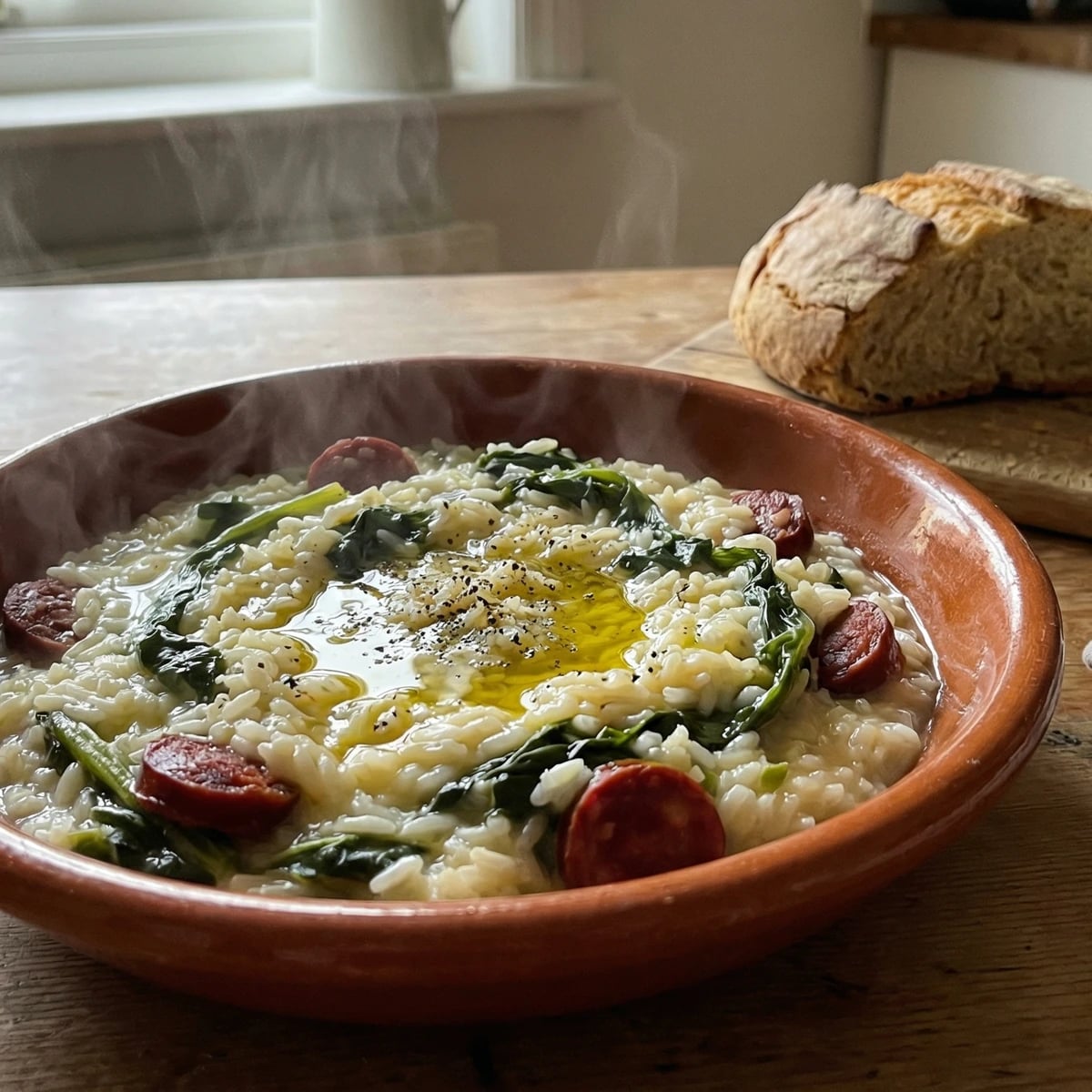
Arroz de Grelos
Created by Chef Margarida
The winter rice of Minho, where turnip greens meet creamy grain and good azeite. Peasant cooking that proves the north knows something about comfort the rest of Portugal is still learning.
In Minho, winter means grelos. Those slightly bitter, deeply green turnip tops that grow wild in the rain and cold, showing up at every market stall from November to March. And where there are grelos, there is arroz de grelos.
I didn't grow up with this dish. Avó Leonor's kitchen was Alentejo through and through, and Alentejo is bread country, not rice country. But when I started documenting recipes from grandmothers across Portugal, I spent two winters in the north, and this dish became my education in how different the regional kitchens really are.
The grandmother who taught me this lived outside Braga. Dona Emília. Eighty-three years old, hands like she'd spent her whole life in water and flour. She made her arroz malandrinho, that loose, creamy rice that's almost a porridge, the way her mother had taught her. No measuring. Just feeling. She'd tilt the pot and watch how the rice moved. That's how she knew.
This is humble food. The greens cost almost nothing. The rice is the cheapest grain. But cooked with patience and finished with good azeite, it becomes something that warms you from the inside, the kind of dish you want when the rain hasn't stopped for days and you need to remember why the world is good.
Ingredients
turnip greens (grelos)
Quantity
500g
thick stems removed, roughly chopped
short-grain rice
Quantity
300g
onion
Quantity
1 medium
finely diced
| Ingredient | Quantity |
|---|---|
| turnip greens (grelos)thick stems removed, roughly chopped | 500g |
| short-grain rice | 300g |
| onionfinely diced | 1 medium |