Culinary Advisor
A cooking platform built around craft, culture, and the stories behind what we eat.
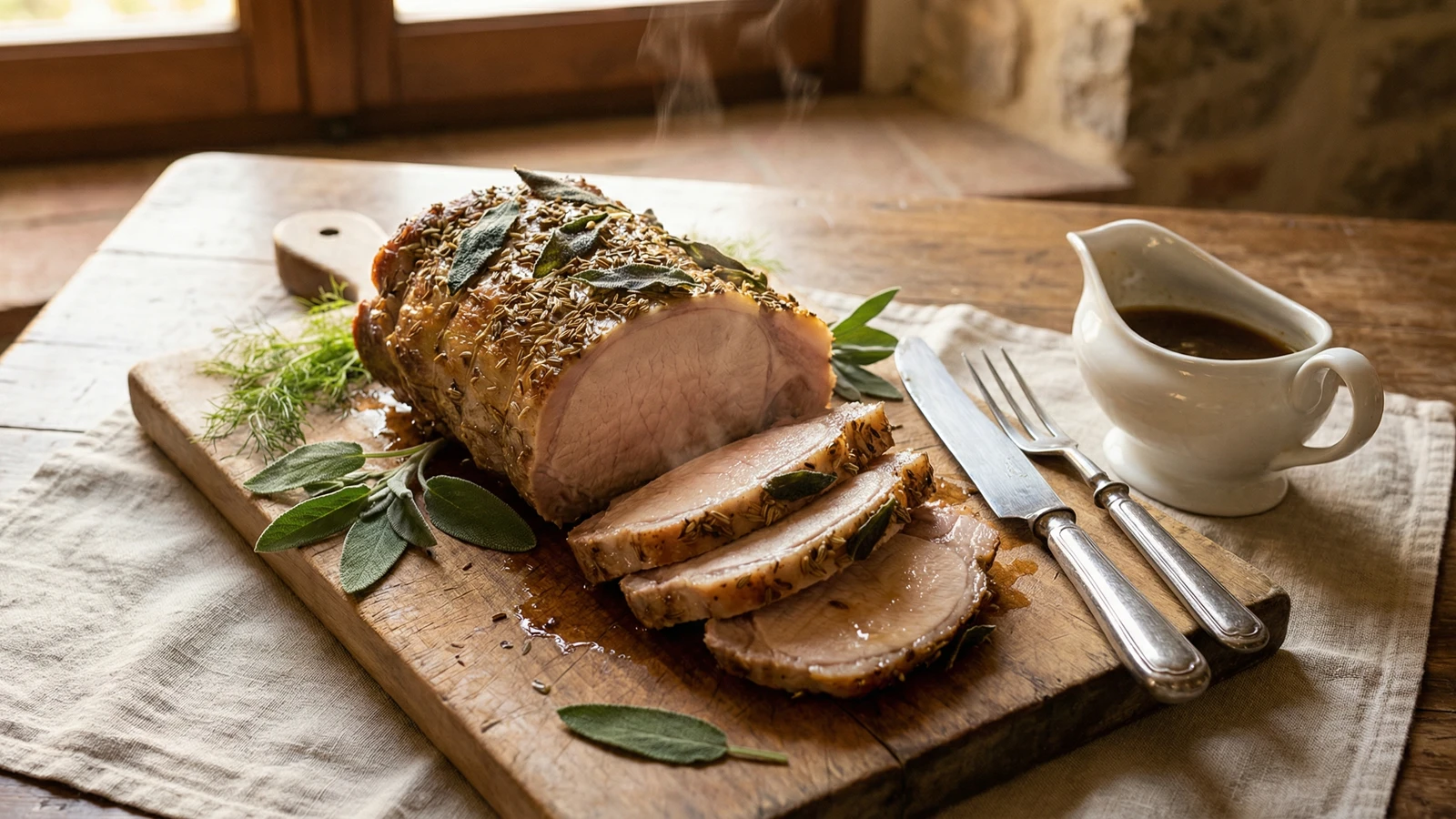
Arrosto di Maiale alle Erbe Aromatiche
Created by Chef Graziella
Bone-in pork loin rubbed with fennel, rosemary, and sage, roasted until the herbs form a crackling crust and the meat stays pink and succulent. This is the roast that brings Sunday to life.
In Umbria and the Marche, they understand pork. The hills there produce pigs that forage on acorns and chestnuts, and the local cooks have spent generations learning exactly how to honor this meat. They do not drown it in sauce or complicate it with unnecessary ingredients. They season it with the herbs that grow wild in the same hills: fennel, rosemary, sage.
This is not fancy restaurant cooking. It is the roast that a grandmother would start in the morning and let cook slowly while the family gathered. The fennel seeds bring a faint sweetness that the Italians call the taste of the forest. The rosemary and sage form an aromatic crust that perfumes the entire house. The wine and pan drippings become a simple sauce that needs nothing else.
I am often asked what makes Italian cooking different from other cuisines. This roast is the answer. Six ingredients, not counting salt and pepper. Nothing complicated. Nothing clever. Just quality pork treated with respect and patience. What you keep out is as significant as what you put in.
The porchetta tradition of central Italy dates to at least the 15th century, when whole pigs were stuffed with wild fennel and roasted over wood fires in communal ovens. This home version preserves the essential flavor profile without requiring a whole pig or a wood-burning oven. The combination of fennel, rosemary, and sage remains the signature of Umbrian and Marchigiano pork cookery.
The technique, the tradition, and the story behind every dish.
Discover Culinary AdvisorIngredients
bone-in pork loin roast
Quantity
5 to 6 pounds
chine bone removed
garlic cloves
Quantity
6
fennel seeds
Quantity
2 tablespoons
fresh rosemary leaves
Quantity
2 tablespoons
fresh sage leaves
Quantity
16
coarse sea salt
Quantity
1 tablespoon
black pepper
Quantity
1 teaspoon
freshly ground
extra virgin olive oil
Quantity
1/4 cup
dry white wine
Quantity
1 cup
chicken or vegetable broth
Quantity
1 cup
| Ingredient | Quantity |
|---|---|
| bone-in pork loin roastchine bone removed | 5 to 6 pounds |
| garlic cloves | 6 |
| fennel seeds | 2 tablespoons |
| fresh rosemary leaves | 2 tablespoons |
| fresh sage leaves | 16 |
| coarse sea salt | 1 tablespoon |
| black pepperfreshly ground | 1 teaspoon |
| extra virgin olive oil | 1/4 cup |
| dry white wine | 1 cup |
| chicken or vegetable broth | 1 cup |
Equipment Needed
- •Heavy roasting pan large enough for the roast without crowding
- •Instant-read meat thermometer
- •Mortar and pestle (optional but traditional)
- •Butcher's twine if using boneless roast
Instructions
- 1
Prepare the herb paste
On a cutting board, combine the garlic, fennel seeds, rosemary, half the sage leaves, the salt, and the pepper. Chop everything together until you have a coarse paste. You may use a mortar and pestle if you prefer, which releases more oil from the herbs. Add the olive oil and work it into the paste. The mixture should be fragrant enough to fill your kitchen. If it does not, your herbs are not fresh.
- 2
Score and season the meat
Using a sharp knife, score the fat cap of the pork in a crosshatch pattern, cutting about one-quarter inch deep. This allows the herb paste to penetrate and the fat to render properly. Rub the herb paste all over the roast, pressing it into the scored fat and coating the underside as well. If you have time, cover and refrigerate overnight. If not, let it rest at room temperature for one hour. The seasoning needs time to penetrate.
Overnight seasoning transforms this roast. The salt draws moisture to the surface, which dissolves the salt, which then penetrates back into the meat. The result is seasoning throughout, not just on the surface. - 3
Bring to room temperature
Remove the roast from the refrigerator two hours before cooking. Cold meat put into a hot oven cooks unevenly, dry on the outside before the center reaches proper temperature. This is not optional. Plan your time accordingly.
- 4
Roast at high heat
Position a rack in the center of your oven and heat to 450 degrees. Place the pork fat side up in a heavy roasting pan just large enough to hold it. Scatter the remaining sage leaves around the meat. Roast for 25 minutes. The fat should begin to render and the herbs should turn fragrant and golden at the edges.
- 5
Add wine and reduce heat
Pour the wine into the bottom of the roasting pan. It will sizzle and steam. Reduce the oven temperature to 325 degrees. Continue roasting, basting every 20 minutes with the pan juices. If the liquid evaporates, add the broth. The meat needs moisture in the pan to prevent the drippings from burning.
- 6
Check for doneness
After about one hour and 15 minutes more at the lower temperature, begin checking the internal temperature. Insert a meat thermometer into the thickest part, not touching bone. You want 145 degrees for pork that is just cooked through with a faint blush of pink, or 150 degrees if you prefer no pink at all. The total roasting time is approximately one hour and 45 minutes, but your thermometer, not your clock, tells you when it is done.
Modern pork is lean and overcooks easily. The old fear of trichinosis required 160 degrees. We know better now. At 145 degrees, the meat is safe and still juicy. - 7
Rest the meat
Transfer the roast to a cutting board and tent loosely with foil. Rest for at least 20 minutes, and up to 30. The juices need time to redistribute throughout the meat. If you carve too soon, they run out onto the board instead of staying in each slice. Patience here is not optional.
- 8
Make the pan sauce
While the meat rests, place the roasting pan over medium heat. Add a splash of broth to loosen the browned bits from the bottom. Scrape with a wooden spoon. Let the liquid reduce by half. Taste and adjust for salt. This is not a thick gravy. It is the concentrated essence of the roast, thin but intensely flavored. Strain through a fine mesh sieve if you want it refined; leave it rustic if you prefer.
- 9
Carve and serve
Carve the roast between the rib bones into thick chops, or remove the meat from the bone and slice across the grain. Arrange on a warm platter. Spoon the pan juices over the slices. The herb crust should be golden and fragrant, the meat pink and glistening with juice. Serve immediately. Call everyone to the table. This is not a dish that waits.
Chef Tips
- •Ask your butcher for a bone-in center-cut loin roast with the chine bone removed. The chine is the part of the backbone that makes carving impossible. If it remains, you cannot cut clean chops.
- •Fennel seeds vary enormously in freshness. Old seeds taste like dust. Buy from a spice merchant who has turnover, or harvest your own from wild fennel if you are fortunate enough to have it growing nearby.
- •If you cannot find bone-in pork loin, a boneless loin will work. Tie it with butcher's twine at two-inch intervals to help it hold its shape. Reduce the cooking time by approximately 15 minutes.
- •The pan juices are essential. Do not discard them. If they have burned at the edges of your pan, add more liquid and scrape gently. A little char adds depth; actual burning ruins everything.
Advance Preparation
- •The roast benefits enormously from overnight seasoning. Apply the herb paste up to 24 hours before roasting and refrigerate uncovered. The surface dries slightly, which helps the crust form.
- •The herb paste can be prepared one day ahead and refrigerated.
- •Leftover roast pork keeps three days refrigerated. Slice thin for sandwiches with bitter greens and a drizzle of the reheated pan juices.
Frequently Asked Questions
Nutrition Information
1 serving (about 210g)
Where cooking meets culture.
Culinary mentorship, cultural storytelling, and the editorial depth that makes cooking meaningful.
Explore Culinary Advisor