Culinary Advisor
A cooking platform built around craft, culture, and the stories behind what we eat.
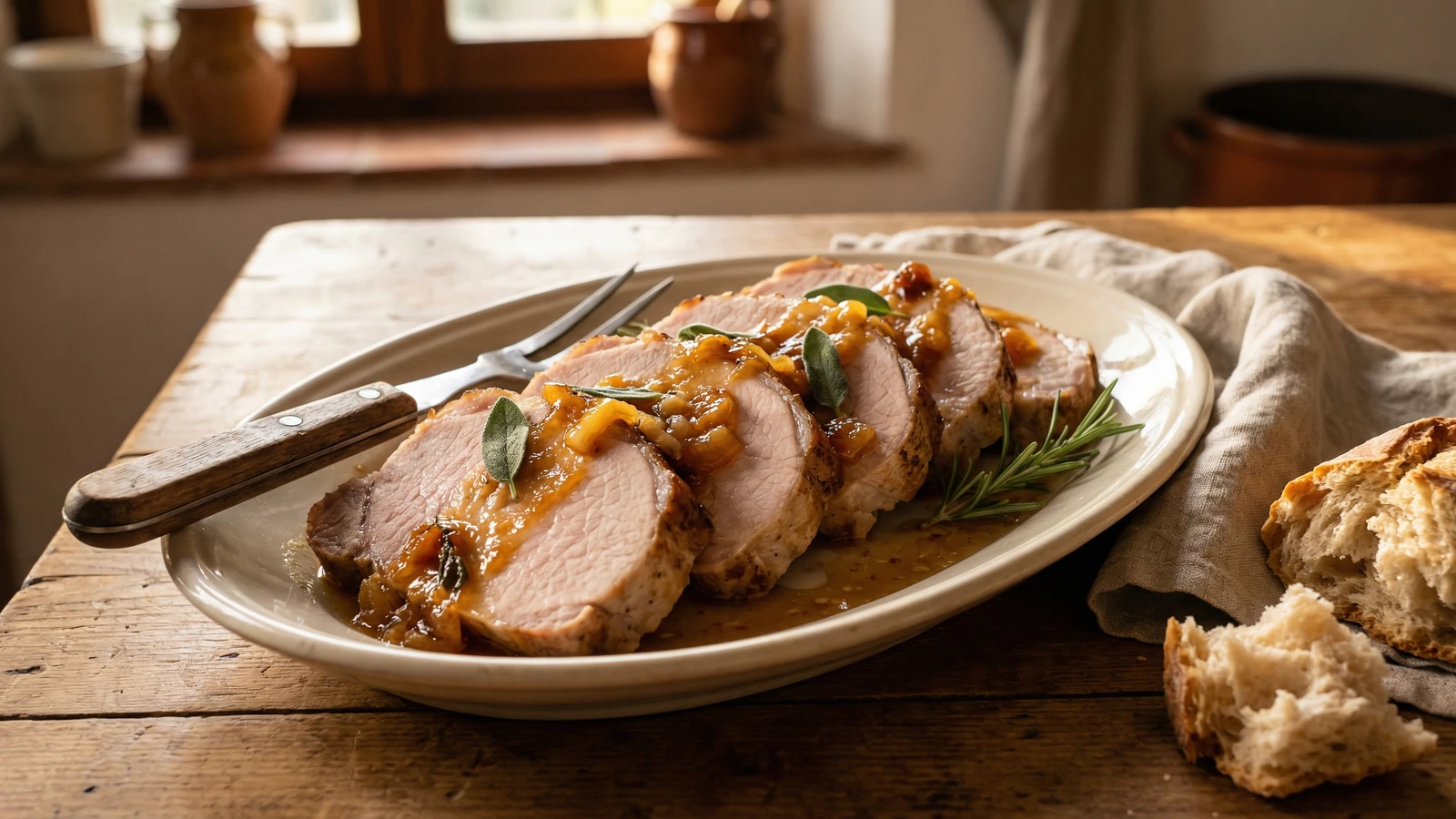
Arrosto di Maiale al Latte
Created by Chef Graziella
Pork loin braised in milk until the liquid transforms into nutty, golden curds that cling to impossibly tender meat. The technique looks like failure and tastes like triumph.
When Americans see curdled milk, they assume something has gone wrong. In Emilia-Romagna, we know better. The curdling is not a mistake to be corrected but a technique to be mastered. As the pork braises slowly in whole milk, the proteins coagulate, the sugars caramelize, and what begins as a pot of white liquid becomes clusters of golden flavor clinging to meat so tender it barely holds together.
This is not a dish that impresses through complexity. It impresses through transformation. You begin with ingredients any farm wife would have on hand: pork, milk, a few aromatics. Two hours later, you have something that tastes far more sophisticated than its origins suggest. The nutmeg is essential, providing warmth without announcing itself. The lemon zest brightens everything without making the dish taste of lemon.
I have taught this recipe to students who panicked the first time they saw the milk begin to separate. 'It's ruined,' they say. 'Taste it,' I tell them. They do, and they understand. What looked like failure was alchemy. What you keep out is as significant as what you put in, and what you keep in here is patience.
Pork braised in milk appears across northern Italy, but the technique reached its refinement in Bologna and the surrounding Emilian countryside, where both pork and dairy have been central to the cuisine for centuries. The method likely evolved from the practical need to tenderize tougher cuts using abundant fresh milk from local farms. By the 19th century, arrosto di maiale al latte had become a Sunday standard in bourgeois Bolognese households.
The technique, the tradition, and the story behind every dish.
Discover Culinary AdvisorIngredients
boneless pork loin roast
Quantity
3 pounds
tied
unsalted butter
Quantity
3 tablespoons
extra virgin olive oil
Quantity
1 tablespoon
whole milk
Quantity
4 cups
fresh sage leaves
Quantity
6
fresh rosemary
Quantity
2 sprigs
garlic cloves
Quantity
4 whole
peeled
lemon zest
Quantity
from 1 lemon
removed in wide strips
nutmeg
Quantity
1/2 teaspoon
freshly grated
kosher salt
Quantity
to taste
black pepper
Quantity
to taste
freshly ground
| Ingredient | Quantity |
|---|---|
| boneless pork loin roasttied | 3 pounds |
| unsalted butter | 3 tablespoons |
| extra virgin olive oil | 1 tablespoon |
| whole milk | 4 cups |
| fresh sage leaves | 6 |
| fresh rosemary | 2 sprigs |
| garlic clovespeeled | 4 whole |
| lemon zestremoved in wide strips | from 1 lemon |
| nutmegfreshly grated | 1/2 teaspoon |
| kosher salt | to taste |
| black pepperfreshly ground | to taste |
Equipment Needed
- •Heavy 5-quart Dutch oven or braising pot with lid
- •Kitchen twine (if roast is not already tied)
- •Instant-read thermometer
Instructions
- 1
Season the pork
Remove the pork from the refrigerator one hour before cooking. Pat it thoroughly dry with paper towels. Season generously on all sides with salt and pepper. The meat must be dry or it will not brown. Wet meat steams. Steamed meat is gray and flavorless.
- 2
Brown the roast
In a heavy pot just large enough to hold the pork, heat the butter and olive oil over medium-high heat. When the butter foam begins to subside, add the pork. Brown it thoroughly on all sides, turning every few minutes, until the entire surface is deep golden brown. This takes 12 to 15 minutes. Do not rush it. The browning creates flavor that no amount of simmering can reproduce.
The pot must fit the roast snugly. Too large a pot means the milk spreads too thin and evaporates too quickly. The milk should come at least halfway up the sides of the meat. - 3
Add aromatics and milk
Reduce the heat to medium. Add the sage, rosemary, whole garlic cloves, lemon zest strips, and nutmeg. Stir them in the fat for 30 seconds until fragrant. Pour in the milk. It will bubble violently when it hits the hot fat. This is correct. Let it settle.
- 4
Braise slowly
When the milk begins to simmer, reduce the heat to the lowest possible setting. The milk should barely move, with only the occasional lazy bubble breaking the surface. Cover the pot with the lid slightly ajar. Braise for approximately 1 hour and 45 minutes, turning the pork every 30 minutes. The meat is done when it offers no resistance to a fork and registers 145°F in the center.
The milk will curdle. This alarms Americans, who expect smooth sauces. The curds are not a failure. They are the point. As the milk proteins coagulate and caramelize, they become nutty, golden clusters that cling to the meat. This is the sauce. - 5
Rest the meat
Transfer the roast to a cutting board and tent loosely with foil. Let it rest for 15 minutes. Resting is not optional. Cut into meat that has not rested and the juices run onto the board instead of staying in the meat where they belong.
- 6
Finish the sauce
While the meat rests, examine the sauce remaining in the pot. It should be reduced to golden-brown curds swimming in a small amount of liquid. If the liquid seems abundant, simmer it over medium heat for a few minutes to concentrate the flavors. If it seems dry, add two tablespoons of water and scrape up any clusters stuck to the bottom. Taste and adjust the salt. Remove the lemon zest strips, rosemary stems, and garlic cloves if you prefer, though I leave them.
- 7
Slice and serve
Remove the twine from the roast. Slice the pork against the grain into pieces about half an inch thick. Arrange the slices on a warm serving platter. Spoon the curdled sauce over and around the meat, distributing the golden clusters generously. Serve immediately.
Chef Tips
- •The pork loin must be tied. A butcher will do this for you. Without the twine, the roast loses its shape during the long braise and becomes difficult to slice properly.
- •Whole milk is non-negotiable. Reduced-fat milk lacks the proteins and sugars necessary for proper curdling and caramelization. The curds will be pale and the sauce thin.
- •Do not be tempted to add wine or stock. The milk provides all the braising liquid you need. Adding other liquids dilutes the concentrated sweetness that makes this dish remarkable.
- •Leftovers are excellent cold, sliced thin and served with the solidified sauce. The Bolognese eat this for lunch the next day with good bread.
Advance Preparation
- •The roast can be made one day ahead. Store the sliced meat in its sauce, covered, in the refrigerator. Reheat gently in a covered pan over low heat, adding a splash of milk if the sauce seems too thick.
- •The dish does not freeze well. The sauce texture changes and becomes grainy upon thawing.
Frequently Asked Questions
Nutrition Information
1 serving (about 210g)
Where cooking meets culture.
Culinary mentorship, cultural storytelling, and the editorial depth that makes cooking meaningful.
Explore Culinary Advisor