Culinary Advisor
A cooking platform built around craft, culture, and the stories behind what we eat.
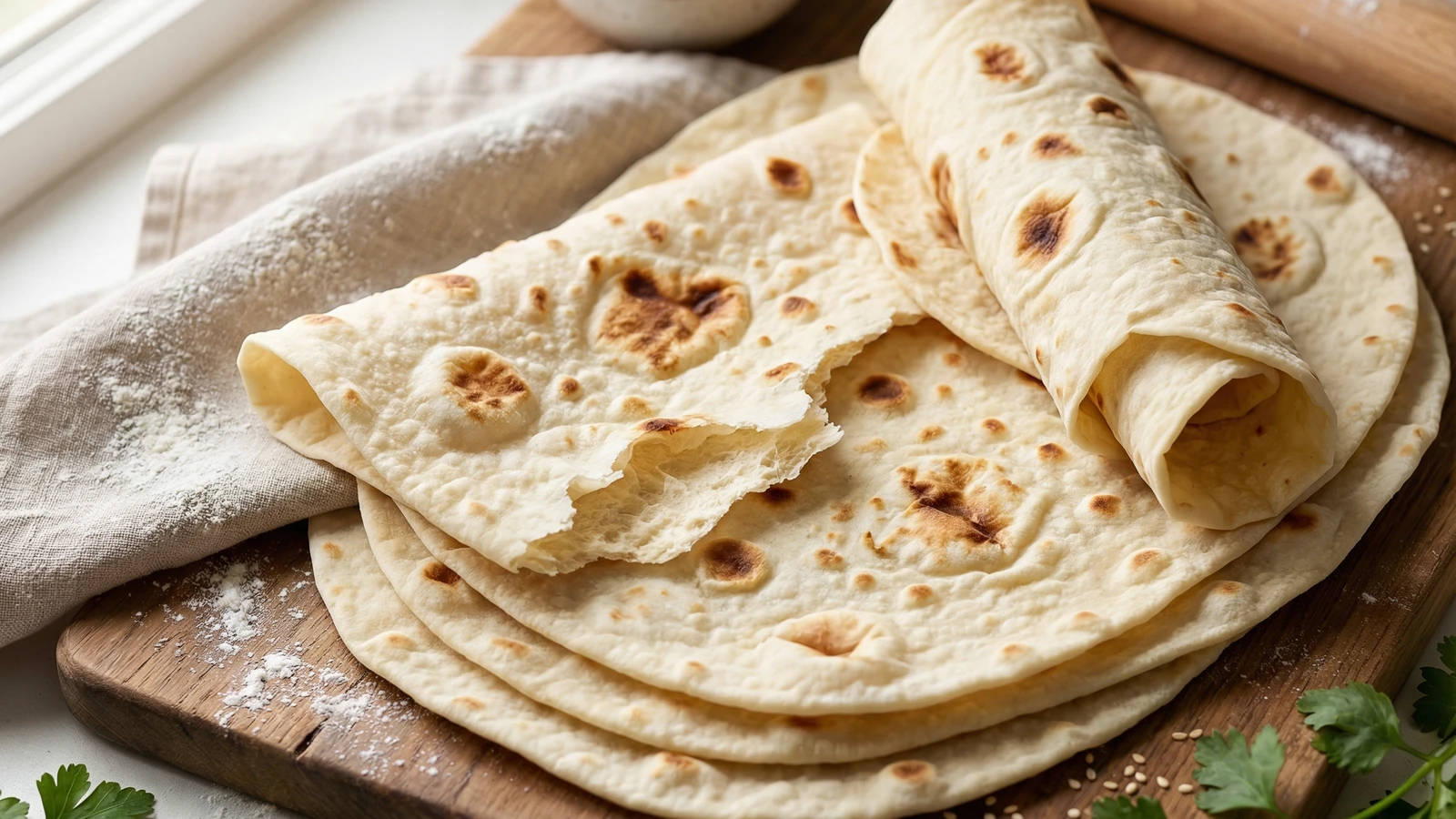
Armenian Lavash
Created by
Ancient Armenian flatbread rolled impossibly thin and baked until blistered, yielding sheets of pliable bread perfect for wrapping, tearing, and gathering around with people you love.
Lavash predates written history. Armenian women have been rolling this bread for thousands of years, passing the technique from grandmother to daughter in an unbroken chain of flour-dusted hands. UNESCO recognizes it as intangible cultural heritage. That's a fancy way of saying this bread matters.
The ingredient list will make you suspicious. Flour, water, salt. That's it. No yeast, no oil, no enrichments. The magic lives entirely in technique: how thin you roll, how hot you bake, how quickly you work. Your first batch will be imperfect. Your third will be good. By your tenth, you'll understand why this bread survived millennia.
I learned lavash from an Armenian baker in Glendale who laughed at my first attempts. Too thick, she said, showing me how to coax the dough until I could nearly see through it. The thinness isn't fussiness. It's function. Paper-thin lavash bakes in minutes, blisters beautifully, and stays pliable when wrapped in cloth. Thick lavash turns into roof shingles.
This bread rewards patience and forgives everything else. No precise hydration ratios. No temperature-controlled proofing. Just your hands, a rolling pin, and the willingness to keep going until you get it right.
The technique, the tradition, and the story behind every dish.
Discover Culinary AdvisorIngredients
all-purpose flour
Quantity
300g (2 1/3 cups)
plus more for rolling
fine sea salt
Quantity
1 teaspoon (6g)
warm water
Quantity
180ml (3/4 cup)
about 100°F
olive oil (optional)
Quantity
1 tablespoon (15ml)
| Ingredient | Quantity |
|---|---|
| all-purpose flourplus more for rolling | 300g (2 1/3 cups) |
| fine sea salt | 1 teaspoon (6g) |
| warm waterabout 100°F | 180ml (3/4 cup) |
| olive oil (optional) | 1 tablespoon (15ml) |
Equipment Needed
- •Baking stone, baking steel, or heavy rimmed baking sheet
- •Rolling pin (thin wooden dowel preferred for final rolling)
- •Large clean work surface for rolling
- •Clean kitchen towels for covering and steaming
Instructions
- 1
Mix the dough
Combine flour and salt in a large bowl, whisking to distribute. Create a well in the center and pour in the warm water. If using oil for a more pliable bread, add it now. Stir with a wooden spoon until a shaggy mass forms. The dough will look rough and unpromising. This is correct.
Water temperature matters. Too hot and you'll partially cook the flour, creating a gummy texture. Too cold and the dough stays stiff. Aim for bath-water warm. - 2
Knead until smooth
Turn the dough onto a lightly floured surface and knead for 8 to 10 minutes. You're developing gluten, which gives lavash its characteristic chew and allows you to roll it thin without tearing. The dough transforms from rough and sticky to smooth and elastic. Press it with your finger: it should spring back slowly. When it feels like a firm earlobe, you're done.
Resist adding too much flour while kneading. A slightly tacky dough rolls thinner than a dry one. Use just enough to prevent sticking. - 3
Rest the dough
Shape the dough into a ball and place it in a lightly oiled bowl. Cover with a damp kitchen towel or plastic wrap. Let it rest at room temperature for at least 30 minutes, or up to 2 hours. This relaxation period is non-negotiable. Rested dough rolls easily. Unrested dough fights back, shrinking stubbornly every time you try to thin it.
You can refrigerate the dough overnight. Bring it to room temperature for 30 minutes before rolling. - 4
Preheat your oven
Position a rack in the upper third of your oven. If you have a baking stone or steel, place it on the rack now. Preheat to 475°F (245°C). The stone needs at least 30 minutes to heat thoroughly. This fierce heat mimics the traditional tonir oven and creates the characteristic blistering. If using a baking sheet, preheat it inverted in the oven.
- 5
Divide the dough
Turn the rested dough onto a clean surface. Divide it into 8 equal pieces, roughly 60 grams each if you have a scale. Shape each piece into a smooth ball by tucking the edges underneath and rolling between your cupped hands. Cover the balls with your damp towel as you work. Exposed dough forms a skin that resists rolling.
- 6
Roll impossibly thin
Working with one ball at a time, flatten it with your palm on a well-floured surface. Roll from the center outward, rotating the dough a quarter turn after each pass. Keep dusting with flour as needed. Roll until the dough is translucent, roughly 12 to 14 inches across and thin enough to see your hand through. This takes longer than you expect. Don't rush. If the dough resists, cover it and let it rest 5 minutes before continuing.
A thin wooden dowel (about 1 inch diameter) works better than a thick rolling pin for the final passes. The narrower contact point helps stretch the dough without tearing. - 7
Transfer to the oven
Drape the rolled dough over your rolling pin and quickly transfer it to the preheated stone or inverted baking sheet. Work fast. The dough will start baking immediately. It's fine if the edges fold or drape over the stone's edge. Lavash is meant to be rustic, not geometric.
- 8
Bake until blistered
Bake for 2 to 3 minutes, watching closely. The lavash puffs dramatically in spots, and the thinnest areas turn golden brown with dark blisters. For soft, pliable lavash, remove it when the bread is pale with scattered brown spots and still flexible. For crisp lavash crackers, bake another minute until uniformly golden and stiff. The bread goes from perfect to burnt in seconds. Stay vigilant.
- 9
Stack and soften
For soft lavash: immediately stack the hot bread on a clean kitchen towel. Fold the towel over to enclose completely. The trapped steam softens the bread, making it pliable enough to wrap around fillings. Let the stack rest 5 minutes before serving. For crisp lavash: transfer to a wire rack to cool completely. It will crisp further as it cools.
Soft lavash stiffens as it cools uncovered. If your bread becomes too rigid, sprinkle it lightly with water and wrap in a towel for 10 minutes to revive its flexibility. - 10
Continue with remaining dough
While each lavash bakes, roll out the next piece. You'll find a rhythm: roll, bake, stack, roll. The whole batch takes about 20 minutes once you're moving. Serve warm or at room temperature, stacked on a board for guests to tear and share.
Chef Tips
- •Lavash keeps soft for 2 to 3 days wrapped in cloth at room temperature. Crisp lavash stores in an airtight container for a week but loses its magic after that.
- •Sprinkle sesame seeds, nigella seeds, or za'atar on the rolled dough before baking for a traditional variation. Press them gently so they adhere.
- •Use soft lavash for wrapping kebabs, grilled vegetables, or cheese with fresh herbs. Crisp lavash serves beautifully with hummus, baba ganoush, or labneh.
- •If your first batch comes out too thick, don't despair. The dough is still delicious. Call it flatbread and try thinner next time.
- •A baking steel produces better results than a stone because it transfers heat faster. If you bake bread regularly, the investment pays off.
Advance Preparation
- •Dough can be made up to 24 hours ahead and refrigerated, wrapped tightly. Bring to room temperature for 30 minutes before dividing and rolling.
- •Rolled lavash can be stacked between sheets of parchment and held for 30 minutes before baking if working in batches.
- •Baked soft lavash freezes well for up to 1 month. Thaw at room temperature and revive in a damp towel before serving.
- •For a dinner party, bake all the lavash in the afternoon and keep stacked in towels. Warm briefly in a low oven before guests arrive.
Frequently Asked Questions
Nutrition Information
1 serving (about 63g)
Where cooking meets culture.
Culinary mentorship, cultural storytelling, and the editorial depth that makes cooking meaningful.
Explore Culinary Advisor