Culinary Advisor
A cooking platform built around craft, culture, and the stories behind what we eat.
Arancini with Marinara
Created by
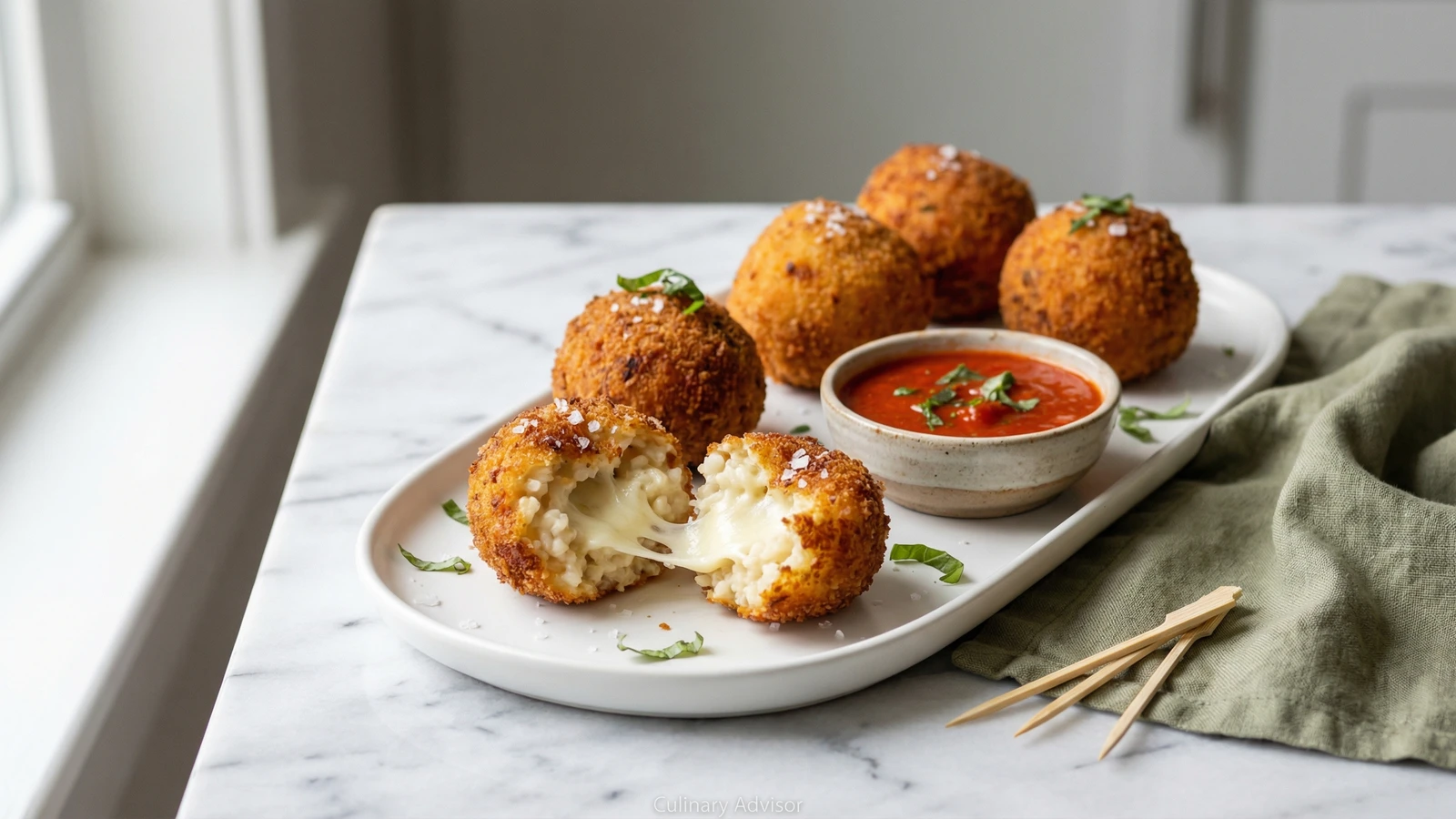
Shattering golden shells give way to creamy risotto and stretchy mozzarella centers, served with a bright, garlicky marinara that cuts through the richness. Sicilian street food elevated to dinner party status.
Sicily gave the world arancini, and we owe the island a debt. These golden orbs of fried risotto, their name meaning 'little oranges,' have been sold from street carts and bakery windows for centuries. Every Sicilian grandmother has her own method. Mine comes from a home cook in Palermo who taught me that the secret lives in the rice itself.
The risotto must be made specifically for this purpose. You want it drier than you'd serve at the table, slightly overcooked so it binds together when cold. This isn't leftover risotto repurposed. This is risotto with a mission. The grains need enough starch on their surface to hold shape when you form them, enough moisture inside to stay creamy after frying.
What happens inside that shell during frying approaches the miraculous. The breadcrumb exterior shatters. The rice softens and steams within its golden armor. And the mozzarella at the center surrenders to the heat, becoming a molten heart that stretches when you pull the arancini apart. Serve them hot, with marinara for dipping, and watch your guests forget their manners.
The technique, the tradition, and the story behind every dish.
Discover Culinary AdvisorIngredients
low-sodium chicken stock
Quantity
6 cups
unsalted butter
Quantity
4 tablespoons
divided
yellow onion
Quantity
1 medium
finely diced
Arborio rice
Quantity
2 cups
dry white wine
Quantity
1/2 cup
Parmigiano-Reggiano
Quantity
1 cup
freshly grated
kosher salt
Quantity
1/2 teaspoon, plus more to taste
black pepper
Quantity
1/4 teaspoon
freshly ground
fresh mozzarella
Quantity
8 ounces
cut into 24 cubes (about 3/4-inch)
all-purpose flour
Quantity
1 1/2 cups
large eggs
Quantity
4
Italian-style breadcrumbs
Quantity
2 cups
panko breadcrumbs
Quantity
1 cup
vegetable or peanut oil
Quantity
about 2 quarts
for frying
San Marzano whole tomatoes
Quantity
1 can (28 ounces)
extra-virgin olive oil
Quantity
4 tablespoons
garlic
Quantity
4 cloves
thinly sliced
red pepper flakes
Quantity
1/4 teaspoon
kosher salt (for marinara)
Quantity
1/2 teaspoon
fresh basil leaves
Quantity
8-10
flaky sea salt
Quantity
for finishing
| Ingredient | Quantity |
|---|---|
| low-sodium chicken stock | 6 cups |
| unsalted butterdivided | 4 tablespoons |
| yellow onionfinely diced | 1 medium |
| Arborio rice | 2 cups |
| dry white wine | 1/2 cup |
| Parmigiano-Reggianofreshly grated | 1 cup |
| kosher salt | 1/2 teaspoon, plus more to taste |
| black pepperfreshly ground | 1/4 teaspoon |
| fresh mozzarellacut into 24 cubes (about 3/4-inch) | 8 ounces |
| all-purpose flour | 1 1/2 cups |
| large eggs | 4 |
| Italian-style breadcrumbs | 2 cups |
| panko breadcrumbs | 1 cup |
| vegetable or peanut oilfor frying | about 2 quarts |
| San Marzano whole tomatoes | 1 can (28 ounces) |
| extra-virgin olive oil | 4 tablespoons |
| garlicthinly sliced | 4 cloves |
| red pepper flakes | 1/4 teaspoon |
| kosher salt (for marinara) | 1/2 teaspoon |
| fresh basil leaves | 8-10 |
| flaky sea salt | for finishing |
Equipment Needed
- •Large Dutch oven or heavy-bottomed pot
- •Deep-fry or candy thermometer
- •Spider strainer or slotted spoon
- •Rimmed baking sheets
- •Wire cooling rack
Instructions
- 1
Heat the stock
Pour the chicken stock into a medium saucepan and bring to a gentle simmer over medium heat. Reduce heat to low and keep it warm. The risotto process demands hot stock added to hot rice. Cold liquid shocks the grains and produces gummy, uneven results.
- 2
Build the risotto base
Melt 3 tablespoons of butter in a large, heavy-bottomed pot or Dutch oven over medium heat. Add the diced onion and cook, stirring occasionally, until soft and translucent but not browned, about 5 minutes. The onion should look glassy and smell sweet.
A Dutch oven retains heat better than a standard pot, making the risotto process more forgiving. - 3
Toast the rice
Add the Arborio rice to the pot and stir constantly for 2 minutes. Each grain should be coated in butter and begin to look slightly translucent at the edges while remaining opaque at the center. You'll hear a gentle crackling. This toasting creates a barrier that helps the grain absorb liquid slowly.
- 4
Add wine
Pour in the white wine. It will sizzle and steam dramatically. Stir continuously until the wine is almost completely absorbed, about 1 minute. The alcohol cooks off quickly, leaving behind a pleasant acidity that balances the richness to come.
- 5
Add stock gradually
Begin adding warm stock one ladleful at a time, stirring frequently. Wait until each addition is nearly absorbed before adding the next. The rice should always look creamy, never dry and never swimming. This process takes 22 to 25 minutes. Resist any temptation to rush.
For arancini, cook the rice slightly past al dente. You want a drier, stickier risotto than you'd serve at the table. The extra starch helps the balls hold together. - 6
Finish and spread
Remove from heat. Stir in the remaining tablespoon of butter and the grated Parmigiano-Reggiano until melted and incorporated. Season with salt and pepper. Spread the risotto onto a rimmed baking sheet in an even layer about 3/4-inch thick. Press plastic wrap directly onto the surface to prevent a skin from forming. Refrigerate until completely cold and firm, at least 2 hours or overnight.
- 7
Make the marinara
While risotto chills, pour the canned tomatoes into a bowl. Crush them with your hands, breaking them into rough pieces. Heat olive oil in a medium saucepan over medium-low heat. Add sliced garlic and red pepper flakes. Cook, stirring constantly, until garlic is pale gold and fragrant, about 2 minutes. Watch carefully. Burnt garlic is bitter garlic.
San Marzano tomatoes have a sweeter, less acidic flavor than standard canned tomatoes. If using another variety, add a pinch of sugar to balance. - 8
Simmer the sauce
Carefully add the crushed tomatoes to the pot. They will sputter. Add salt and stir. Bring to a gentle simmer and cook, stirring occasionally, for 20 to 25 minutes until slightly thickened and the raw tomato flavor has mellowed. Tear basil leaves and stir in during the last minute. Taste and adjust seasoning. Set aside. The sauce can be made up to 5 days ahead and refrigerated.
- 9
Prepare mozzarella
Pat the mozzarella cubes dry with paper towels and place them on a plate in the freezer for 15 minutes. Cold mozzarella is easier to encase in rice and melts more dramatically during frying, creating that beautiful stretch when you pull the arancini apart.
- 10
Form the arancini
Line a baking sheet with parchment paper. Wet your hands with cold water to prevent sticking. Scoop about 2 tablespoons of cold risotto into your palm. Flatten it slightly, press a mozzarella cube into the center, then mold the rice around the cheese, sealing completely. Roll between your palms to form a smooth ball about the size of a golf ball. Place on prepared sheet. Repeat with remaining risotto and mozzarella.
- 11
Set up breading station
Arrange three shallow bowls in a row. Place flour in the first. Beat eggs with a tablespoon of water in the second. Combine Italian breadcrumbs and panko in the third. The panko adds extra crunch. This assembly line will keep your kitchen organized and your hands from becoming unmanageable.
- 12
Bread the arancini
Working with one ball at a time, roll in flour to coat completely, shaking off excess. Dip in egg, letting excess drip back into bowl. Roll in breadcrumb mixture, pressing gently to adhere. Return to baking sheet. Repeat with all balls. For extra-crispy arancini, refrigerate the breaded balls for 30 minutes to set the coating.
Designate one hand for dry ingredients, one for wet. This 'dry hand, wet hand' technique prevents clumpy fingers and even coating. - 13
Heat the oil
Pour oil into a large Dutch oven or heavy pot to a depth of 3 inches. Attach a deep-fry thermometer to the side. Heat over medium-high until oil reaches 350°F. This temperature is critical. Too cool and the arancini absorb oil and turn greasy. Too hot and the crust burns before the mozzarella melts.
- 14
Fry in batches
Carefully lower 4 to 5 arancini into the hot oil using a slotted spoon or spider strainer. Do not crowd the pot. Fry, turning occasionally with the spider for even browning, until deep golden brown all over, 4 to 5 minutes. The color should remind you of autumn leaves. Transfer to a wire rack set over a baking sheet. Sprinkle immediately with flaky sea salt while still glistening.
Monitor oil temperature between batches. Adding cold arancini drops the temperature. Wait for it to return to 350°F before the next batch. - 15
Serve immediately
Gently rewarm the marinara if needed. Transfer to a serving bowl. Arrange hot arancini on a platter around the marinara or serve sauce on the side. Cut one arancini in half to reveal the stretchy mozzarella center and entice your guests. These wait for no one. Serve within minutes of frying for the full experience.
Chef Tips
- •Arborio rice is traditional and widely available, but Carnaroli produces even starchier, more cohesive arancini. If you see it at an Italian market, grab it.
- •Fresh mozzarella provides the dramatic stretch, but low-moisture mozzarella (the kind sold in blocks for pizza) works perfectly well and is easier to cube. Either earns its place at the center.
- •Oil temperature is everything. Invest in a deep-fry thermometer if you don't own one. They cost less than the ingredients you'll waste guessing.
- •For larger gatherings, fry arancini in advance and keep warm in a 250°F oven for up to 30 minutes. They'll stay crisp. Beyond that, the crust begins to soften.
- •Leftover marinara freezes beautifully for three months. Double the batch while you're at it.
Advance Preparation
- •Risotto base can be made, spread, and refrigerated up to 3 days ahead. Cover tightly with plastic wrap.
- •Marinara sauce keeps refrigerated for 5 days or frozen for 3 months. Rewarm gently before serving.
- •Formed, unbreaded arancini balls can be refrigerated overnight on a parchment-lined sheet, covered.
- •Fully breaded arancini can be frozen on a baking sheet until solid, then transferred to a freezer bag for up to 2 months. Fry directly from frozen, adding 1 to 2 minutes to cooking time.
- •For parties, bread arancini in the morning, refrigerate, and fry just before guests arrive.
Frequently Asked Questions
Nutrition Information
1 serving (about 270g)
Where cooking meets culture.
Culinary mentorship, cultural storytelling, and the editorial depth that makes cooking meaningful.
Explore Culinary Advisor