Culinary Advisor
A cooking platform built around craft, culture, and the stories behind what we eat.
Apple Charlotte
Created by Chef Thomas
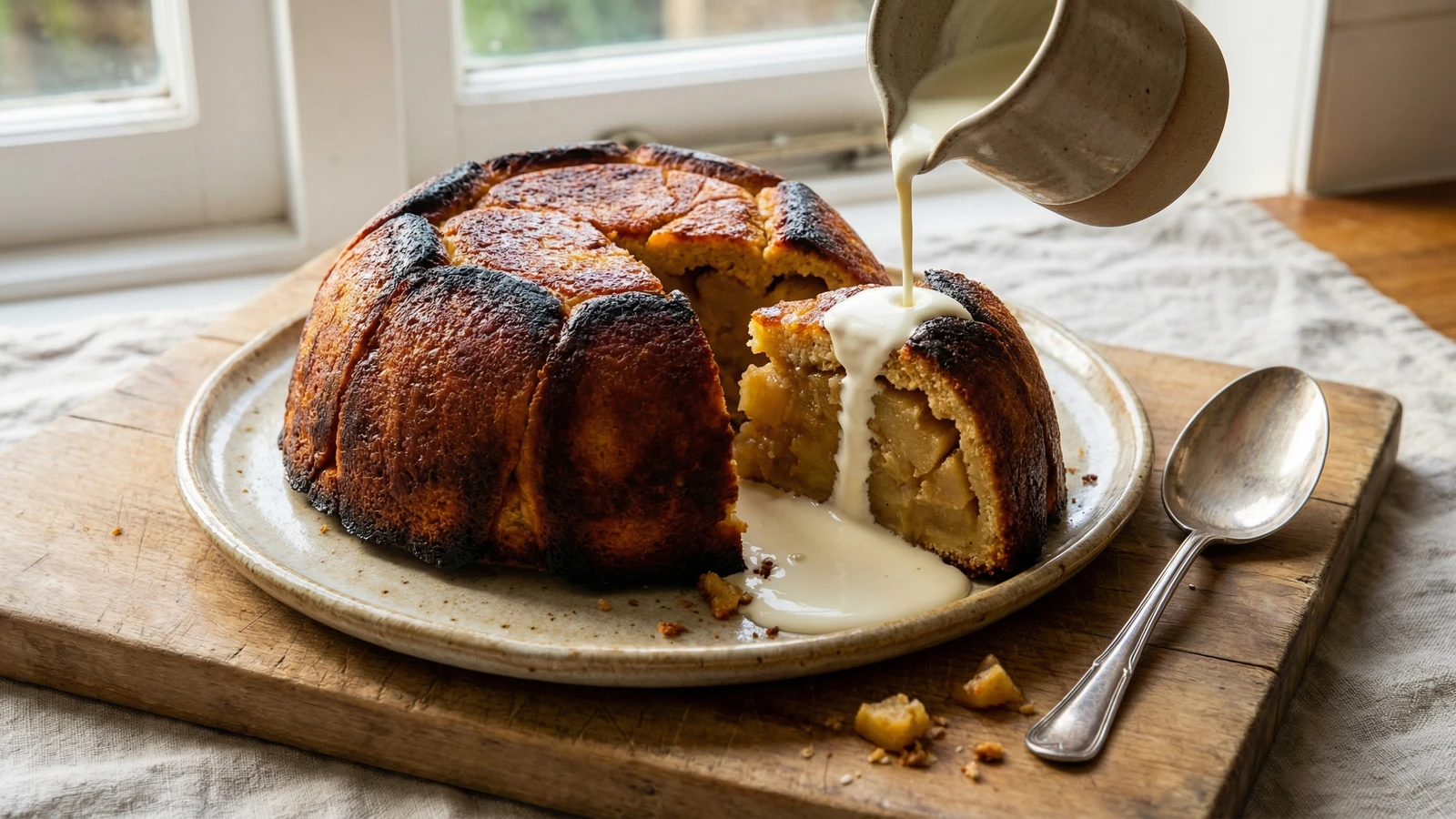
Buttered bread baked to a deep mahogany around a filling of spiced Bramley apples, turned out at the table in a small moment of drama, cold cream poured from a jug alongside.
There's a point in autumn when the apple trees give more than anyone knows what to do with. Windfalls in the wet grass. A bag of Bramleys left on your doorstep because somebody's tree has done it again and they've run out of ideas. The kitchen starts to smell faintly of fruit even when you haven't cooked anything yet. This is when an Apple Charlotte makes sense.
It's an old pudding and a quiet one. Bread, butter, apples, spice. Nothing you couldn't have found in a kitchen a hundred years ago, and nothing that has been improved since. You cook the apples down until they collapse into something thick and sharp and fragrant. You line a mould with butter-soaked bread. You pack the lot in, slide it into a hot oven, and wait for the house to smell of toast and orchards at the same time.
The drama, such as it is, happens at the table. You invert the mould onto a plate, lift it away, and there it stands: a burnished gold dome, almost mahogany at the edges, the bread gone crisp and caramelized where it met the heat. You cut into it and the apple inside is dense and spiced and barely holding together. Cream poured from a jug, cold against the hot pudding, pooling into the wedge.
I wrote it down in the notebook years ago, the first time I made one properly. "Apple Charlotte. October. Raining. Right food, right evening." I still think that's the whole recipe.
The technique, the tradition, and the story behind every dish.
Discover Culinary AdvisorIngredients
Bramley apples
Quantity
1.2kg
peeled, cored and roughly chopped
unsalted butter (for the apples)
Quantity
100g
golden caster sugar
Quantity
120g
unwaxed lemon
Quantity
1
zest only
ground cinnamon
Quantity
1 teaspoon
nutmeg
Quantity
half a teaspoon
freshly grated
calvados or brandy (optional)
Quantity
1 tablespoon
day-old white bread
Quantity
10-12 slices
crusts removed
unsalted butter (for the bread)
Quantity
150g
melted
demerara sugar
Quantity
2 tablespoons
double cream
Quantity
to serve
cold, from the fridge
| Ingredient | Quantity |
|---|---|
| Bramley applespeeled, cored and roughly chopped | 1.2kg |
| unsalted butter (for the apples) | 100g |
| golden caster sugar | 120g |
| unwaxed lemonzest only | 1 |
| ground cinnamon | 1 teaspoon |
| nutmegfreshly grated | half a teaspoon |
| calvados or brandy (optional) | 1 tablespoon |
| day-old white breadcrusts removed | 10-12 slices |
| unsalted butter (for the bread)melted | 150g |
| demerara sugar | 2 tablespoons |
| double creamcold, from the fridge | to serve |
Equipment Needed
- •1-litre charlotte mould or deep round cake tin (about 15cm across)
- •Wide, heavy saucepan for cooking the apples
- •Pastry brush
- •Palette knife
- •Baking tray to catch drips
Instructions
- 1
Cook the apples down
Melt the 100g of butter in a wide, heavy pan over a medium heat. Add the chopped apples, the caster sugar, the lemon zest, the cinnamon and the nutmeg. Stir it through, then put a lid on and let it go for ten minutes or so, stirring now and then. The Bramleys will collapse quickly. They always do. Once they've gone soft and foamy, take the lid off and turn the heat up a touch. You need to cook the water out. Keep stirring until you have a thick, sharp, golden puree that holds its shape on the spoon. Taste it. A Bramley likes sugar, but not too much. You want it tart. Add the calvados if you're using it, give it another minute, then take it off the heat and let it cool a little.
The single most important thing about an Apple Charlotte is that the filling is thick. A sloppy puree will weep into the bread and you'll end up with a soggy pudding that refuses to stand up. Cook it further than feels necessary. When you drag a spoon across the pan and the puree holds the line for a beat before closing, it's ready. - 2
Prepare the bread
Heat the oven to 190C/170C fan. While the apples are cooling, set up the bread. Cut the crusts off. You need one round piece for the bottom of the mould (cut it to fit by pressing the tin down onto a slice), one round for the top, and the rest cut into rectangles or wedges to line the sides. Don't agonize over neatness. This pudding is meant to look handmade, because it is.
Day-old bread is better than fresh. Fresh bread tears and goes soggy; day-old bread drinks the butter and crisps up properly in the oven. If your loaf is too fresh, dry the slices out in a low oven for five minutes first. - 3
Butter and line the mould
Brush the inside of a 1-litre charlotte mould, or a deep round cake tin of similar size, with some of the melted butter. Now take each slice of bread and dip one side generously into the melted butter, like you're buttering toast but more so. Lay the round piece, buttered side down, in the bottom of the mould. Line the sides with the rectangles, again buttered side out against the tin, overlapping each piece slightly so there are no gaps. The bread is the crust. Treat it that way.
- 4
Fill and seal
Spoon the cooled apple into the bread-lined mould, packing it down firmly as you go. Mound it slightly higher than the rim, because it'll settle in the oven. Cover the top with the remaining bread, buttered side up this time, trimming pieces to fit and tucking the edges down the sides to seal everything in. Brush the top with any leftover butter and scatter the demerara sugar over it. The demerara will caramelize into something dark and crunchy as it bakes.
- 5
Bake until mahogany
Place the mould on a baking tray, in case of drips, and slide it into the hot oven. Bake for thirty-five to forty-five minutes. You're looking for a deep, burnished gold on top, going toward mahogany at the edges. If it's browning too fast, lay a piece of foil loosely over it and carry on. The kitchen should smell of toast and warm apples and something like winter, even if it isn't winter yet. Trust your nose. It knows before you do.
Pale bread is the enemy of a good Charlotte. If the top looks timid when you check at forty minutes, give it another five. The colour is the flavour. A properly baked Charlotte has edges that are almost too dark, and that's exactly right. - 6
Rest and turn out
Take the Charlotte out of the oven and let it rest in the mould for ten minutes. Not less. This is when it firms up enough to hold its shape. Run a palette knife gently around the edge, place a serving plate on top, and invert the whole thing in one confident movement. Lift the mould away. If a bit of bread sticks, press it back into place with a knife. Nobody will know. Bring it to the table whole and cut it into generous wedges there, with a jug of cold double cream alongside. Pour the cream over the top so it pools into the wedge and runs down the sides. There are few better feelings than putting a warm plate in front of someone at the end of a cold evening.
Chef Tips
- •Bramleys are the right apple, and it isn't close. They collapse into a proper tart puree the moment they meet heat. Eating apples hold their shape and stay watery, which is exactly what you don't want here. If you can't get Bramleys, look for any proper cooking apple. The market usually has them from September onwards.
- •Don't be shy with the butter on the bread. The bread is supposed to drink it. A mean hand with the butter gives you pale, dry crust; a generous one gives you that deep, crisp, almost fried finish that makes a Charlotte worth the trouble.
- •Serve it warm, not hot. Straight from the oven it's too soft to cut cleanly, and the cream will vanish into it. Ten minutes of rest makes all the difference. This is a pudding that rewards a bit of patience at the end, even when everyone at the table is watching you unmould it.
- •Double cream, poured from a jug. Not ice cream, not custard, not a quenelle of anything. A Charlotte is a simple pudding and the cream should be simple too. Cold, thick, unwhipped, and generous.
Advance Preparation
- •The apple puree can be made up to two days ahead and kept covered in the fridge. Let it come back to room temperature before assembling so it's easy to pack into the mould.
- •You can assemble the whole Charlotte an hour or two before baking and leave it in a cool place. Any longer and the bread starts to lose its edge.
- •Leftovers are decent the next day, warmed gently in the oven, though it's at its best the moment it comes out the first time. This isn't a pudding that improves with keeping.
Frequently Asked Questions
Nutrition Information
1 serving (about 265g)
Where cooking meets culture.
Culinary mentorship, cultural storytelling, and the editorial depth that makes cooking meaningful.
Explore Culinary Advisor