Culinary Advisor
A cooking platform built around craft, culture, and the stories behind what we eat.
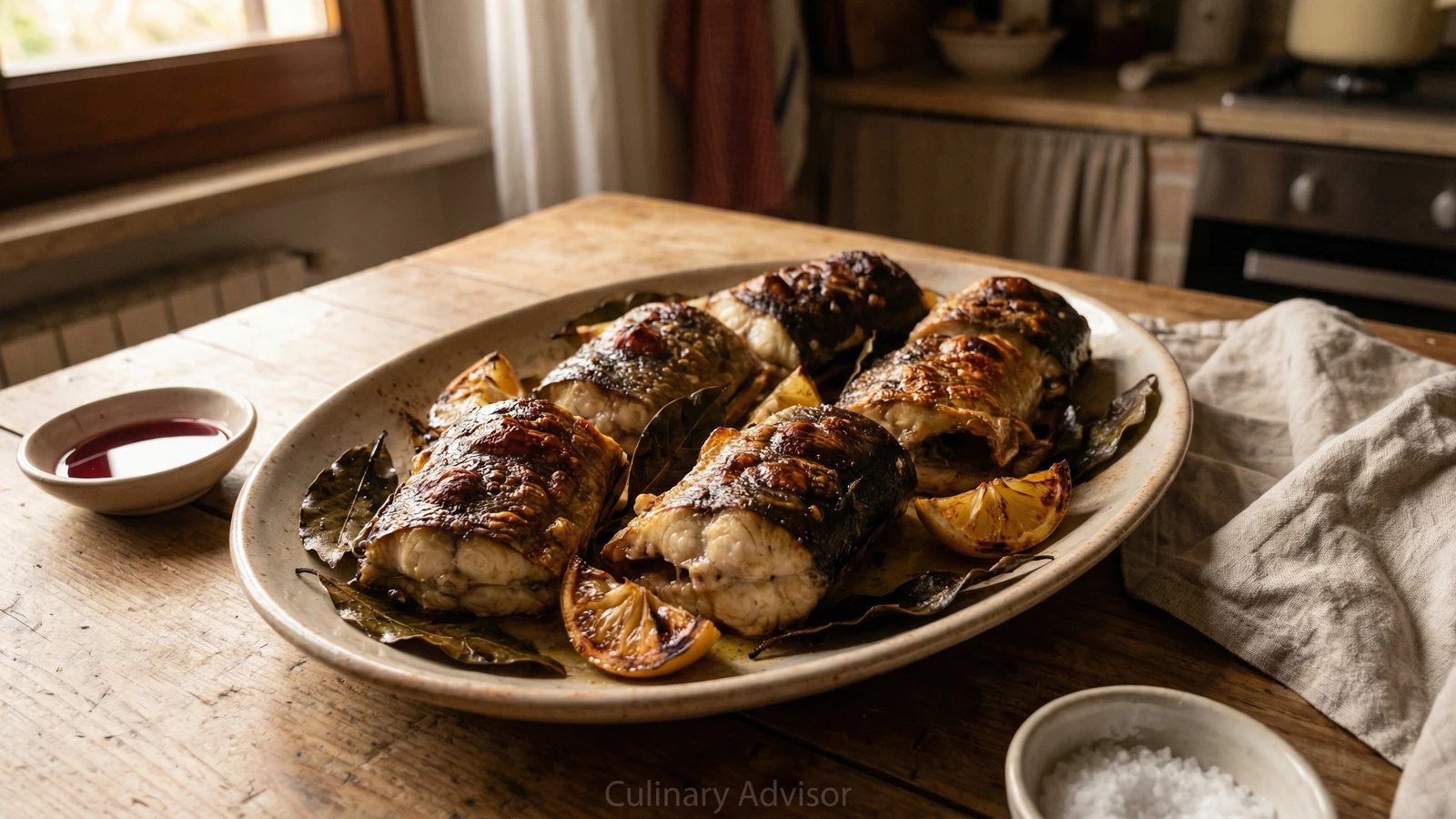
Anguilla Arrosto alla Comacchiese
Created by Chef Graziella
The legendary roasted eel of Comacchio, where the brackish lagoons of the Po Delta have produced Italy's finest anguilla for two thousand years. Bay leaves, salt, fire. Nothing more.
Comacchio sits in the marshlands where the Po River meets the Adriatic, a town built on thirteen small islands connected by bridges, its entire existence shaped by eels. The Valli di Comacchio, those vast brackish lagoons, trap eels migrating from the Sargasso Sea. For centuries, the people of Comacchio have understood what the rest of the world often forgets: eel is one of the finest eating fish in existence.
Americans avoid eel. They find it strange, perhaps unsettling. This is their loss. Properly prepared, eel has flesh that is rich, silken, and sweet, nothing like the muddy taste people fear. The secret is freshness and simplicity. The eel's abundant natural fat bastes the flesh as it cooks. You need only bay leaves, salt, and heat.
The fishermen of Comacchio roast their eels over wood fires, turning them on hinged grills until the skin crackles. Your oven will do the job adequately. What you cannot compromise on is the eel itself. It must be impeccably fresh, its skin glistening, its eyes clear. The eel tells you when it is done: the skin turns bronze and crisp, the flesh beneath yields to gentle pressure. Trust your senses more than any timer I could give you.
Comacchio's eel trade dates to the Etruscans, though the town's fortunes rose under papal control in the Middle Ages, when its salted and marinated eels provisioned Rome during Lent. The lavoriero, an ancient trapping system that funnels migrating eels into holding ponds each autumn, still operates today. Every October, the Sagra dell'Anguilla celebrates the catch that has sustained this remote lagoon town for over two millennia.
The technique, the tradition, and the story behind every dish.
Discover Culinary AdvisorIngredients
fresh eel
Quantity
2 pounds
cleaned and gutted
fresh bay leaves
Quantity
12
coarse sea salt
Quantity
to taste
black pepper
Quantity
to taste
freshly ground
extra virgin olive oil
Quantity
2 tablespoons
lemon
Quantity
1
cut into wedges
red wine vinegar (optional)
Quantity
for serving
| Ingredient | Quantity |
|---|---|
| fresh eelcleaned and gutted | 2 pounds |
| fresh bay leaves | 12 |
| coarse sea salt | to taste |
| black pepperfreshly ground | to taste |
| extra virgin olive oil | 2 tablespoons |
| lemoncut into wedges | 1 |
| red wine vinegar (optional) | for serving |
Equipment Needed
- •Heavy roasting pan or baking dish
- •Tongs for turning
Instructions
- 1
Prepare the eel
If your fishmonger has not done so, gut the eel and remove the head. Rinse thoroughly under cold running water, removing any remaining blood along the spine. The skin stays on. It crisps beautifully and holds the flesh together. Cut the eel into sections approximately four inches long.
Fresh eel should smell of clean water and the sea, never fishy or of ammonia. If it smells wrong, do not buy it. There is no saving bad eel. - 2
Season simply
Pat the eel sections completely dry with paper towels. Season generously with coarse salt and freshly ground pepper. Rub lightly with olive oil. The eel has abundant fat beneath its skin and needs little additional fat to cook properly, but the oil helps the seasonings adhere.
- 3
Arrange with bay leaves
Place the bay leaves in a single layer on the bottom of a roasting pan or baking dish. Arrange the eel sections on top, leaving space between each piece. Tuck additional bay leaves between and around the eel. The bay is not garnish. It perfumes the flesh as it roasts.
Fresh bay leaves are superior to dried for this preparation. Their aromatic oils infuse the eel more delicately. If using dried, reduce the quantity by half. - 4
Roast until done
Place in an oven preheated to 425 degrees Fahrenheit. Roast for 35 to 45 minutes, turning the pieces once halfway through. The eel is done when the skin has turned golden brown and crisp, and the flesh is opaque and pulls easily from the bone. The fat will have rendered and the bottom of the pan will be sizzling.
Traditional Comacchiese preparation uses an open wood fire and a hinged double grill called a graticola. If you have access to a charcoal grill, use it. The smoke adds another dimension the oven cannot replicate. - 5
Rest briefly and serve
Let the eel rest for three minutes, no longer. Transfer to a warm platter with the bay leaves scattered around. Serve immediately with lemon wedges. Some at the table will want a few drops of good red wine vinegar. This is acceptable. The acidity cuts the richness of the eel's natural fat.
Chef Tips
- •Order eel from a reputable fishmonger who will clean it for you. Cleaning eel yourself requires skill and a very sharp knife. The skin is slippery and the creature's anatomy unfamiliar to most home cooks.
- •Eel is rich. Serve modest portions with something acidic to balance: the lemon, the vinegar, or a simple salad of bitter greens dressed with oil and lemon.
- •In Comacchio, roasted eel is often served during the Christmas Eve feast of the seven fishes. The preparation has not changed in centuries because it does not need to change.
- •Leftover roasted eel, should you have any, is excellent cold the next day. The fat sets and the flesh firms, making it suitable for antipasto.
Advance Preparation
- •The eel must be purchased the day you plan to cook it, or at most the day before. Keep it refrigerated on ice until ready to prepare.
- •This dish does not benefit from advance preparation. The entire cooking process takes less than an hour. Plan accordingly.
Frequently Asked Questions
Nutrition Information
1 serving (about 180g)
Where cooking meets culture.
Culinary mentorship, cultural storytelling, and the editorial depth that makes cooking meaningful.
Explore Culinary Advisor