Culinary Advisor
A cooking platform built around craft, culture, and the stories behind what we eat.
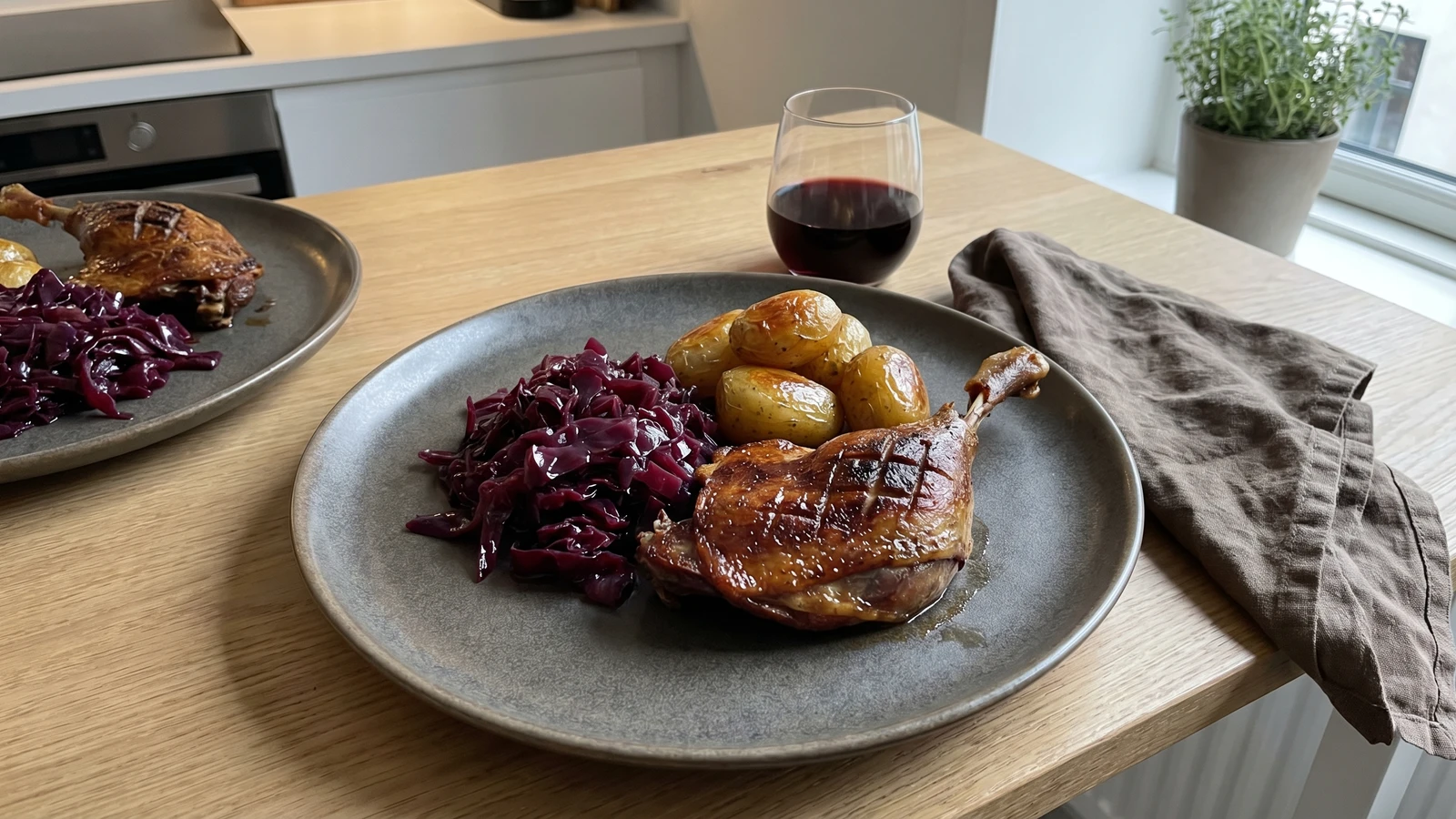
Andelår med Rødkål
Created by Chef Freja Lund
Slow-roasted duck legs with crisp, deeply golden skin, served with braised red cabbage and caramelized potatoes. The weeknight Danish duck that proves the best part of the bird is the one that takes its time.
November in Denmark is when you stop pretending autumn will last. The trees are bare. The bicycles have lights on at four in the afternoon. This is duck weather.
Andelår med rødkål is the weeknight duck, not the Christmas one. The Christmas bird is a whole roast duck, stuffed with apples and prunes, ceremonial and once-a-year. This is different. Duck legs, slow-roasted until the fat has rendered out and the skin has gone dark and crisp, served with red cabbage braised long enough to turn sweet and soft, and small potatoes rolled in caramel. It's a Tuesday night dinner that happens to be extraordinary.
Three things matter here. First: score the duck skin deeply and start it in a cold pan. The fat needs time to render, and rushing it gives you flabby skin and greasy meat. Second: the red cabbage wants patience. An hour at least, longer if you can give it. It should be soft enough to melt on your tongue, sweet from the apples and the redcurrant jelly, sharp from the vinegar. Third: the brunede kartofler, the caramelized potatoes, are their own small project. You make a dry caramel, add butter, and roll the potatoes through it. It sounds fiddly. It isn't. And once you've done it, you'll understand why Danes put them next to everything that matters.
Duck has been on the Danish table since the medieval period, when wild birds were hunted across the wetlands of southern Jutland and the low islands. The tradition of the whole roast Christmas duck, andesteg, became established among the Danish middle class in the 1800s, but the legs have always belonged to the everyday kitchen, prized by cooks who understood that slow rendering and connective tissue produce a richness the breast can't match. Rødkål became the duck's inseparable companion by the mid-19th century, and the recipe has never settled: Jutland cooks favor apple cider vinegar and more sugar, while Copenhagen kitchens lean toward red wine vinegar and a sharper, more astringent finish.
The technique, the tradition, and the story behind every dish.
Discover Culinary AdvisorIngredients
duck legs
Quantity
4, about 300g each
fine sea salt
Quantity
to taste
black pepper
Quantity
freshly ground, to taste
red cabbage
Quantity
1 small, about 800g
cored and finely shredded
tart apple
Quantity
1 large
peeled and coarsely grated
unsalted butter (for the cabbage)
Quantity
40g
light brown sugar
Quantity
75g
red wine vinegar
Quantity
100ml, plus extra to taste
redcurrant jelly
Quantity
2 tablespoons
cinnamon stick
Quantity
1
whole cloves
Quantity
3
bay leaf
Quantity
1
water
Quantity
150ml
small waxy potatoes
Quantity
800g
caster sugar (for the caramel)
Quantity
100g
unsalted butter (for the potatoes)
Quantity
40g
| Ingredient | Quantity |
|---|---|
| duck legs | 4, about 300g each |
| fine sea salt | to taste |
| black pepper | freshly ground, to taste |
| red cabbagecored and finely shredded | 1 small, about 800g |
| tart applepeeled and coarsely grated | 1 large |
| unsalted butter (for the cabbage) | 40g |
| light brown sugar | 75g |
| red wine vinegar | 100ml, plus extra to taste |
| redcurrant jelly | 2 tablespoons |
| cinnamon stick | 1 |
| whole cloves | 3 |
| bay leaf | 1 |
| water | 150ml |
| small waxy potatoes | 800g |
| caster sugar (for the caramel) | 100g |
| unsalted butter (for the potatoes) | 40g |
Equipment Needed
- •Heavy ovenproof skillet or roasting tin
- •Heavy-bottomed pot with lid, for the cabbage
- •Wide heavy pan, for the caramel potatoes
- •Sharp knife for scoring the duck skin
- •Box grater for the apple
Instructions
- 1
Score and season the duck
With a sharp knife, score the skin of each duck leg in a crosshatch pattern, cutting through the skin and the fat beneath but not into the meat. The cuts should be about 1cm apart. This does two things: it lets the thick layer of subcutaneous fat render out during cooking, and it creates ridges of skin that crisp independently, giving you more of that golden, crackling surface. Season the legs generously with salt on both sides. If you have time, do this the night before and leave them uncovered in the fridge. The salt draws moisture from the skin, and dry skin crisps better. If you're starting now, that's fine too.
Run your finger across the scored skin. You should feel distinct ridges. If the cuts are too shallow, the fat underneath won't render properly and you'll end up with thick, chewy skin instead of crisp. - 2
Render the fat
Place the duck legs skin-side down in a cold, heavy ovenproof pan or skillet. This is important: cold pan, cold start. Turn the heat to medium-low. Over the next fifteen to twenty minutes, the fat will begin to melt and pool around the legs. You'll hear a gentle, steady sizzle, nothing aggressive. The skin will slowly turn from pale to golden. Don't touch them. Don't move them. Let the fat do its work. When the skin is evenly golden and there is a good centimetre of liquid fat in the pan, pour the fat off carefully into a heatproof jar and save it. That's liquid gold for roasting potatoes another day.
If the sizzle turns loud and sharp, the heat is too high. Turn it down. You want the fat to leave the duck slowly. Rushing this step is how you end up with burnt skin on the outside and raw fat underneath. - 3
Start the red cabbage
While the duck renders, prepare the rødkål. Quarter the cabbage, cut out the hard core, and shred it finely. Coarse shreds take too long to soften and never reach the texture you want. Peel and core the apple and grate it on the coarse side of a box grater. In a heavy pot, melt the butter over medium heat. Add the shredded cabbage, grated apple, brown sugar, red wine vinegar, cinnamon stick, cloves, and bay leaf. Stir everything together until the cabbage is coated and glistening. Add the water and bring to a gentle simmer. Put the lid on and turn the heat as low as it will go. The cabbage needs at least an hour and a half. Stir it every twenty minutes or so. It will go from bright purple to a deep, dark garnet, and the kitchen will fill with something sweet and warm and spiced.
The cabbage will seem like far too much for the pot at first. It shrinks dramatically as it cooks. Push it down, put the lid on, and trust the process. - 4
Roast the duck legs
Heat the oven to 160°C. Place the pan with the duck legs, still skin-side down, into the oven. If your pan isn't ovenproof, transfer them to a roasting tin. Roast for one and a half hours at this low, patient temperature. The remaining fat renders slowly while the connective tissue in the legs breaks down and the meat turns tender and giving. After an hour and a half, flip the legs skin-side up and increase the temperature to 200°C. Roast for another twenty to twenty-five minutes until the skin is deeply golden, taut, and crisp. The meat should be pulling away from the bone slightly. That's how you'll know it's right.
- 5
Finish the cabbage
After the rødkål has braised for at least an hour and a half, stir in the redcurrant jelly. Taste it. You're looking for a balance between sweet, sharp, and warm. If it needs more acidity, add a splash of vinegar. If it's too sharp, a little more sugar. Fish out the cinnamon stick, cloves, and bay leaf. Season with salt. The finished cabbage should be soft enough that the shreds almost dissolve on your tongue, deeply colored, and glistening with butter.
- 6
Make the brunede kartofler
Boil the potatoes in generously salted water until tender when pierced with a knife, about fifteen to twenty minutes depending on their size. Drain and peel them while they're still warm. Use a cloth to hold them; they'll be hot. In a wide, heavy pan, spread the caster sugar in an even layer. Place it over medium heat and do not stir. Watch it carefully. The sugar will melt from the edges inward, turning first clear, then pale gold, then deep amber. This takes about five minutes. The moment it reaches a rich dark amber, add the butter. It will hiss and foam. Swirl the pan until the butter melts into the caramel, then add the potatoes and roll them gently through the coating until each one is glazed and gleaming. Keep them over low heat for five minutes more, turning occasionally. They should look like polished amber stones.
Don't stir the sugar while it melts. Stirring causes crystallization and you'll get grainy lumps instead of smooth caramel. Swirl the pan gently if you must, but let the heat do the work. - 7
Rest and serve
Take the duck legs from the oven and let them rest for ten minutes. The juices redistribute and the meat relaxes. Arrange the legs on a warm serving platter or directly onto plates, with a generous spoonful of rødkål alongside and the burnished caramelized potatoes clustered beside the cabbage. There is no garnish. The colors do the work: the dark gold of the duck, the deep garnet of the cabbage, the amber gleam of the potatoes. This is a meal that looks the way it tastes, honest and complete. Tak for mad.
Chef Tips
- •Save every drop of the rendered duck fat. Strain it into a clean jar and keep it in the fridge, where it lasts for months. Potatoes roasted in duck fat are one of the best things you can eat, and once you've tried it, you won't go back to oil.
- •Rødkål is one of those rare dishes that improves overnight. If you can, make it the day before. Reheat it gently and stir in the redcurrant jelly just before serving. The flavors deepen and settle in a way they can't in a single afternoon.
- •Use a tart apple. In Denmark we'd use an Ingrid Marie or a Belle de Boskoop. A Granny Smith works well if those aren't available. Sweet apples make the cabbage cloying. You want the fruit to add body and a quiet sharpness, not sweetness.
- •The cold-pan start for the duck is not optional. If you put duck legs into a hot pan, the skin seizes before the fat has a chance to render. You get a hard, leathery surface over a thick layer of unmelted fat. Starting cold gives the fat time to melt out slowly, and that slow melt is what gives you the crisp skin everyone wants.
Advance Preparation
- •Salt the duck legs the night before if you can. Leave them uncovered on a plate in the fridge overnight. The salt seasons the meat through and dries the skin, which means crisper results. Even an hour of salting ahead improves things.
- •The red cabbage can be made up to three days ahead and stored in the fridge. It reheats beautifully over low heat. Add the redcurrant jelly when you reheat so it stays glossy and bright.
- •The caramelized potatoes must be made just before serving. The caramel softens and loses its gloss if they sit. This is the one element that doesn't wait.
Frequently Asked Questions
Nutrition Information
1 serving (about 520g)
Where cooking meets culture.
Culinary mentorship, cultural storytelling, and the editorial depth that makes cooking meaningful.
Explore Culinary Advisor