Culinary Advisor
A cooking platform built around craft, culture, and the stories behind what we eat.
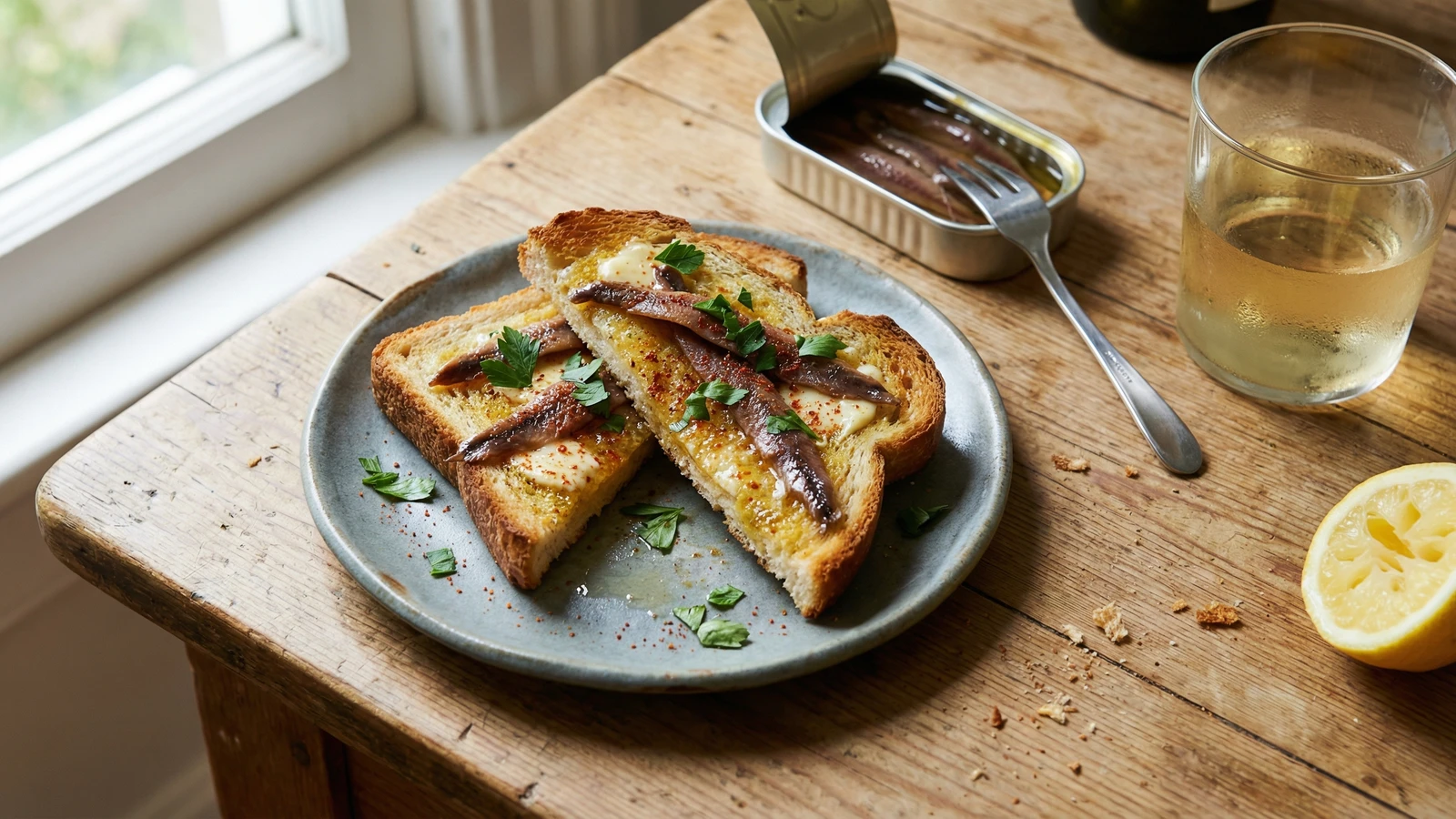
Anchovy Toast
Created by Chef Thomas
Salted anchovies pressed into hot buttered toast, sharp with lemon and cayenne, the kind of thing you eat standing at the kitchen counter with a glass of cold wine and nothing else planned.
Late in the evening, after everything else has been cleared away, there are times when the only thing that feels right is something salty and sharp on hot bread. Anchovy toast is that thing. It isn't a recipe in any meaningful sense. It's an assembly. But it's an assembly that has outlasted most of what passes for clever food, and it will outlast whatever comes next.
The Victorians served it as a savoury at the end of a long dinner, a sharp note after the pudding, something to reset the palate before the port. I serve it because it takes five minutes and tastes like exactly what I want at nine o'clock on a Thursday when the kitchen is quiet and there's half a bottle of something cold in the fridge. Different centuries, same instinct.
You need three things and none of them can be poor. Good bread, the kind with a crust that resists the knife. Real butter, unsalted, so you control the salt. And anchovies worth eating, dark and soft and rich, from a tin you'd happily open just to smell. Gentleman's Relish if you can find it, that peculiar, pungent paste that tastes of anchovy and butter and spice and something faintly Victorian that nobody has ever quite been able to name. Either way. Your kitchen, your rules.
I wrote it down in the notebook years ago. Just three words: anchovies, butter, toast. It didn't need more. Some things don't.
The technique, the tradition, and the story behind every dish.
Discover Culinary AdvisorIngredients
good white bread
Quantity
4 thick slices
cut from a proper loaf
unsalted butter
Quantity
generous knob
softened
salted anchovy fillets
Quantity
8-10
or use Gentleman's Relish (Patum Peperium)
lemon juice
Quantity
a squeeze
cayenne pepper
Quantity
pinch
flat-leaf parsley (optional)
Quantity
small handful
roughly chopped
| Ingredient | Quantity |
|---|---|
| good white breadcut from a proper loaf | 4 thick slices |
| unsalted buttersoftened | generous knob |
| salted anchovy filletsor use Gentleman's Relish (Patum Peperium) | 8-10 |
| lemon juice | a squeeze |
| cayenne pepper | pinch |
| flat-leaf parsley (optional)roughly chopped | small handful |
Equipment Needed
- •Grill or toaster
- •Bread knife
Instructions
- 1
Toast the bread properly
Get the bread under a hot grill or into a toaster. You want proper colour on it, golden and firm enough to hold butter without collapsing, but not so dark it tastes of carbon. Watch it. Toast turns in seconds. If you have a grill, toast one side first, then the other. The control is better and you get that slightly uneven char that a toaster can't manage.
The bread matters here as much as the anchovies. A thick slice from a close-crumbed white loaf, the sort you'd buy at a proper baker. Sliced supermarket bread won't hold the butter or the weight of what goes on top. - 2
Butter while hot
The moment the toast comes out, butter it. Generously. The bread should be hot enough that the butter melts on contact and soaks in slightly, leaving the surface glossy. This is not the time for restraint. Cold butter on cooling toast is a missed opportunity.
- 3
Add the anchovies
If you're using whole fillets, lay them across the buttered toast, two or three per slice, pressing them gently into the warm butter so they soften and begin to melt at the edges. If you're using Gentleman's Relish, spread it thinly. It's concentrated stuff, salty and pungent and a little goes a long way. You can always add more. You can't take it back.
Good salted anchovies packed in olive oil are what you want. The ones in tins from Spain or Italy, dark and rich and soft. Avoid anything that smells of tin rather than sea. - 4
Finish and serve
A squeeze of lemon over the top. Not much. Just enough to cut through the salt and the butter. A bare dusting of cayenne if you want a bit of warmth at the back of the throat. Parsley if it's there, chopped roughly and scattered over. Cut the toast in half on the diagonal, put it on a warm plate, and carry it to whoever is waiting. Eat it standing up in the kitchen or sitting down with a glass of cold white wine. Both are correct.
Chef Tips
- •If you can find Gentleman's Relish, Patum Peperium, in the jar with the label that hasn't changed in a hundred and fifty years, buy it. It keeps for months in the fridge and there is nothing else quite like it. Spread it the way you'd spread Marmite: thinly, on thick butter, and let the toast do the rest.
- •The anchovy question matters. Tinned fillets packed in good olive oil are what you want. Ortiz, if you can get them. Rinse them briefly if they're packed in salt. The fish should taste of the sea, not of the tin.
- •This wants a cold, dry white wine alongside it. Something with enough acid to stand up to the salt. A Muscadet, a Picpoul, a bone-dry Fino sherry if you're feeling correct about it. The wine and the anchovy were made for each other. Trust your instinct on the pairing.
Advance Preparation
- •There is no advance preparation. This is a five-minute operation from start to plate. The only preparation is having the right things in the kitchen: good bread, good butter, good anchovies. Stock them and you're always ten minutes from something worth eating.
Frequently Asked Questions
Nutrition Information
1 serving (about 130g)
Where cooking meets culture.
Culinary mentorship, cultural storytelling, and the editorial depth that makes cooking meaningful.
Explore Culinary Advisor