Culinary Advisor
A cooking platform built around craft, culture, and the stories behind what we eat.
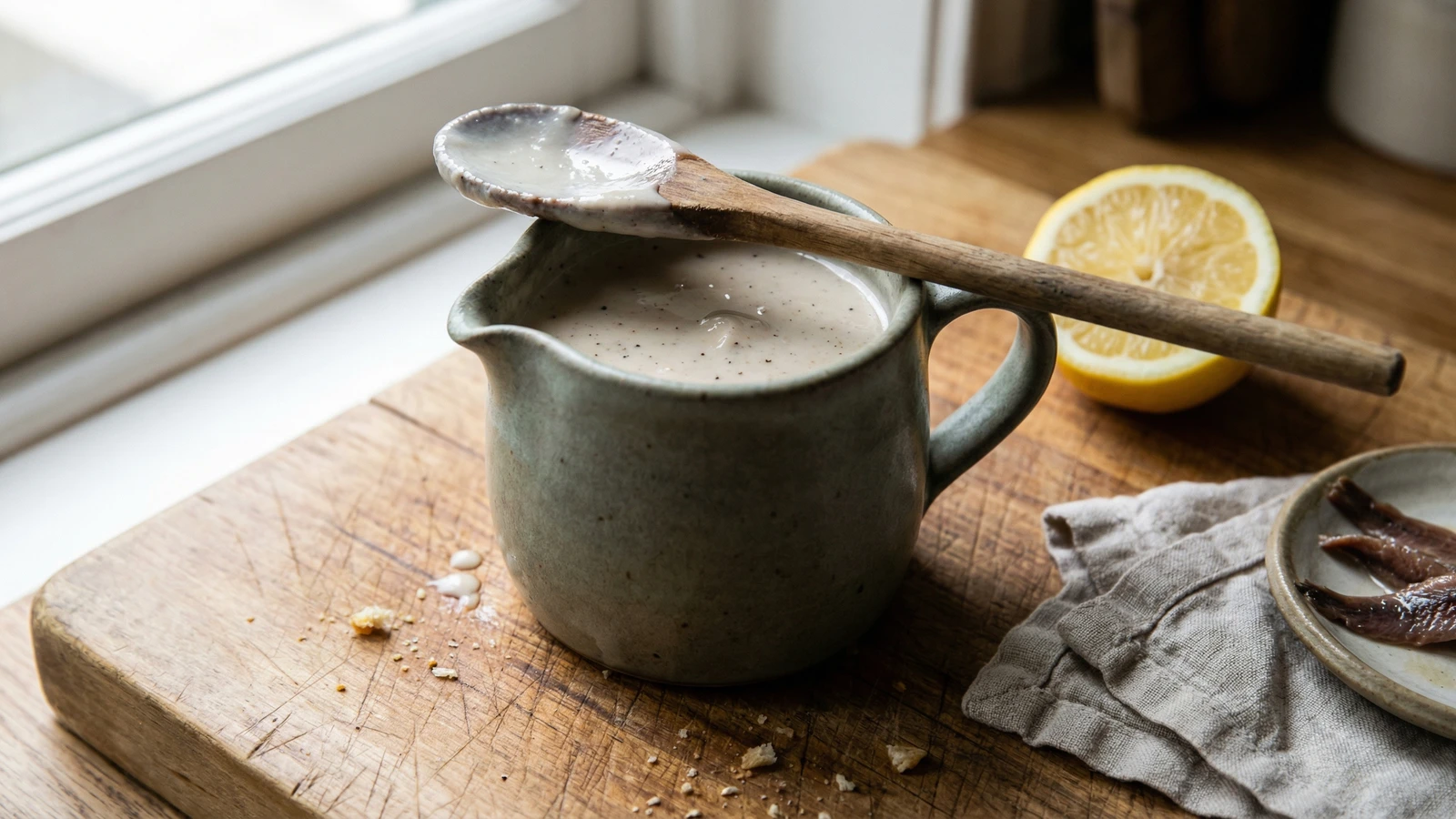
Anchovy Sauce
Created by Chef Thomas
A proper white sauce sharpened with pounded anchovy, the old Georgian trick for waking up a piece of poached fish or a slice of roast lamb on a Sunday in spring.
There's a moment, when you stir the pounded anchovies into the warm white sauce, where the kitchen suddenly smells of the sea. Salt and butter and something deeper than either. It catches you off guard every time, even when you're expecting it.
This is a Georgian sauce, and not one most people make any more. A pity. People used to know what to do with anchovies. They pounded them into butter, into sauces, into anything that needed waking up. Then somewhere along the way we forgot, and anchovies became a pizza topping you apologize for. A small loss, easily fixed.
The sauce itself is plain enough. White sauce, properly made, then sharpened with anchovy until it tastes of itself. Spoon it over a piece of poached fish on a quiet Tuesday, or pour it alongside a slice of roast lamb on a Sunday in spring when the new season's lamb has just come in and feels like an occasion. You don't need much. A puddle on the warm plate. The fish or the lamb does the rest.
I wrote it down in the notebook last Easter: 'Anchovy sauce with the lamb. Forgot how good this is. Make again.' Some things you have to keep relearning. We're only making dinner, but a sauce like this is the difference between feeding people and feeding them properly.
The technique, the tradition, and the story behind every dish.
Discover Culinary AdvisorIngredients
unsalted butter
Quantity
50g
plain flour
Quantity
40g
whole milk
Quantity
500ml
anchovy fillets in oil
Quantity
8 good ones
drained
lemon
Quantity
a small squeeze
nutmeg (optional)
Quantity
a grating
freshly grated
white pepper
Quantity
to taste
cold unsalted butter (optional)
Quantity
a small knob
to finish
| Ingredient | Quantity |
|---|---|
| unsalted butter | 50g |
| plain flour | 40g |
| whole milk | 500ml |
| anchovy fillets in oildrained | 8 good ones |
| lemon | a small squeeze |
| nutmeg (optional)freshly grated | a grating |
| white pepper | to taste |
| cold unsalted butter (optional)to finish | a small knob |
Equipment Needed
- •Heavy-bottomed saucepan
- •Small saucepan for warming the milk
- •Balloon whisk
- •Wooden spoon
- •Mortar and pestle (or a small bowl and fork)
Instructions
- 1
Pound the anchovies
Tip the anchovy fillets into a mortar and work them with the pestle until they break down into a rough, salty paste. No mortar? A small bowl and the back of a fork will do the same job, less elegantly. You're not after silk; a bit of texture is fine. Set it aside. Your fingers will smell of anchovy for the rest of the afternoon. There are worse things.
Buy the best anchovies you can find. The ones in glass jars from a proper deli, packed in good oil, are worth the small extra. Tinned will do, but the difference is real. - 2
Warm the milk
Pour the milk into a small saucepan and set it over a low heat. You don't want it to boil. Just warm it through until it's hand-hot, then take it off the heat. Cold milk hitting a hot roux is the main reason a white sauce goes lumpy, and a small bit of patience here saves you a lot of whisking later.
- 3
Make the roux
Melt the butter in a heavy-bottomed saucepan over a gentle heat. Once it's foaming but not browning, scatter in the flour and stir it through with a wooden spoon. It will come together as a smooth, pale paste. Cook it for a minute or two, stirring all the while. It should smell faintly biscuity, like a shortbread just starting in the oven. That smell is the raw flour cooking out, which is the difference between a sauce that tastes like a sauce and one that tastes like wallpaper paste.
- 4
Build the sauce
Pour in the warm milk a ladleful at a time, whisking hard after each addition until the sauce is smooth before you add the next. Take your time over the first few. After three or four ladles you can start adding it more freely. Once all the milk is in, let the sauce come up to a gentle simmer, whisking constantly. It will thicken as it heats. You're after a sauce that coats the back of a spoon and falls in a slow, lazy ribbon when you lift it.
If a few lumps appear despite your best efforts, push the sauce through a fine sieve at the end. Nobody needs to know. - 5
Finish with anchovy
Take the pan off the heat and stir in the pounded anchovies. The sauce will go a faint, blushing grey and the kitchen will suddenly smell of the sea. Add a small squeeze of lemon, a grating of nutmeg if you fancy it, and a few twists of white pepper. Taste it. Don't reach for salt without tasting first; the anchovies bring plenty of their own. If it tastes flat, more lemon. If it tastes thin, drop in a small knob of cold butter and swirl it through off the heat. That's the trick that pulls the whole thing together. Serve warm, in a small jug, alongside whatever needs it.
Chef Tips
- •The anchovies do all the heavy lifting here, so don't economise on them. The good ones in glass jars from a proper deli, packed in olive oil, taste of the sea rather than the tin. If you can find salt-packed anchovies and don't mind rinsing and filleting them yourself, better still. The flavour is deeper and cleaner.
- •This is the place for whole milk, not skimmed or semi. The fat carries the flavour and gives the sauce the body it needs. Half-fat anything will give you a sauce that tastes thin and apologetic.
- •Pair it with what suits. Traditionally it goes with poached white fish: turbot, cod, hake, anything firm and gentle. But it's quietly splendid alongside roast lamb too, especially the first spring lamb of the year, where the salty hit of the anchovy plays off the sweetness of the meat. Try it once and you'll see why people used to make it for every Sunday lunch.
- •Don't reach for salt before you've tasted. The anchovies are salty enough on their own, and an over-salted sauce is a sauce nobody wants seconds of. Season and taste. Then taste again.
Advance Preparation
- •Best made fresh and served warm. White sauces don't reward sitting around, but if you need to get ahead, make it up to an hour before serving and keep it warm in a bowl set over a pan of barely simmering water. Stir occasionally and loosen with a splash of warm milk if it tightens up.
- •Leftovers will keep in the fridge for up to two days. Reheat very gently in a small pan with a splash of milk, whisking until smooth. Don't let it boil or it will split.
- •Doesn't freeze well. The texture goes grainy when it thaws. Make what you'll use.
Frequently Asked Questions
Nutrition Information
1 serving (about 130g)
Where cooking meets culture.
Culinary mentorship, cultural storytelling, and the editorial depth that makes cooking meaningful.
Explore Culinary Advisor