Culinary Advisor
A cooking platform built around craft, culture, and the stories behind what we eat.
Altwiener Salonbeuschel
Created by Chef Elsa
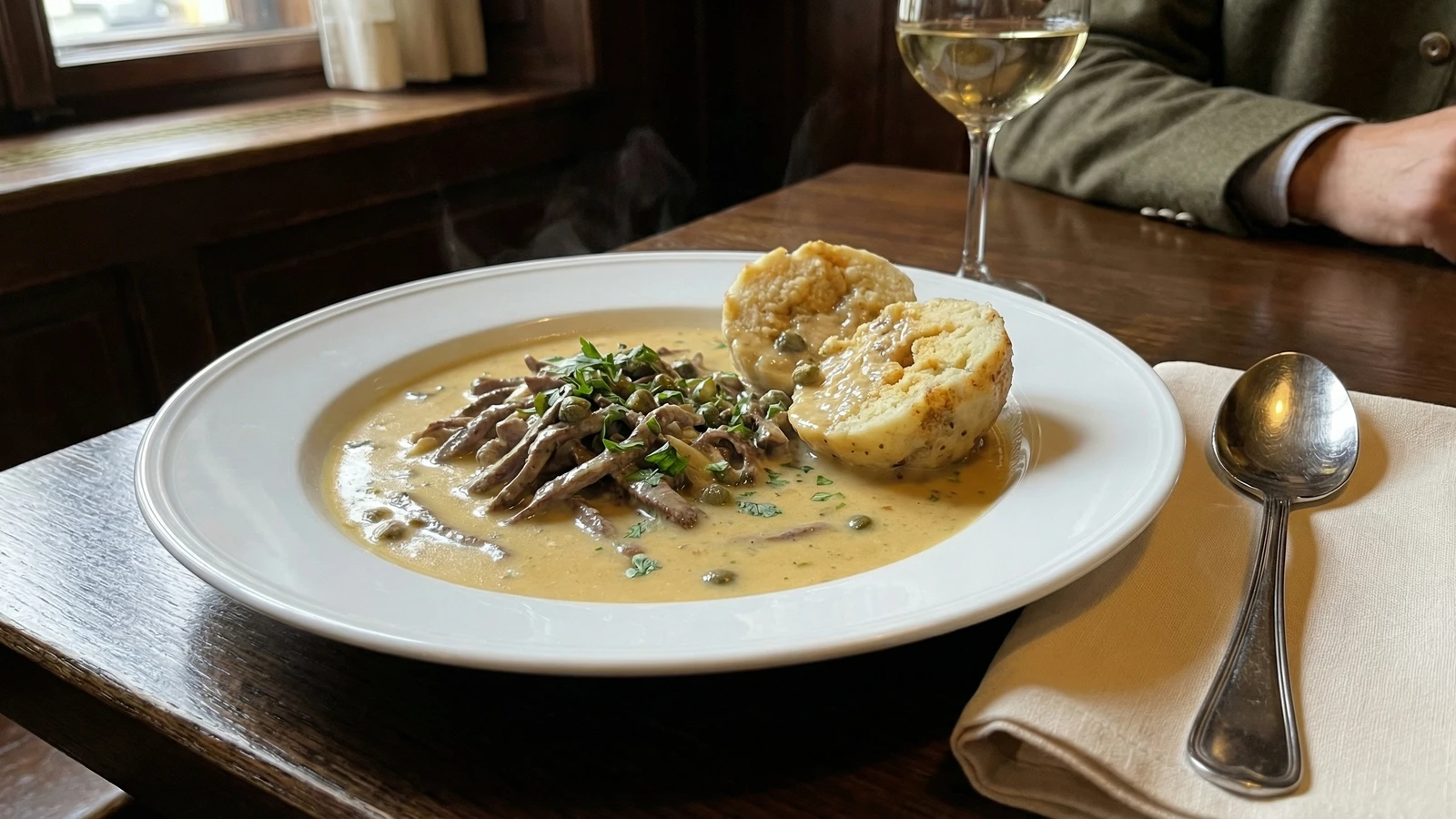
Veal lung and heart braised tender in a velvety cream sauce spiked with capers, anchovies, and lemon zest, served the only way Vienna allows: with a proper Semmelknödel to soak up every last drop.
Gretel always said that if you want to understand how the Viennese think about cooking, don't look at the Sachertorte. Look at the Beuschel. Here is a city that took the cheapest parts of the calf, the lungs and the heart, and turned them into something so refined they put "Salon" in front of the name and served it on their best porcelain. That tells you everything.
I first tasted Salonbeuschel on one of our childhood trips to Vienna, at a Gasthaus near the Naschmarkt where the tablecloths were white and the Knödel arrived on their own plate. I was maybe ten. Eva and Gretel ordered it without hesitation, the way you order something you've been eating your whole life. I remember the sauce was pale gold, silky, and sharp in a way I couldn't identify. Gretel told me later: anchovies. Not enough to taste like fish, just enough to make everything else wake up. That's the secret of Viennese cuisine right there, knowing how to use one ingredient to make all the others louder.
The technique is straightforward. You poach the lung and heart until tender, slice them thin, then build a cream sauce with a proper roux, good stock, capers, a whisper of anchovy, and enough lemon zest to cut through the richness. The "Alt" in the name means old-style, and this is old-style Viennese cooking at its most confident. Simple ingredients, precise technique, a finished dish that makes you forget you're eating offal and remember you're eating in Vienna.
This is not a dish for people who are afraid of it. It's a dish for people who are curious. And if you've never cooked with lung before, I'd like to explain: it's gentler than you think. Mild, tender, almost creamy when sliced thin. The heart has more character, a clean, mineral bite that the sauce rounds out beautifully. Together, with a Semmelknödel splitting open on the plate and soaking up that sauce, this is one of the most satisfying things Vienna ever put on a table.
Beuschel, from the Viennese dialect for the pluck (lungs, heart, and sometimes spleen), has been a staple of Vienna's Innereienküche since at least the 18th century. The prefix "Salon" appeared in the 19th century to distinguish the refined, cream-sauced version from the simpler peasant preparation, signaling a dish fit for bourgeois dining rooms. Altwiener Salonbeuschel became a signature of the Beisl, Vienna's neighborhood restaurants, where it remains a point of pride and a reliable test of the kitchen's skill. The combination of capers and anchovies in the sauce reflects Italian influence carried through centuries of Habsburg exchange with the south.
The technique, the tradition, and the story behind every dish.
Discover Culinary AdvisorIngredients
veal lung
Quantity
500g
cleaned and trimmed
veal heart
Quantity
250g
cleaned and trimmed
onion (for poaching)
Quantity
1 medium
peeled and halved
carrot
Quantity
1
peeled
celeriac
Quantity
1 small piece
peeled
bay leaf
Quantity
1
whole black peppercorns
Quantity
6
white wine vinegar (for poaching)
Quantity
1 tablespoon
salt
Quantity
to taste
unsalted butter
Quantity
50g
onion (for sauce)
Quantity
1 medium
finely diced
plain flour
Quantity
40g
reserved poaching stock
Quantity
500ml
heavy cream (Schlagobers)
Quantity
125ml
capers
Quantity
2 tablespoons
drained and roughly chopped
anchovy fillets
Quantity
2
finely minced
lemon zest
Quantity
zest of 1 lemon
fresh lemon juice
Quantity
1 tablespoon
Dijon mustard
Quantity
1 teaspoon
white wine vinegar (for sauce)
Quantity
1 tablespoon
sugar
Quantity
pinch
white pepper
Quantity
freshly ground, to taste
fresh flat-leaf parsley
Quantity
1 tablespoon
finely chopped
Semmelknödel (bread dumplings)
Quantity
for serving
| Ingredient | Quantity |
|---|---|
| veal lungcleaned and trimmed | 500g |
| veal heartcleaned and trimmed | 250g |
| onion (for poaching)peeled and halved | 1 medium |
| carrotpeeled | 1 |
| celeriacpeeled | 1 small piece |
| bay leaf | 1 |
| whole black peppercorns | 6 |
| white wine vinegar (for poaching) | 1 tablespoon |
| salt | to taste |
| unsalted butter | 50g |
| onion (for sauce)finely diced | 1 medium |
| plain flour | 40g |
| reserved poaching stock | 500ml |
| heavy cream (Schlagobers) | 125ml |
| capersdrained and roughly chopped | 2 tablespoons |
| anchovy filletsfinely minced | 2 |
| lemon zest | zest of 1 lemon |
| fresh lemon juice | 1 tablespoon |
| Dijon mustard | 1 teaspoon |
| white wine vinegar (for sauce) | 1 tablespoon |
| sugar | pinch |
| white pepper | freshly ground, to taste |
| fresh flat-leaf parsleyfinely chopped | 1 tablespoon |
| Semmelknödel (bread dumplings) | for serving |
Equipment Needed
- •Large stockpot (6-liter minimum) for poaching
- •Fine-mesh sieve
- •Wide heavy-bottomed pan or sauté pan (28cm)
- •Whisk
- •Sharp knife for slicing the offal thinly
Instructions
- 1
Poach the offal
Place the veal lung and heart in a large pot with the halved onion, carrot, celeriac, bay leaf, peppercorns, a tablespoon of white wine vinegar, and a generous pinch of salt. Cover with cold water by at least five centimeters. Bring to a gentle simmer over medium heat. Gray foam will rise to the surface in the first few minutes. Skim it patiently until it stops coming. Then turn the heat down low. You want the surface barely trembling, not rolling. The lung needs about an hour and a half. The heart is done in about an hour, so pull it out earlier and set it aside. The lung is ready when a knife slides through without resistance.
Start with cold water, always. It draws the impurities out gradually and gives you a cleaner stock. Hot water seals them in and you'll spend the next hour chasing gray scum. - 2
Cool and slice the meat
Lift the lung and heart ontoa cutting board. Strain the poaching liquid through a fine-mesh sieve and reserve 500ml of it. This stock is the backbone of your sauce, so don't discard it. Let the meat cool until you can handle it comfortably. Slice both the lung and heart into thin strips, about half a centimeter wide and three to four centimeters long. The lung will be pale and spongy, the heart darker and firmer. That contrast of texture is part of what makes the dish interesting.
- 3
Build the roux
Melt the butter in a wide, heavy-bottomed pan over medium heat. When it foams, add the finely diced onion and cook gently until it softens and turns translucent, about five minutes. You don't want color here. Burnt onion will make the whole sauce bitter. Sprinkle the flour over the onions and stir constantly with a wooden spoon for two to three minutes. The roux should turn a very pale gold and smell faintly nutty. This is a blonde roux, not a brown one. Keep the heat moderate and keep stirring. Lumps now mean lumps later.
White pepper, not black, in this sauce. The Viennese use white pepper when they want heat without dark specks in a pale sauce. It's an aesthetic choice and a flavor one: white pepper has a sharper, more direct bite. - 4
Add the stock and cream
Pour the reserved poaching stock into the roux in a slow, steady stream, whisking constantly. The mixture will seize up at first and look alarmingly thick. Keep whisking, keep pouring. It will smooth out. Once all the stock is incorporated, let the sauce simmer gently for ten minutes, stirring occasionally. It should thicken to the consistency of heavy cream, coating the back of a spoon in a clean line. Stir in the Schlagobers and let the sauce simmer another five minutes. Taste it. The base should be mild and rich, a blank canvas waiting for the sharp notes.
- 5
Sharpen the sauce
This is where the Salonbeuschel becomes itself. Add the chopped capers, the minced anchovies, the lemon zest, lemon juice, mustard, and the tablespoon of white wine vinegar. Stir everything through and let it simmer for two minutes. Add a pinch of sugar. Not sweetness, just enough to round the acidity. The sauce should taste bright and layered: creamy first, then the salt of the capers and anchovies, then the lemon cutting through at the end. If it tastes flat, it needs more vinegar. If it tastes too sharp, a touch more cream.
The anchovies should disappear into the sauce. You shouldn't taste fish. If you can identify anchovy as a distinct flavor, you've used too much. Two fillets is the right amount for this quantity. They're there to add depth, the way a bass note supports a melody. - 6
Combine and warm through
Add the sliced lung and heart to the sauce. Fold them in gently. Let everything simmer together on low heat for five to ten minutes so the meat absorbs the flavors of the sauce. Don't let it boil. Boiling will tighten the lung and turn something tender into something rubbery. Season with salt and white pepper. Taste again. The balance should be right: creamy, sharp, savory, with a clean lemon finish.
- 7
Serve with Semmelknödel
Ladle the Salonbeuschel into warm, wide bowls. Scatter the chopped parsley over the top. Place a Semmelknödel alongside or on a separate plate, depending on how you feel about your Knödel swimming in sauce. The Knödel is not optional. It's the other half of the dish. Break it open with your fork and let the sauce soak into the soft bread interior. That first bite, the tender lung, the sharp cream sauce, the giving texture of the Knödel, is pure Vienna. Mahlzeit!
Chef Tips
- •Talk to your butcher early. Veal lung and heart are not everyday counter items in most countries. A good butcher can source them with a few days' notice, and they'll clean and trim them for you if you ask. Tell them it's for Beuschel and if they know Austrian cooking, they'll know exactly what you need.
- •The poaching liquid is everything. Don't even think about discarding it. That stock carries the clean, mineral flavor of the offal and the vegetables, and it becomes the foundation of your sauce. If you substitute water or commercial stock, the dish will taste hollow.
- •The sauce should be assertive, not polite. Vienna's cream sauces are not the gentle, whispery things you find in French cuisine. They have vinegar, they have mustard, they have capers and anchovy. If your sauce tastes mild and creamy and nothing else, you haven't gone far enough with the sharp notes. Be brave. Taste and adjust.
- •Semmelknödel should be made from day-old Semmeln (Austrian bread rolls). If you can't find Semmeln, use a good-quality white bread with a tight crumb. Soft sandwich bread is too spongy and will fall apart in the sauce.
Advance Preparation
- •The lung and heart can be poached a day ahead and refrigerated in their strained stock. Slice them cold the next day, which is actually easier than slicing them warm, and proceed with the sauce.
- •The finished Salonbeuschel reheats well. Let it cool, refrigerate, and gently rewarm the next day over low heat. The flavors actually deepen overnight. Add a splash of stock if the sauce has thickened too much.
- •Semmelknödel can be shaped and refrigerated several hours before cooking. They take about twenty minutes to simmer, so start them before you reheat the Beuschel.
Frequently Asked Questions
Nutrition Information
1 serving (about 330g)
Where cooking meets culture.
Culinary mentorship, cultural storytelling, and the editorial depth that makes cooking meaningful.
Explore Culinary Advisor