Culinary Advisor
A cooking platform built around craft, culture, and the stories behind what we eat.
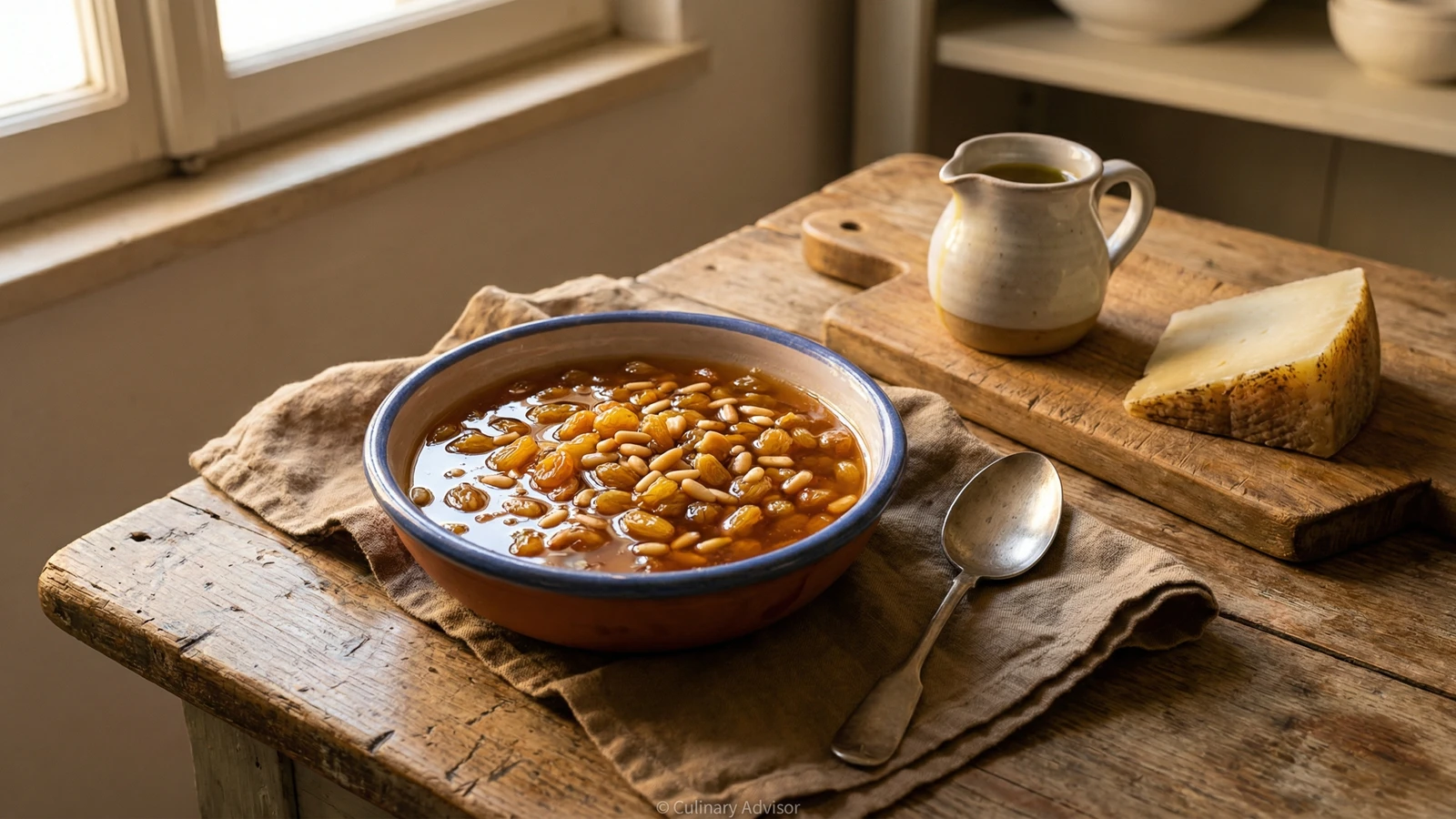
Agrodolce alla Siciliana
Created by Chef Graziella
The sweet-sour sauce that proves Sicily is where East meets West, where Arab traders left their mark on Italian cooking. A syrup of vinegar and honey, studded with pine nuts and raisins.
Agrodolce is not Italian. It is Sicilian, which is something else entirely. The Arabs who ruled this island for two hundred years brought with them a taste for sweet and sour together, for pine nuts and raisins in savory dishes, for the kind of cooking that the rest of Italy still finds peculiar. When you make this sauce, you are cooking from a tradition older than what most people call Italian food.
The balance is everything. Too much vinegar and the sauce attacks the palate. Too much honey and it becomes cloying, suitable only for dessert. You are looking for a tension between the two, neither winning, both present. This requires tasting as you cook. No recipe can tell you when it is right. Your tongue must learn.
This is a foundation sauce. You will spoon it over grilled swordfish still hot from the pan. You will drizzle it over roasted eggplant. You will serve it alongside aged pecorino, where the salt of the cheese meets the sweet-sour of the sauce. Once you have made it, you will find uses I have not mentioned.
When Arab rulers controlled Sicily from the 9th through 11th centuries, they transformed the island's cuisine with ingredients unknown to mainland Italy: sugar cane, citrus, saffron, and the sweet-sour sensibility that defines agrodolce. This sauce survived the Norman conquest, the Spanish rule, and the unification of Italy because Sicilians recognized its genius. The combination of vinegar, honey, pine nuts, and raisins is a direct inheritance from medieval Arab cookery.
The technique, the tradition, and the story behind every dish.
Discover Culinary AdvisorIngredients
red wine vinegar
Quantity
3/4 cup
honey
Quantity
3 tablespoons
pine nuts
Quantity
1/4 cup
golden raisins
Quantity
1/4 cup
extra virgin olive oil
Quantity
2 tablespoons
shallot
Quantity
1 small
minced fine
fine sea salt
Quantity
1/2 teaspoon
black pepper
Quantity
to taste
freshly ground
| Ingredient | Quantity |
|---|---|
| red wine vinegar | 3/4 cup |
| honey | 3 tablespoons |
| pine nuts | 1/4 cup |
| golden raisins | 1/4 cup |
| extra virgin olive oil | 2 tablespoons |
| shallotminced fine | 1 small |
| fine sea salt | 1/2 teaspoon |
| black pepperfreshly ground | to taste |
Equipment Needed
- •Small heavy-bottomed saucepan
- •Small dry skillet for toasting nuts
Instructions
- 1
Toast the pine nuts
Place the pine nuts in a small dry skillet over medium-low heat. Shake the pan frequently, watching them constantly. They will turn golden and begin to smell sweet and nutty. This takes 3 to 4 minutes. The moment they color, remove them to a plate. They burn in seconds if you look away. Set aside.
Pine nuts contain oils that burn easily. Never toast them over high heat, and never trust them unattended. They go from golden to ruined faster than you expect. - 2
Soften the shallot
In a small saucepan, warm the olive oil over medium-low heat. Add the minced shallot and cook gently, stirring occasionally, until it softens and becomes translucent. This takes about 5 minutes. The shallot must not brown. You want sweetness from it, not bitterness.
- 3
Build the agrodolce
Add the vinegar, honey, raisins, and salt to the saucepan. Stir to dissolve the honey. Raise the heat to medium and bring to a gentle simmer. The vinegar will be sharp and aggressive at first. This is normal.
Do not cover the pan. You want the vinegar to reduce and concentrate. Covering traps the acidity and prevents the sauce from developing its proper character. - 4
Reduce to syrup
Let the sauce simmer gently, uncovered, until it reduces by about half. This takes 12 to 15 minutes. The raisins will plump. The sauce will thicken to a light syrup that coats a spoon. When you stir, it should move slowly, not run like water. Taste and adjust: more honey if too sharp, a splash more vinegar if too sweet.
- 5
Finish the sauce
Remove from heat. Stir in the toasted pine nuts and a few grinds of black pepper. Let the sauce cool for at least 10 minutes before using. It thickens further as it cools. Serve at room temperature or gently warmed.
Chef Tips
- •The quality of your vinegar matters. Cheap red wine vinegar tastes harsh even after reduction. Seek out aged vinegar from a reputable producer. You will taste the difference.
- •Sicilian honey from wildflowers or orange blossoms adds authenticity, but any good raw honey works. Avoid the processed honey in squeeze bottles. It has no character.
- •Store the agrodolce in a glass jar in the refrigerator for up to two weeks. Bring to room temperature before serving. The cold dulls the flavors.
- •For fish, use this sauce slightly warm. For cheese courses or roasted vegetables, room temperature is ideal. Never serve it cold from the refrigerator.
Advance Preparation
- •Agrodolce improves after resting for a day. The flavors meld and the sharpness softens. Make it the day before you need it.
- •The sauce keeps refrigerated for two weeks. The raisins and pine nuts maintain their texture. Add a splash of water when reheating if it has thickened too much.
Frequently Asked Questions
Nutrition Information
1 serving (about 60g)
Where cooking meets culture.
Culinary mentorship, cultural storytelling, and the editorial depth that makes cooking meaningful.
Explore Culinary Advisor