Culinary Advisor
A cooking platform built around craft, culture, and the stories behind what we eat.
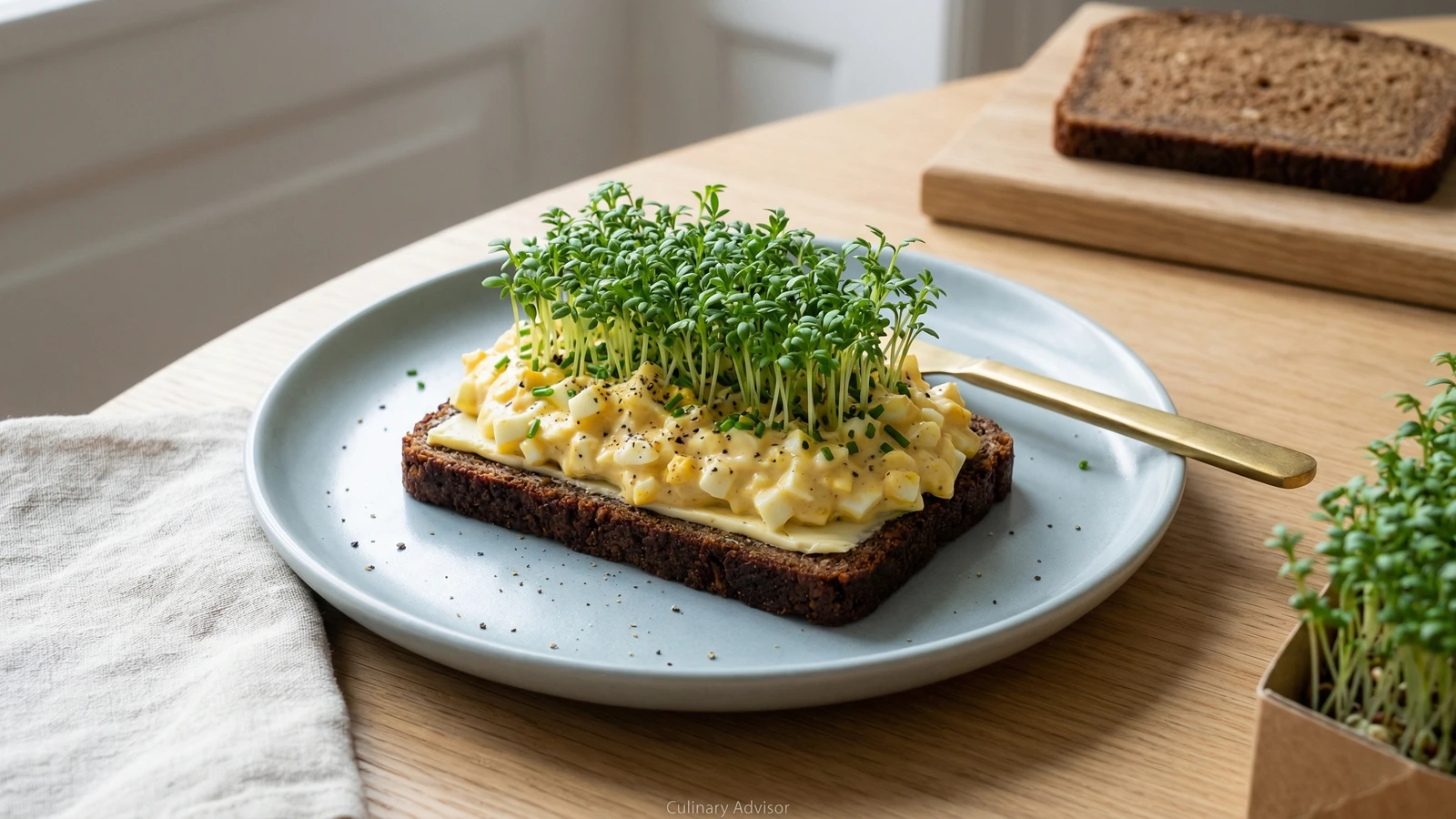
Aeggesalat med Karse
Created by Chef Freja
Hard-boiled eggs folded into curry-spiked mayonnaise, heaped onto buttered rugbrod, and crowned with freshly snipped garden cress. The piece of smorrebrod that Easter lunch cannot be without.
Easter in Denmark is yellow. Not the pale yellow of winter sun finally returning, but the deep saturated yellow of daffodils on every windowsill, of the first proper butter from spring-grass cows, of egg yolks laid by hens that have started eating green things again. Paaskefrokost, the long Easter lunch that stretches from noon into late afternoon, is built around these yellows, and aeggesalat sits near the center of the table.
This is egg salad, yes, but the Danish version is its own creature. The mayonnaise is warmed gently with curry powder, a soft golden spice that Danish cooks adopted over a century ago and have never let go of. The eggs are chopped rough, not mashed. The whole thing is piled onto dark rugbrod and topped with a thick green shock of fresh karse, the tiny peppery cress that Danes grow on their windowsills in little paper boxes like grass. The contrast is the dish: warm yellow against dark rye, soft against crisp, mild against peppery.
There are two things I want you to pay attention to. The first is blooming the curry powder in a dry pan before it goes into the mayonnaise. Raw curry tastes flat and slightly dusty. Warmed curry tastes round and alive, and the difference between the two is what separates a good aeggesalat from a memorable one. The second is the resting time. Half an hour in the fridge lets the flavors find each other. Rush this step and you'll taste every ingredient separately. Wait, and you'll taste the dish. The joy of waiting, as always, is real.
And while this belongs to Easter in its heart, don't keep it there. Aeggesalat is a weeknight lunch, a lunchbox anchor, a piece of smorrebrod you make on a Tuesday because you have eggs and you have rye and you have ten minutes. The season decides when it feels most at home, but this one wants to be on your table all year.
Curry powder arrived in Danish kitchens through the shipping routes of the late 19th century, when Danish merchants trading out of Copenhagen and the East Asiatic Company brought back the mild, turmeric-heavy blends that British traders had carried from India. Danish cooks softened the spice even further, pairing it with mayonnaise, cream, and eggs to produce what is now called karry in everything from hoensekodssalat to this one. Aeggesalat med karse became a fixed piece of the påskefrokost table in the early 20th century, when home-grown cress in shallow trays on kitchen windowsills was one of the first edible greens that Danish families could produce in the thin light of early spring, a small act of impatience against the long wait for the real garden.
The technique, the tradition, and the story behind every dish.
Discover Culinary AdvisorIngredients
large eggs
Quantity
6
as fresh as you can find them
mayonnaise
Quantity
4 tablespoons
good quality, preferably homemade
creme fraiche
Quantity
2 tablespoons
mild Danish curry powder (karry)
Quantity
1 teaspoon
Dijon mustard
Quantity
1 teaspoon
white wine vinegar
Quantity
1 teaspoon
shallot
Quantity
1 small
very finely minced
chives
Quantity
1 tablespoon
finely chopped
fine sea salt
Quantity
to taste
white pepper
Quantity
freshly ground, to taste
fresh garden cress (karse)
Quantity
1 small punnet
dark rugbrod
Quantity
4 thick slices
salted butter
Quantity
for the bread
softened
| Ingredient | Quantity |
|---|---|
| large eggsas fresh as you can find them | 6 |
| mayonnaisegood quality, preferably homemade | 4 tablespoons |
| creme fraiche | 2 tablespoons |
| mild Danish curry powder (karry) | 1 teaspoon |
| Dijon mustard | 1 teaspoon |
| white wine vinegar | 1 teaspoon |
| shallotvery finely minced | 1 small |
| chivesfinely chopped | 1 tablespoon |
| fine sea salt | to taste |
| white pepper | freshly ground, to taste |
| fresh garden cress (karse) | 1 small punnet |
| dark rugbrod | 4 thick slices |
| salted buttersoftened | for the bread |
Equipment Needed
- •Small saucepan for boiling the eggs
- •Small dry pan for blooming the curry
- •Mixing bowl
- •Spatula
- •Sharp knife for chopping
- •Kitchen scissors for cutting the cress
Instructions
- 1
Boil the eggs
Lower the eggs gently into a pot of already simmering water and cook them for exactly nine minutes. Not eight, not ten. Nine minutes gives you a yolk that is fully set but still tender at the center, which is what you want here. A runny yolk turns the salad into soup. A chalky, overcooked yolk turns it into sand. The middle ground is the whole point.
Set a timer the moment the eggs go in. Egg timing is exact, and memory is not. - 2
Shock and peel
As soon as the timer goes, lift the eggs out and drop them into a bowl of ice water. Leave them there for five minutes. The cold stops the cooking immediately and shrinks the egg slightly inside the shell, which makes peeling easier. Peel the eggs under a thin stream of cold running water. The water slips between the shell and the white and lifts the membrane with it.
- 3
Bloom the curry
While the eggs cool, measure the curry powder into a small dry pan and warm it gently over a low heat for about thirty seconds, stirring constantly. You'll smell it lift and open, turning from dusty to fragrant. This is called blooming, and it wakes the spices up. Raw curry powder tastes flat and slightly bitter. Warmed curry powder tastes round and alive. Tip it straight into a mixing bowl so it stops cooking.
- 4
Build the dressing
To the bowl with the bloomed curry, add the mayonnaise, creme fraiche, mustard, vinegar, and minced shallot. Whisk everything together until it is smooth and pale yellow. Taste it. It should be gently tangy, subtly warm from the curry, and savory from the mustard. Adjust with salt and a little white pepper. The dressing should taste slightly stronger than you think it needs to, because the eggs will mellow it once they go in.
- 5
Chop and fold
Chop the peeled eggs into rough pieces, about the size of a large pea. Some Danish cooks press them through a coarse sieve; I prefer the rougher texture of a knife, because it gives you both large and small pieces, and each bite is different. Add the eggs to the dressing along with the chopped chives. Fold everything together gently with a spatula. Don't beat it. You want the eggs to stay in pieces, not turn to paste.
Hold the eggs briefly in your palm as you chop. If they still feel warm, wait. Warm eggs thin the mayonnaise and the salad goes loose. - 6
Rest in the fridge
Cover the bowl and let the salad rest in the fridge for at least thirty minutes before serving. This is not a step to skip. The curry needs time to settle into the mayonnaise and the flavors need to find each other. Aeggesalat made and eaten immediately tastes like its parts. Aeggesalat rested for half an hour tastes like itself.
- 7
Build the smorrebrod
Spread each slice of rugbrod with a thin layer of softened salted butter, right to the edges. The butter is not decoration; it is a barrier that keeps the bread from going soggy under the salad. Heap a generous spoonful of aeggesalat on each slice, letting it mound slightly in the center. Snip the fresh cress directly over the top with kitchen scissors, a thick green canopy from edge to edge. Serve at once, with a knife and fork. You'll know when it's right.
Chef Tips
- •The curry powder matters. Danish karry is mild and golden, heavy on turmeric and fenugreek, low on chili. If your curry powder is hot or smoky, it will overpower the eggs. Look for a mild yellow blend, or use half the quantity of something stronger.
- •Grow your own cress if you can. A shallow tray of soil or damp kitchen paper on a sunny windowsill gives you a full crop in about a week. Danes have done this for generations, and the taste of cress cut minutes before eating is completely different from a supermarket punnet.
- •Homemade mayonnaise is always better here, because you control the oil and the egg and the seasoning. If you make it fresh, use the same yolks from the same eggs, and keep one aside raw for the mayo before you boil the rest.
- •A glass of cold beer or a dry white wine alongside is the traditional drink. At Easter, an aquavit is not out of place either, though it belongs more to the herring course that comes before.
Advance Preparation
- •The egg salad itself keeps beautifully in the fridge for up to two days, covered tightly. The flavor deepens overnight, and many Danish cooks prefer it on the second day.
- •Do not assemble the smorrebrod ahead. The rugbrod goes soggy within an hour of meeting the salad, and the cress wilts the moment it is cut. Keep the components separate and build each piece to order.
- •For a proper påskefrokost, make the aeggesalat the day before. It is one less thing to do on the morning of the lunch, and it will taste better for the rest.
Frequently Asked Questions
Nutrition Information
1 serving (about 180g)
Where cooking meets culture.
Culinary mentorship, cultural storytelling, and the editorial depth that makes cooking meaningful.
Explore Culinary Advisor