Culinary Advisor
A cooking platform built around craft, culture, and the stories behind what we eat.
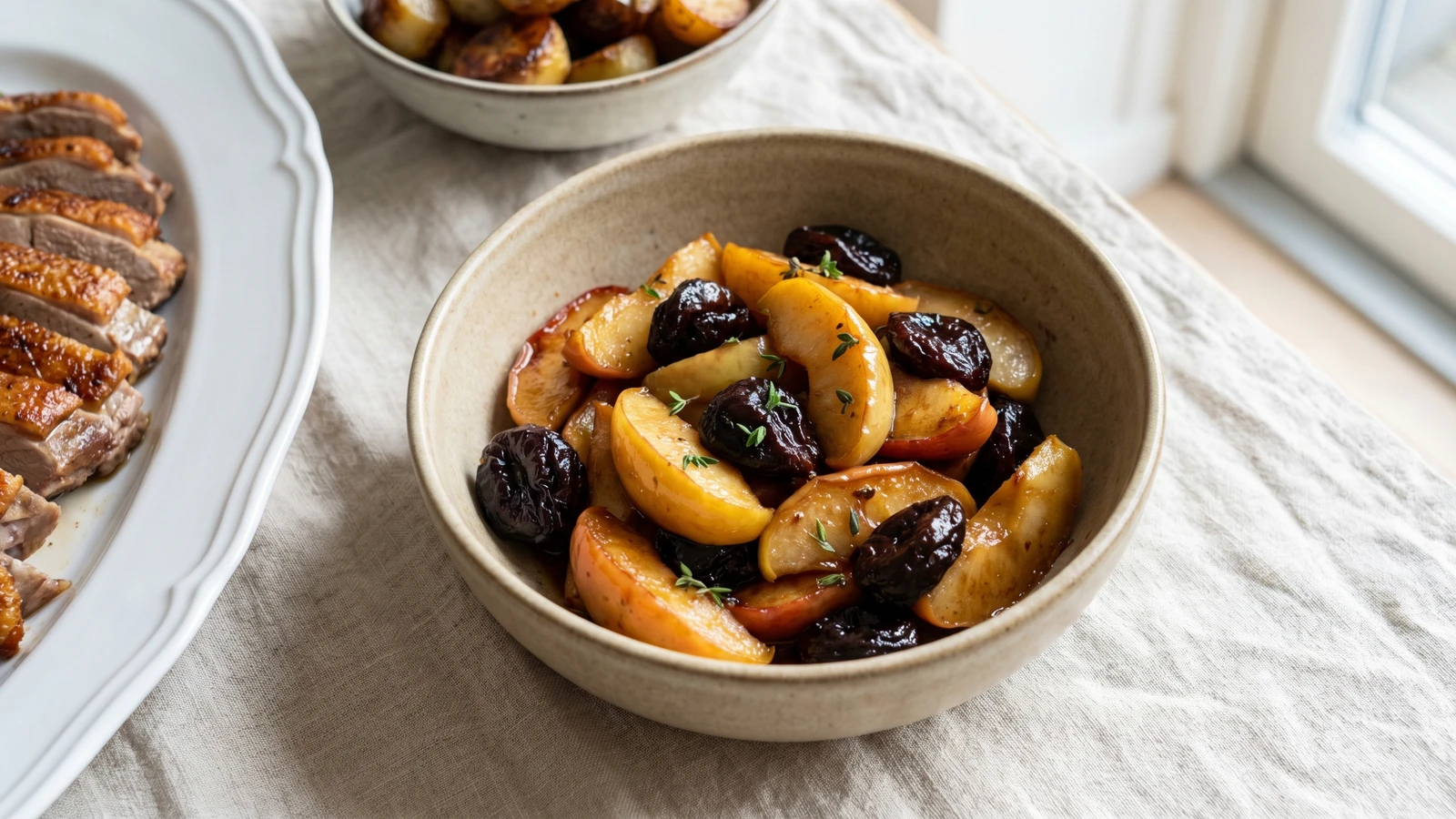
Æble-Sveskefyld (Apple and Prune Christmas Stuffing)
Created by Chef Freja
Tart apples, soft prunes, and thyme packed into the Christmas duck. The stuffing that absorbs the fat, sweetens with the roasting, and belongs on every forkful of sliced meat on juleaften.
December in Denmark has a particular darkness. Not the grey of November, something deeper and more deliberate. By the time juleaften arrives on the twenty-fourth, the light is gone by half past three and the kitchen has been warm for hours. Somewhere in that kitchen, a duck is being stuffed with apples and prunes.
Æble-sveskefyld is not a recipe you follow so much as a ratio you feel. Tart apples, soft prunes, a few sprigs of thyme, and nothing else. The fruit goes into the cavity raw, and the bird does the work. As the duck roasts, the fat renders down through the stuffing, and the fruit absorbs it slowly, the apples turning golden and silky, the prunes swelling until they're almost jammy. What comes out is something no side dish cooked separately can replicate: fruit that tastes of the bird itself, rich and sweet and sharp all at once.
The thing to understand is that this stuffing exists in conversation with everything else on the plate. The brunede kartofler bring sweetness and caramel. The rodkal brings acidity and spice. The stuffing bridges them, its tartness cutting through the duck fat, its sweetness answering the red cabbage. Get the balance right and you'll feel it in every bite. I'll show you what to look for and where to pay attention, and you'll know when it's right.
The tradition of stuffing a Christmas bird with apples and prunes dates to at least the 18th century in Denmark, when dried prunes were a winter luxury imported through Copenhagen's trading routes with Southern Europe. The combination reflects a deep Scandinavian instinct for pairing sweet fruit with fatty roasted meat, a principle that also governs the lingonberry with meatballs and the apple with pork. Until the mid-20th century, goose was the standard juleaften bird across Denmark; duck gradually replaced it in most homes after the 1960s as family sizes shrank and geese became harder to source, but the stuffing remained unchanged.
The technique, the tradition, and the story behind every dish.
Discover Culinary AdvisorIngredients
tart cooking apples
Quantity
4 large, about 600g total
peeled, cored, and cut into thick wedges
pitted prunes
Quantity
200g
soft and plump, halved if very large
fresh thyme
Quantity
8 sprigs
unsalted butter
Quantity
1 tablespoon
softened
fine sea salt
Quantity
to taste
black pepper
Quantity
freshly ground, to taste
| Ingredient | Quantity |
|---|---|
| tart cooking applespeeled, cored, and cut into thick wedges | 4 large, about 600g total |
| pitted prunessoft and plump, halved if very large | 200g |
| fresh thyme | 8 sprigs |
| unsalted buttersoftened | 1 tablespoon |
| fine sea salt | to taste |
| black pepper | freshly ground, to taste |
Equipment Needed
- •Small skewers or kitchen twine for closing the cavity
- •Large mixing bowl
- •Warm serving bowl
Instructions
- 1
Choose the apples
Use tart, firm cooking apples. In Denmark we reach for Belle de Boskoop, Bramley, or Ingrid Marie, apples that hold their shape under long roasting without dissolving into mush. A sweet eating apple collapses into sauce inside the bird, and you lose the contrast that makes this stuffing work. You want pieces you can spoon out alongside the meat, still recognizable, soft but not shapeless. Peel, core, and cut the apples into thick wedges, roughly eight pieces per apple.
If you can't find a Danish or Northern European cooking apple, Granny Smith is the closest widely available substitute. The tartness is what matters most. - 2
Prepare the prunes
The prunes should be soft and pliable. If they feel dry or leathery, cover them with warm water for twenty minutes and then drain them well. Dry prunes don't absorb the duck fat the way soft ones do, and absorption is the whole point. They should swell inside the bird, turning almost jammy, dark and rich against the pale apple. Halve any prunes that are very large so the pieces are roughly even.
- 3
Season and combine
Toss the apple wedges and prunes together in a bowl with a light seasoning of salt and pepper. Strip the leaves from half the thyme sprigs and scatter them through. Don't overseason. The bird itself will be salted, and the stuffing will absorb pan juices and rendered fat as it cooks. You're seasoning gently now because the roasting does the rest.
Keep the remaining thyme sprigs whole. They go into the cavity with the fruit and perfume the stuffing from the inside, then get pulled out before serving. - 4
Stuff the bird
Rub the inside of the duck or goose cavity with the softened butter. This helps the first layer of fruit release when you spoon it out later. Pack the apple and prune mixture loosely into the cavity, tucking the whole thyme sprigs in among the fruit. Don't force it. You want the fruit to have room to swell and move as it cooks. If you press it too tight, it steams rather than roasts, and you lose that beautiful caramelized edge where the fruit meets the fat.
Close the cavity with two or three small skewers or stitch it with kitchen twine. It doesn't need to be airtight, just enough to keep the fruit from tumbling out when you move the bird. - 5
Roast inside the bird
The stuffing cooks inside the duck or goose, so its timing follows the bird. For a standard 2kg duck at 180°C, that's about an hour and forty-five minutes. For a larger goose, longer. You'll know the stuffing is ready when the apples are completely tender and the prunes have swelled and darkened. When the bird comes out of the oven, let it rest for fifteen minutes before you open the cavity. The juices redistribute through both the meat and the fruit.
- 6
Serve alongside the meat
Spoon the stuffing out into a warm serving bowl. Remove the whole thyme sprigs. The fruit will be glossy with duck fat, the apples tender and golden at the edges, the prunes dark and almost sticky. Serve it in generous spoonfuls beside the sliced duck, the brunede kartofler, and the rodkal. Every forkful of meat wants a piece of apple and a piece of prune beside it. That balance of rich, tart, and sweet is the whole architecture of the Danish Christmas plate.
Chef Tips
- •The quality of the prunes matters more than you'd expect. Look for Agen prunes or another soft, plump variety. Cheap prunes that feel like leather will stay tough even after two hours inside the bird. Good prunes are soft enough to tear open with your fingers.
- •Don't peel the apples if they're organic and thin-skinned. The peel helps the wedges hold their shape during the long roast. But if the skin is thick or waxy, peel them. Tough apple skin in a spoonful of stuffing is unpleasant.
- •If you're not stuffing a bird, you can roast this mixture in a baking dish at 180°C for forty minutes, spooning duck fat over the fruit halfway through. It's not quite the same, the fruit doesn't absorb the juices in the same way, but it's a good alternative for anyone roasting a crown or a breast instead of a whole bird.
- •Save any leftover stuffing for the day after. Warmed gently and spooned onto rugbrod with cold sliced duck and a little mustard, it becomes one of the best meals of the Christmas season.
Advance Preparation
- •The fruit mixture can be prepared up to a day ahead. Toss the apples, prunes, and thyme together, cover, and refrigerate. Bring to room temperature before stuffing the bird so the cold fruit doesn't slow the cooking.
- •If your prunes need soaking, do it the night before and drain them in the morning. Overnight soaking gives the most even texture.
Frequently Asked Questions
Nutrition Information
1 serving (about 115g)
Where cooking meets culture.
Culinary mentorship, cultural storytelling, and the editorial depth that makes cooking meaningful.
Explore Culinary Advisor