Culinary Advisor
A cooking platform built around craft, culture, and the stories behind what we eat.
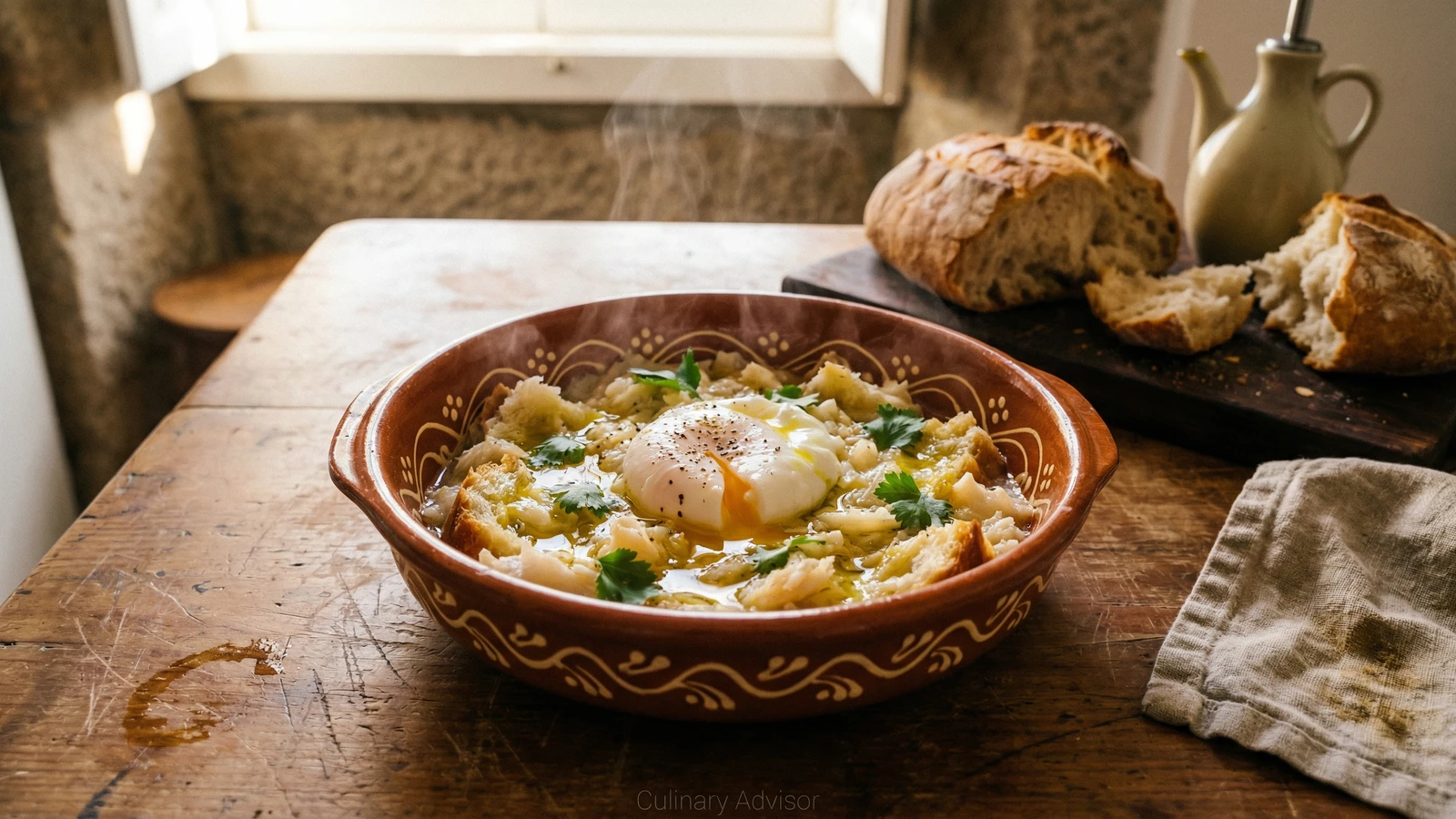
Açorda de Bacalhau
Created by
Two Portuguese icons meet in one humble bowl: the bread soup of Alentejo embracing flakes of salt cod. Peasant genius that proves scarcity breeds invention, that pão and bacalhau together can feed the soul.
This is what happens when two pillars of Portuguese cooking find each other in a bowl. Açorda, the bread soup that kept Alentejo alive through centuries of scorching heat and empty cupboards. Bacalhau, the salt cod that crossed oceans in ship holds and became more Portuguese than Portugal itself. Put them together and you have something that Avó Leonor called "comida de verdade." Real food.
I learned açorda at my grandmother's worn kitchen table in Évora. I learned bacalhau from every grandmother in every region I've documented. But this combination, this marriage of the two, I found in the notebooks of an elderly woman in Elvas, near the Spanish border. She told me her family made this on Fridays during Lent, when meat was forbidden but the body still needed warmth. The bread stretched the fish. The garlic and coentros made it taste like abundance.
The technique is simple. Poach the cod gently. Build a broth with garlic and azeite that perfumes the whole kitchen. Tear the bread by hand. Poach eggs in the broth because an egg makes everything better. Then bring it together in the bowl, where the bread drinks and the cod flakes and the egg yolk runs golden into everything it touches.
This is not restaurant food. This is not food that photographs well for magazines. This is food that makes you close your eyes when you taste it, that makes you think of kitchens you've never been in, of grandmothers you've never met. A cozinha é memória. The kitchen is memory. And this dish carries the memory of two traditions in every spoonful.
Açorda de bacalhau represents the marriage of Alentejo's inland bread traditions with Portugal's maritime cod heritage. While classic açorda dates to before tomatoes reached Europe, the addition of bacalhau likely became common in the 18th and 19th centuries as dried cod became affordable to rural families. The dish appears frequently in Lenten cooking traditions along the Spanish border regions.
The technique, the tradition, and the story behind every dish.
Discover Culinary AdvisorIngredients
dried salt cod (bacalhau)
Quantity
300g
soaked 2 days, water changed 3 times
water
Quantity
4 cups
bay leaf
Quantity
1
garlic cloves
Quantity
6
smashed
extra virgin olive oil (azeite)
Quantity
1/2 cup, plus more for drizzling
sea salt
Quantity
1 teaspoon, or to taste
day-old crusty bread
Quantity
4 slices (about 300g)
eggs
Quantity
4 large
fresh cilantro (coentros)
Quantity
1 large bunch
roughly chopped
black pepper
Quantity
freshly ground, to taste
| Ingredient | Quantity |
|---|---|
| dried salt cod (bacalhau)soaked 2 days, water changed 3 times | 300g |
| water | 4 cups |
| bay leaf | 1 |
| garlic clovessmashed | 6 |
| extra virgin olive oil (azeite) | 1/2 cup, plus more for drizzling |
| sea salt | 1 teaspoon, or to taste |
| day-old crusty bread | 4 slices (about 300g) |
| eggs | 4 large |
| fresh cilantro (coentros)roughly chopped | 1 large bunch |
| black pepper | freshly ground, to taste |
Equipment Needed
- •Wide heavy-bottomed pot
- •Medium pot for poaching cod
- •Deep serving bowls, preferably terracotta
Instructions
- 1
Poach the bacalhau
Place the soaked cod in a pot with fresh cold water and the bay leaf. Bring just to a gentle simmer over medium heat. The moment you see the first lazy bubbles, remove from heat and let it sit for 10 minutes. The fish should flake easily when pressed. Drain, reserving the poaching liquid. Flake the cod with your fingers, removing any skin and bones. The pieces should be rough and uneven, not neat. Set aside.
Never boil bacalhau. Boiling makes it tough and stringy. You want it just barely cooked, tender enough to fall apart when you look at it. - 2
Build the broth
In a wide pot, combine the reserved poaching liquid (or fresh water if the liquid is too salty), smashed garlic, and olive oil. Bring to a gentle simmer over medium heat. Let it bubble softly for 5 minutes. Taste the broth. It should be deeply aromatic, rich with garlic and good azeite. Adjust salt carefully. The cod brings salt; the bread will absorb it.
- 3
Poach the eggs
Crack each egg directly into the simmering broth, spacing them apart. Let them poach gently for 3 to 4 minutes until the whites are set but the yolks remain runny. Don't stir. Don't touch them. The eggs know what they're doing.
- 4
Prepare the bowls
While the eggs poach, tear the day-old bread into rough chunks and divide among four deep bowls. The bread must be day-old or older. Fresh bread turns to paste. Stale bread drinks the broth and holds its soul.
Avó Leonor always said: if you can squeeze the bread and it stays compressed, it's too fresh. Leave it out overnight. - 5
Assemble and serve
Remove the pot from heat. Gently stir in the flaked bacalhau and most of the coentros, reserving some for garnish. Ladle the soup over the bread in each bowl, distributing the cod evenly and placing one poached egg on top of each portion. The bread should drink the broth but keep some texture. Drizzle generously with your best olive oil. Scatter the remaining coentros. Grind fresh pepper over top. Serve immediately. Açorda waits for no one.
Chef Tips
- •The bacalhau must soak for two full days, water changed three times. Taste a small piece before cooking. It should taste like mild fish, not the sea. If it's still salty, soak longer.
- •Use your best olive oil. You'll taste it directly in the broth, uncooked and unmasked. Azeite from Alentejo if you can find it. This is not the place for ordinary oil.
- •Some families add a splash of white wine vinegar to the finished bowls. Others add a pinch of pimentão doce (sweet paprika) to the broth. Both are traditional. Neither is mandatory.
- •If you can't find good crusty bread, use ciabatta or a country loaf. Never sandwich bread. Never anything soft. The bread must have structure to drink the broth without collapsing.
Advance Preparation
- •The bacalhau must soak for 2 days minimum, with water changed three times. This is not optional. Plan ahead.
- •The cod can be poached and flaked up to a day ahead. Refrigerate and bring to room temperature before using.
- •The bread can be torn into chunks and left uncovered overnight to dry further.
- •The assembled açorda cannot be made ahead. It must be served immediately. The bread continues to absorb liquid as it sits.
Frequently Asked Questions
Nutrition Information
1 serving (about 275g)
Where cooking meets culture.
Culinary mentorship, cultural storytelling, and the editorial depth that makes cooking meaningful.
Explore Culinary Advisor